




This is an archived article that was published on sltrib.com in 2012, and information in the article may be outdated. It is provided only for personal research purposes and may not be reprinted.
They could officially start applying Wednesday, but the message being sent out by lawyers and nonprofits to any illegal immigrant wanting to obtain a temporary work permit could be distilled down to three words.
Take your time.
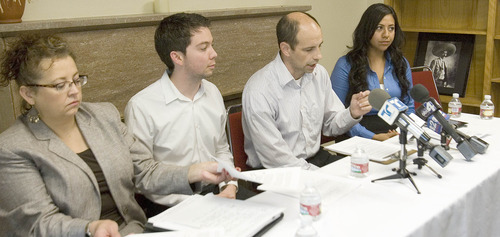
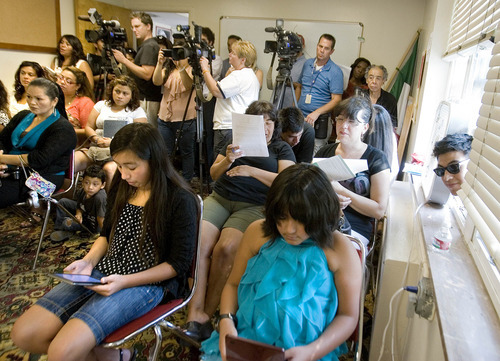
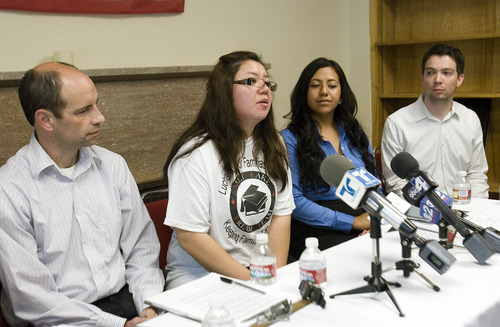
"There is no line," Salt Lake City based lawyer Mark Alvarez said before a tightly packed group at the headquarters of Comunidades Unidas.
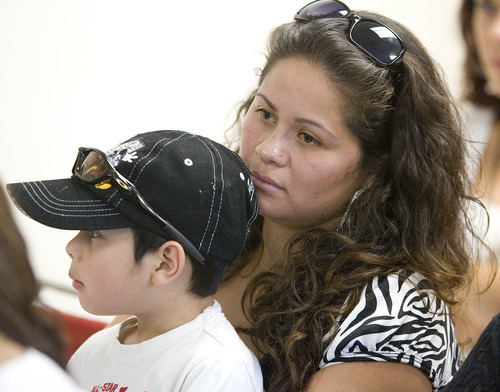
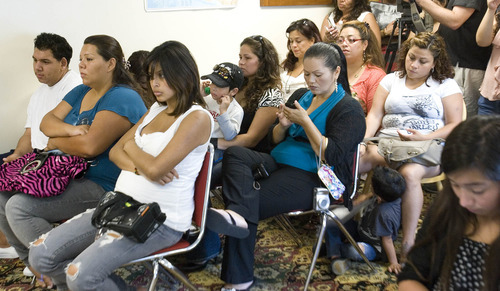
In the small room, people fanned themselves while others stood outside snapping pictures through the window to try to capture the historic day allowing illegal immigrants ages 15 to 30 to apply through U.S. Citizenship and Immigration Services for a two-year temporary work permit under a policy known as "deferred action."
And even though the requirements are strict — no criminal convictions, be enrolled in school, have a high school diploma, GED or have served honorably in the military — speakers offered hope to attendees.
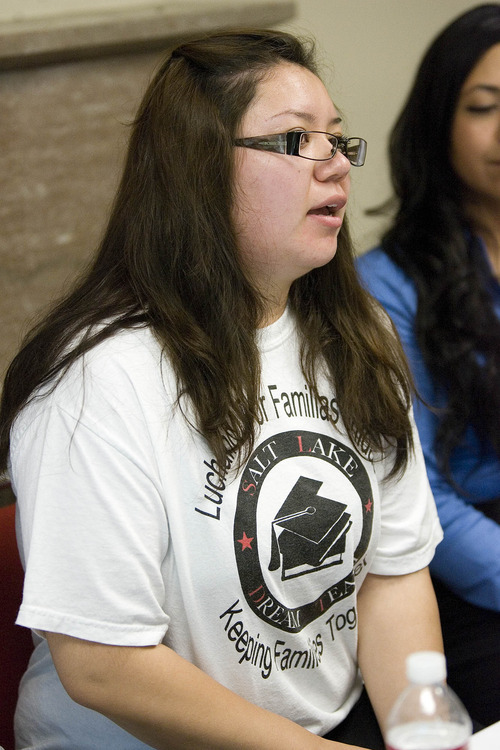
Jessica Vega, who was brought to the U.S. as a child, will be applying for the deferred action.
"You'll be able to look at me and know I exist," Vega said. "Even though I've always existed."
Vega is a member of the Salt Lake Dream Team — a group that has been fighting for passage of the Dream Act, which is similar to President Barack Obama's deferred action policy, with one key exception: The Dream Act allows a pathway to citizenship while deferred action does not.
"No es Dream Act," Alvarez said clearly to everyone in the room.
But for Vega, just the ability to move forward with an education and the possibility to work was a positive turn. Now there was simply the matter of applying for it.
To help, the American Civil Liberties Union of Utah, Catholic Community Services, the Mexican Consulate and the Dream Team are kicking off workshops next week that will help people navigate whether they're eligible or not as well as how to fill out the paperwork required by the federal government.
Lorina Tester, an attorney with the American Immigration Lawyers Association, cautioned people not to commit fraud when applying — noting that if applications were discovered to be inaccurate, it would bar them for any future immigration opportunity.
She said the process also built in confidentiality into the application, meaning USCIS wouldn't use information provided to turn the person over to authorities for deportation.
The other concern for groups is getting the word out to people who are eligible but don't know about the announcement made by the president in June or the launch of the application process Wednesday.
Heidi Chamorro, a volunteer project coordinator with the workshops, said advocates will be pushing information on Spanish-language radio, posting flyers at grocery stores and shops and using Facebook and other social media to bring people into the program.
"We want to try and reach as many people as possible," she said.
According to the Pew Hispanic Center, about 1.7 million people could be eligible for the deferred action policy — with about 8,000 in Utah, according to data provided by Comunidades Unidas and the Immigration Policy Center.
dmontero@sltrib.comTwitter: @davemontero —
Workshops
Aug. 24 • 1-5 p.m., St. George Community Legal Center, 229 St. George Blvd.
Aug. 25 • 9 a.m. to 5 p.m. at St. George Community Legal Center, 229 St. George Blvd.
Aug. 27 • 6 p.m., Dixon Middle School, 750 W. 200 North, Provo