





This is an archived article that was published on sltrib.com in 2012, and information in the article may be outdated. It is provided only for personal research purposes and may not be reprinted.
St. George • Good quality of life is a term you're likely to hear when you talk to someone about the lure of Utah's southwestern corner.
And, while some might highlight the web of bike trails or redrock hiking, parks or golfing, almost everyone mentions the area's clean, often crystalline air. Protecting that air quality here has become a rallying point for business, government and advocates for health and the environment.
"Lots of people move here for the quality of life and clean air," said Gail Bunker, a member of the St. George City Council. "We've got to have good air quality to have people participating in these [outdoor] activities."
"As a city, we're trying to protect the citizens. We want to be proactive, ahead of the curve."
In other parts of the state, cleaning up the air is not a matter of choice but necessity.
In Utah's urban heart, the Utah Division of Air Quality has a small army of specialists working full-time on solutions to sooty and dusty pollution on the Wasatch Front that violates the federal Clean Air Act and worries health advocates.
Up north, Cache County is brainstorming fixes for the nasty episodes of microscopic soot called PM 2.5 that sometimes blights the valley basin in winter. The U.S. Environmental Protection Agency wants the plan done by the year's end.
East, in the Uinta Basin, the EPA already has put state and local leaders on notice that unexpectedly high ozone or smoggy pollution in the winter is a problem requiring speedy attention.
—
Taking action • Here in Washington County, preserving air quality is not mandated but mainstreamed.
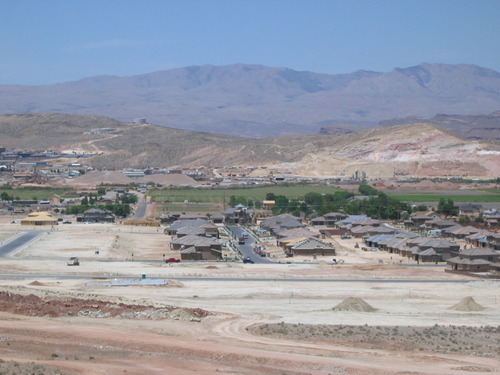
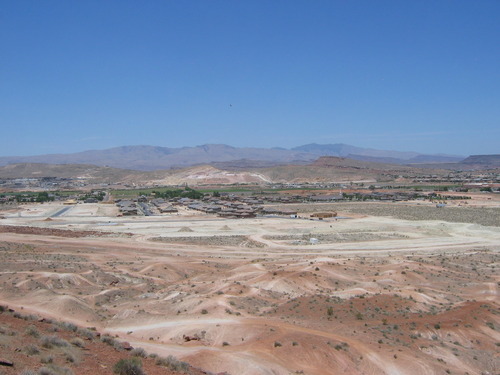
Prompted by the super-hot, super-dusty building boom a few years ago, local agencies started fielding complaints about the plants that make construction materials and the construction itself. They zeroed in on the visible signs of pollution, especially dust that has died down along with the building boom.
Meanwhile, state regulators focused on invisible ozone, or smog, that is created by vehicle exhaust and other airborne chemicals that become hazardous after cooking in the sun. Over a five-year period, the state logged 33 "yellow" air quality days at the St. George and Santa Clara monitors and 71 at Zion National Park.
At greatest risk for health problems are retirees who'd moved from northern Utah and children whose families had settled here to be near grandparents and good jobs Outdoor recreationists grouse about the dust too.
St. George Mayor Dan McArthur responded with the Southern Utah Clean Air Task Force and, in recent years, an annual air-quality summit.
"I hate mandates," he said, sharing the idea behind trying to build a consensus around the problem.
"We don't want to be more strict than we have to," he said, "but we want to make sure we have clean air."
Local groups — from the Citizens for Dixie's Future to the Associated General Contractors — came together and developed a carrot-and-stick approach. Bryan Rodgers represents the area's 100-company construction industry on the task force.
"We just wanted to make sure we're invited to the table when any kind of regulations are discussed," he said.
Now trucks are required to cover their loads, keep dirt off the roads and water work sites. Construction crews must stop jobs when the wind gets strong enough to stir up the dust.
An intensive education program by the trade groups reminds members to limit idling and play by the same anti-pollution rules their competitors face.
—
Monitoring the air • St. George City is also determined to monitor air quality.
"There's an old saying: if you don't measure it, you can't manage it," said Bill Swensen, who oversees the city's clean air efforts.
This week he picked up an air-pollution monitor, the first owned by the city.
Officials hope their budget will allow a similar $30,000 purchase next year.
St. George has not been not alone in its efforts. Zion National Park has operated monitors for years. And state air regulators are in their second year of studying where to place the devices to get the clearest picture of the problem.
From the state's standpoint, summertime ozone pollution has been the most pressing concern, partly because the EPA is expected to toughen its ozone standard sometime soon and partly because measurements show the pollutant is close to violating current standards. This is the second year in a row the state air-quality division will set up a network of monitors to help drill down on solutions.
Some of the clues the air scientists have picked up so far have worrisome implications, said Dave McNeill of the state's air-quality office.
For instance, past monitoring has shown air currents are carrying lots of pollution into Washington County from Las Vegas, the West Coast and probably China. But the coastal shipping ports and Nevada's coal-fired power plants are beyond the reach of Utah regulators trying to solve Washington County's pollution problems.
"We're trying to understand what's going on," he said. "We're trying to understand while we have a chance to."
Mike Small, president of the advocacy group Citizens for Dixie's Future, has been part of the drive for common-sense air-quality protections.
Overall, he gives the city good marks for trying to head off problems before they get unwieldy. But he notes pollution controls haven't been in full effect during a construction boom time. Plus, pollution drifting from outside Utah's borders is a worry.
"I don't know anyone here who wants the quality of life of Vegas," he said. "But if we keep growing like we have been, we could have it."
fahys@sltrib.comTwitter: @judyfutah