




This is an archived article that was published on sltrib.com in 2012, and information in the article may be outdated. It is provided only for personal research purposes and may not be reprinted.
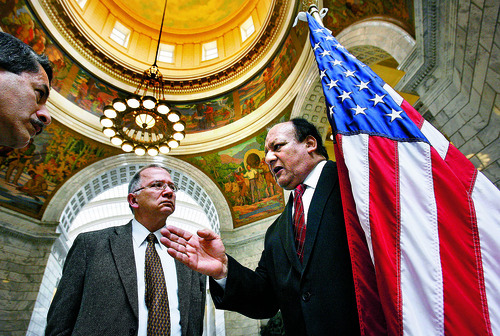
Utah's 104 legislators return to action beginning Monday, buckling in for a 45-day blitz of lawmaking, budget-writing, speechifying, statesmanship and — at times — political game playing. By the time the final gavel comes down, the state will have hundreds more new laws and commitments to spend close to $13 billion in taxpayer funds. That March 8 midnight deadline is rigid, set in the state Constitution. But some on Utah's Capitol Hill will be keeping one eye on another date: Nov. 6, when all 75 House members and half of the 29 senators face voters. That looming election is likely to leave its own an imprint on the session, perhaps on the substantial issues of immigration and education, and certainly by way of inspiring a new raft of message bills.
—
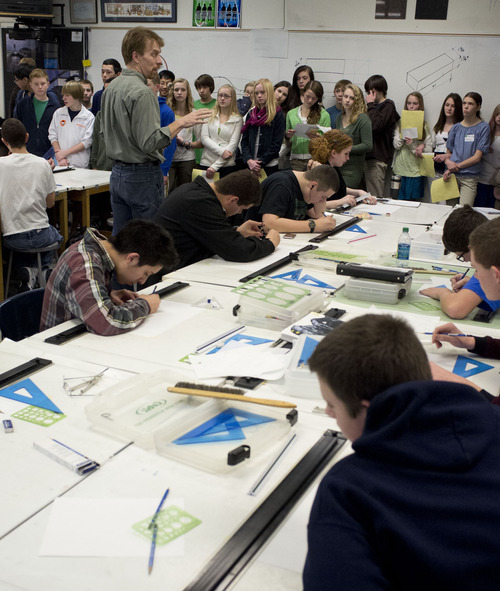
Education • School budget cuts might not be as big a topic of discussion this session as in years past, but education is sure to remain at the forefront of legislative debate.
Usually by this time each year, state leaders have already started discussing potential cuts to schools. But this year, it appears the state will likely pull in enough revenue to skip talks over doomsday budget scenarios — though money is still tight, and lawmakers will still have to make tough calls on how to slice the pie.
The state school board wants $21.7 million to pay for new technology and computer-adaptive tests for kids, which members say can help teachers better pinpoint students' strengths and weaknesses. The board's other priorities include $60 million to pay for 12,479 new students expected to pour into Utah schools in the fall and they want to see the restoration of $8 million cut last session from programs for at-risk students.
Board members also are pushing for $37.3 million to go toward college readiness tests, early childhood education such as extended-day kindergarten, new academic standards, and continuation of an elementary school arts learning program, among other things.
Debates are expected over more than school funding.
Sen. Howard Stephenson, R-Draper, plans to run a bill to create tax credits to help struggling and poor students attend private schools. The proposal — which foes already are calling another student voucher bill — has been dubbed by Stephenson the "Anti-voucher Student Opportunity Scholarship" bill.
Sen. Stuart Reid, R-Ogden, plans to run bills aimed at changing the makeup of the state school board and giving the governor more power over education. And freshman Sen. Aaron Osmond, R-South Jordan, who will chair the Senate Education Committee, has been discussing running a bill that could make changes to teacher employment — an evolving proposal.
— Lisa Schencker
—
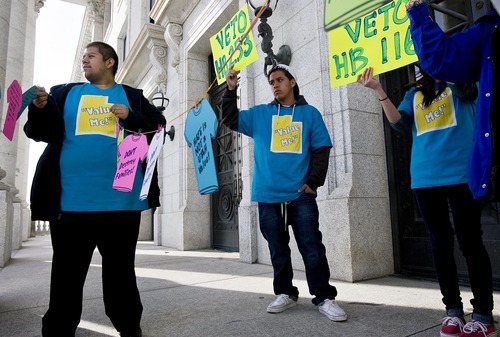
Immigration • The Legislature will tackle immigration for the second year in a row, likely assuring more bitter in-fighting among Republicans as they grapple over E-Verify, the repeal of a guest worker law and an attempt to provide Medicaid coverage for child immigrants.
Rep. Chris Herrod, R-Provo, will take a crack at replacing the controversial HB116, Utah's guest worker law that is set to take effect in July 2013. It currently would allow undocumented workers in the state — estimated to be anywhere between 100,000 and 120,000 — to pay a fine and establish themselves as legal workers in Utah.
His bill would, among other things, eliminate the trigger start date of July 2013 and instead wait for Congress to approve a pilot program for Utah. It would not allow undocumented immigrants to remain in the state if they have been using stolen Social Security numbers, but would give them time to remove themselves from the state.
However, Herrod's bill would allow those who entered the country and the state illegally but have never worked using a false Social Security number, to apply for a waiver in Utah that would allow them to eventually obtain a visa.
There is also a likely attempt by Sen. Steve Urquhart, R-St. George, to simply repeal HB116.
Rep. Stephen Sandstrom, R-Orem, will push a state E-Verify law that is modeled after Arizona's.
The bill would allow the state to suspend or revoke business licenses for companies that hired undocumented immigrants and didn't participate in the government's E-Verify program.
Utah currently has E-Verify on the books, but it has no penalties for a company failing to use the system designed to verify a person's legal right to work in the country.
There will also likely be a proposal by Sen. Luz Robles, D-Salt Lake City, to provide Medicaid immediately for eligible legal immigrant children — eliminating a current five-year residency requirement.
— David Montero
—
Budget • Making a budget is a little like meatball surgery.
During the recession, the state budget had more than $1 billion sliced out of it with programs pared back and some cut to the bone.
Now, with economic conditions improving, legislators will have a total of $400 million to set about patching up the wounds and nursing the patient back to a somewhat more robust $12.9 billion.
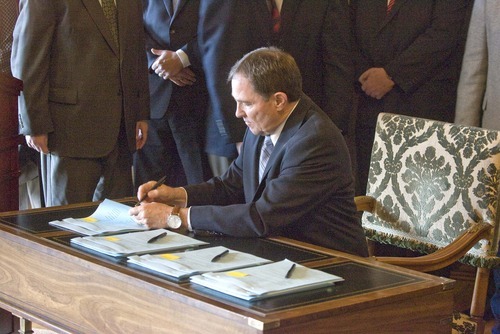
But budget doctors and Gov. Gary Herbert both acknowledge the money won't go far.
"I can tell you if we … just take the money available, we will meet maybe half of the needs to fund growth in education and other areas of government, things we think are really, really important," said Sen. Lyle Hillyard, R-Logan, co-chairman of the budget committee.
Rapid growth in school enrollment combined with federally mandated health care coverage for Utah's poor will eat up half the available funds.
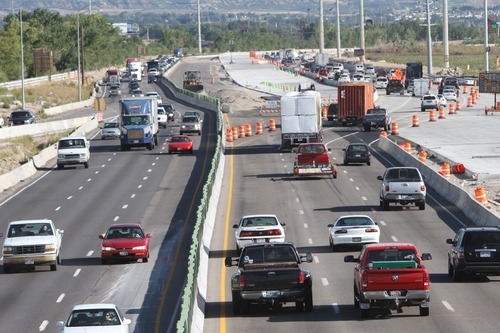
The Legislature earmarked another $60 million for road maintenance — overriding the governor's veto — and has to come up with $56 million out of the gate to sustain programs whose funding would vanish by July without a fresh infusion.
Herbert has proposed a $26.4 million corporate tax break, reducing what businesses pay for unemployment insurance. The governor says the move would stimulate private-sector hiring.
— Robert Gehrke
—
States' rights • In recent years, Utah Republicans sought to draw a line in the sand — all the way around the state.
They exempted guns made in the state from federal laws, blocked implementation of federal health reform and declared gold as legal tender.
Conservative lawmakers in the upcoming session will seek to continue the push a states' rights agenda.
"This year is going to be a much, much better year for states' rights issues than 2011 but I don't think it will top 2010," said Sen. Daniel Thatcher, the new chairman of the states-rights-oriented Patrick Henry Caucus.
Rep. Ken Ivory, R-West Jordan, is sponsoring the latest push to challenge the federal government's ownership of land in Utah. His proposal would set a deadline for the feds to begin selling land in the state and if it isn't met, the state would slap the feds with taxes, setting up a likely court fight.
Reps. Ken Sumsion and Chris Herrod are taking a different approach. They want the attorney general to go to court to seek a judgment ordering the federal government to turn over federal land to the state or make compensation to the tune of billions of dollars.
"As far as the lands bills go," Thatcher said, "at the end of the day we are going to find a successful model and I absolutely believe that this year we will pass something that will help the state tremendously."
Sen. Casey Anderson is proposing legislation that would make it a state crime for any official to enforce any federal regulations on food produced entirely within the state.
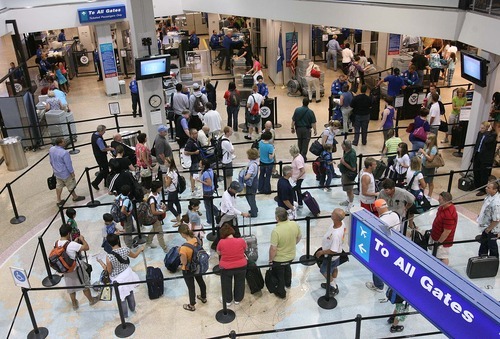
Meanwhile, Rep. Wayne Harper is sponsoring a bill that could prohibit intrusive screenings at airports in the state.
And Rep. Brad Galvez is crafting legislation that would foster the day-to-day use of gold and silver currency, let entities mint their own coins and perhaps pave the way for creation of gold banks that issue debit cards drawing on gold reserves.
— Robert Gehrke
—
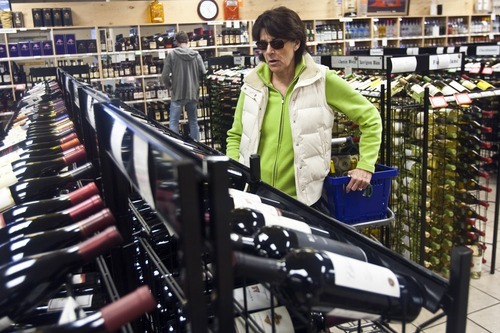
Best of the rest • Amid allegations of shenanigans at the Department of Alcoholic Beverage Control, lawmakers may explore privatizing the agency — or whether the agency should continue to answer to the Alcohol Beverage Commission or to the governor or another agency such as the Commerce Department.
Also, Rep. Jim Dunnigan, R-Taylorsville, is pushing a bill that would return legal fireworks dates to the days immediately surrounding Independence Day and Pioneer Day — instead of all July.
Utah legislators also are looking to close one loophole in Utah's total gambling ban but maybe open another.
Rep. Don Ipson, R-St. George, is pushing a bill to eliminate vague wording that some Internet cafes have claimed allows them to operate games of chance — as long as it isn't their primary business — which made some look like casinos.
And Rep. Kraig Powell, R-Heber City, says he is exploring how to legalize raffles that he says are frequently held by nonprofit groups.
High-interest payday loans are also expected to come under some attack. Rep. Brad Daw, R-Orem, said he may push to allow only one such loan at a time — and create a state database to enforce it. Sen. Ben McAdams, D-Salt Lake City, also is pushing a bill that would force payday lenders who sue borrowers to do so in the county where the loan is made.
— Lee Davidson
—
Back on the Hill
Utah's 104 legislators return to action beginning Monday, buckling in for a 45-day blitz of lawmaking, budget-writing, speechifying, statesmanship and — at times — political game playing.
By the time the final gavel comes down, the state will have hundreds more new laws and commitments to spend close to $13 billion in taxpayer funds. That March 8 midnight deadline is rigid, set in the state Constitution.
But some on Utah's Capitol Hill will be keeping one eye on another date: Nov. 6, when all 75 House members and half of the 29 senators face voters. That looming election is likely to leave its own an imprint on the session, perhaps on the substantial issues of immigration and education, and certainly by way of inspiring a new raft of message bills.