




This is an archived article that was published on sltrib.com in 2011, and information in the article may be outdated. It is provided only for personal research purposes and may not be reprinted.
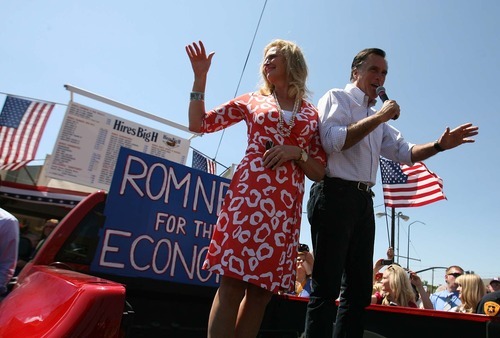
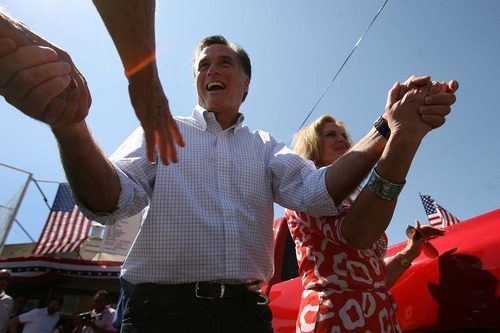
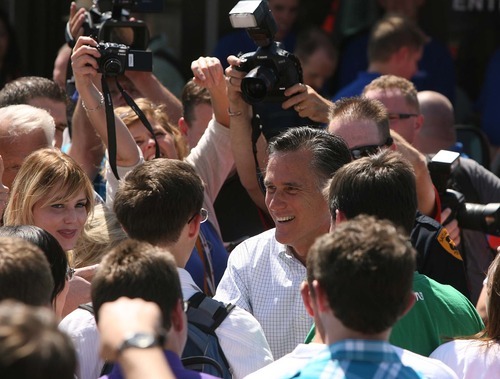
Mitt Romney's Utah advisers are working to try to get the state's Republican presidential primary moved up, from late June to earlier in the spring where it might play a bigger role in the nomination process.
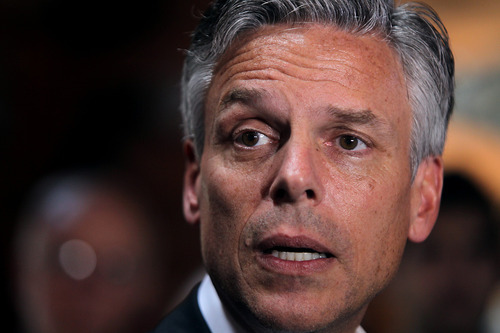
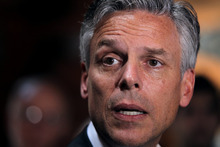
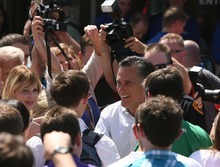
If the Romney camp is successful, it could set up an early showdown between Romney, chief of the 2002 Olympics in Utah, and former Gov. Jon Huntsman in Huntsman's old backyard — and it is a contest that, according to recent statewide polls, Romney would likely win.
"The earlier it is the more likely that clash of the Utah titans would happen," said Reid Wilson, editor of National Journal Hotline, a leading political publication.
However, it could also end up costing taxpayers between $2.5 million and $3 million to stage the primary.
Right now, the Utah Republican Party is planning to hold its presidential primary on June 26, 2012, the same day as the statewide primary election for other Utah offices.
GOP Chairman Thomas Wright said the scheduling was a function of efficiency, so the state would only have to stage one primary election next year instead of two.
"Our priority was not to do what Mitt Romney thought was best. Our priority was to do what was best for Republicans and the state of Utah," Wright said. "What makes the most sense is not having the state pay for another primary."
But Lt. Gov. Greg Bell, who is a Romney backer and the state's elections supervisor, said he has had discussions with the Romney campaign about moving the election and that, from his perspective, the change could still happen.
"I talked to the Romney people and said, 'Is this important for you?' And they said, 'A win is a win and delegate votes may really count,' " Bell said. "I would love to see Utah matter and not be a fly-over state and have a real impact on the election."
Kirk Jowers, an adviser to the Romney team, said the June primary is so late in the presidential nominating process that it would make Utah meaningless.
"Utah now knows what it feels like to be relevant in a presidential contest," Jowers said, referring to the state's February 2008 primary in the last election. "I can't imagine Utah wants to go back to being irrelevant."
But Wright doesn't believe Utah loses clout by being late in the process. California is moving its primary to June, he said, meaning the race may be focused but not decided by summer.
"By going in June, the field will have really narrowed by then and we'll know who the top contenders are," he said.
If Utah's primary were to move, it would not be allowed — under the Republican National Committee's rules — to advance any earlier than the second week of March. If the primary is held in March, Utah's 39 delegates would have to be allocated proportionately based on how much of the vote the candidates receive.
That could still bode well for Romney, who won nearly 90 percent of the vote in Utah's 2008 primary, and polls pitting the two against each other show Romney soundly beating Huntsman in Utah.
"Losing his home state wouldn't be devastating to Huntsman, but it would prove a major embarrassment and at a time when every single news story is crucial, it would raise questions about why he lost the one state he should definitely win," said Wilson.
Huntsman spokesman Tim Miller said the campaign would welcome whatever decision Utah makes.
"Governor Huntsman looks forward to competing vigorously in the primary no matter when it takes place," Miller said. "He's had two very successful campaigns in the state and is excited about the prospect of a third. His track record of cutting taxes and growing jobs compares quite favorably to his competitors."
Wilson said it makes sense that Romney would want the primary earlier, since it could let him notch a win and "create a sense of momentum and sense of inevitability" heading into other states.
Tim Chambless, a political science professor with the University of Utah's Hinckley Institute of Politics, said that Huntsman may have the resources and enough support among GOP moderates to stick around in the contest until a Utah primary in June.
And, Chambless said, Utah is a small state in the grander scheme, so a loss there might not be too damaging to Huntsman.
"He has shown that he is trying to develop a nationwide appeal and he knows the population of Utah is less than 1 percent of the country," Chambless said. "Utah is one of 50 states, not the state he has to do well in."
There remains one major hurdle for any attempt to move the primary: money.
It costs at least $2.5 million to stage a statewide election and it would fall to taxpayers to bear that expense. Making it happen would also require the Legislature to change the current law and appropriate the money.
Wright said there was discussion earlier in the year of trying to do some sort of presidential caucus when the party holds its normal caucuses in March, but there was no way to guarantee the results wouldn't be challenged.
Last year, Gov. Gary Herbert did not include funding for the presidential primary in his budget proposal, nor did the Legislature include the funds in the budget it passed.
"I think you'd have quite a bit of convincing to do," said Senate President Michael Waddoups, R-Taylorsville. "Most people I've asked about it say why bother, because by the time it gets down to choosing who the candidate is, the only interest is between Huntsman and Romney and Huntsman would probably be out of it by then."
Herbert said last week that Utah gained much by holding an early primary in 2008, but did not address plans for 2012.
"We had more candidates come to Utah than ever before in the state's history," Herbert said in a Tribune interview. "It's good for us to be able to say to them, 'By the way, if you want our vote, understand our issue and tell us how you're going to take care of it when you're president.' That's getting engaged and having influence on policy. That's really a significantly important thing."