



This is an archived article that was published on sltrib.com in 2011, and information in the article may be outdated. It is provided only for personal research purposes and may not be reprinted.
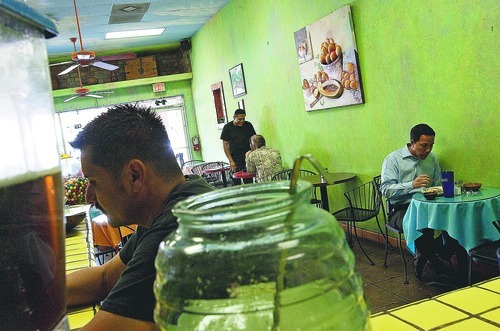
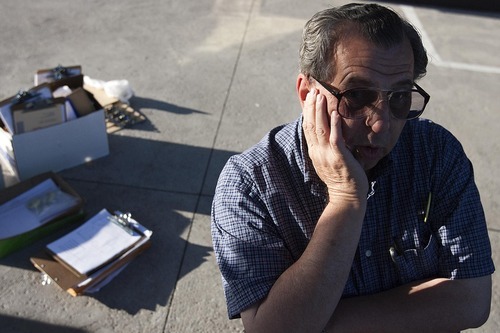
Mesa, Ariz. • Fernando Hernandez feels weary on a Sunday morning as he sits alone in his office in this suburb connected to Phoenix by car-clogged freeways and seemingly endless rows of empty strip malls. Last year, about 600 clients paid for his tax preparation services, and he employed four people to help with the onslaught. The day before the filing deadline, he and his staff worked until nearly midnight. This year, he'll knock off before sunset, having processed only 200 returns for the year. He worries about closing a second office a few miles away.
The culprit for this downturn is simple in his mind — the anti-immigration, enforcement-only bill SB1070 signed into law a little more than a year ago.
"Last year, people were just waiting for their refunds to move," he says. "I knew this year was going to be really, really hard."
But back then, fewer people viewed SB1070 so skeptically. It passed the Arizona House 35-21, the Senate 17-13 and is largely credited with catapulting Gov. Jan Brewer to victory.
Utah Rep. Stephen Sandstrom, R-Orem, was certain his state would support a similar bill and began looking at SB1070 as a template. He consulted with SB1070's chief sponsor, Russell Pearce, a good friend and fellow Mormon, who also saw Utah as a sure-fire follower.
What a difference a year makes.
Sandstrom's bill, HB497 is scheduled to take effect Tuesday, if a federal lawsuit doesn't block it. Instead of mimicking Arizona's law, it was watered down repeatedly in the shadow of The Utah Compact endorsed by The Church of Jesus Christ of Latter-day Saints, business groups and politicians — ultimately derided by some as "Arizona-light." Utah also passed a guest worker bill that captured the imagination of other states which began rejecting SB1070 copycat proposals one by one.
And now Arizona — which once looked to be the leader for Utah and other states — may end up following its northern neighbor with a quiet insurgency happening in Pearce's backyard. This backlash includes a recall movement against him and a possible adoption of The Utah Compact by local officials in Pearce's own district — the Mesa City Council.
—
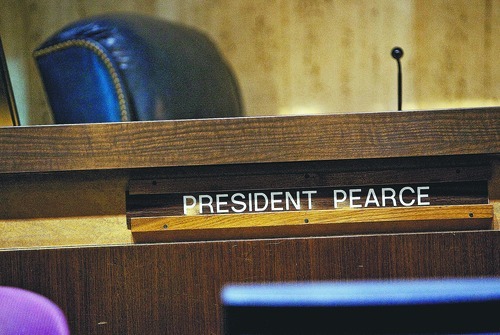
Russell Pearce • Pearce is a barrel-chested man with a gravelly voice and part of a finger missing — shot off while he served as a Maricopa County sheriff's deputy. Inside the Arizona Capitol, it's nearing the end of the legislative session and the lawmakers are talking about going past 2 a.m. to wrap it up.
A local radio reporter buzzes around Pearce, the Senate president, waiting to get a sound bite and the Republican leader's assistant tries to shuttle him back to his office quickly.
But Pearce won't be denied microphones.
The session — which will end in a day — was the "most successful session in the last 20 years" and Pearce says he's proud of the accomplishments — notably passing a balanced budget. He makes a similar pronouncement about SB1070 when asked to reflect on it a year after its passage.
Despite a federal judge setting aside some of its provisions, crime is down, business is up and "the illegals are leaving," Pearce says. He believes it's "a rousing success." He rattles off statistics, rapid-fire like a machine gun to emphasize that success.
Statistics from the Immigration Customs and Enforcement Removal Operations in Phoenix appear to support a few of his claims.
In 2009, there were 81,484 deportations — 23,563 of them criminals. In 2010, that jumped to 95,952 total deportations, including 35,937 criminals. And as of April, 24,488 had already been removed, just more than half of them criminals.
"I won't tolerate those invading our country," Pearce says. "And I won't tolerate those who put profits over patriotism and lawbreakers over lawmakers."
He also didn't read as failures the Arizona Legislature's defeat this year of five anti-immigration bills that covered everything from repeal of the 14th Amendment's birthright citizenship clause to denying undocumented immigrants access to hospitals and education.
Instead, he defiantly says those bills will come back in the next session and that those who fought them are now targets.
"I see them as weak on these issues," Pearce says flatly. "And there will be a price to be paid in the coming election year."
—
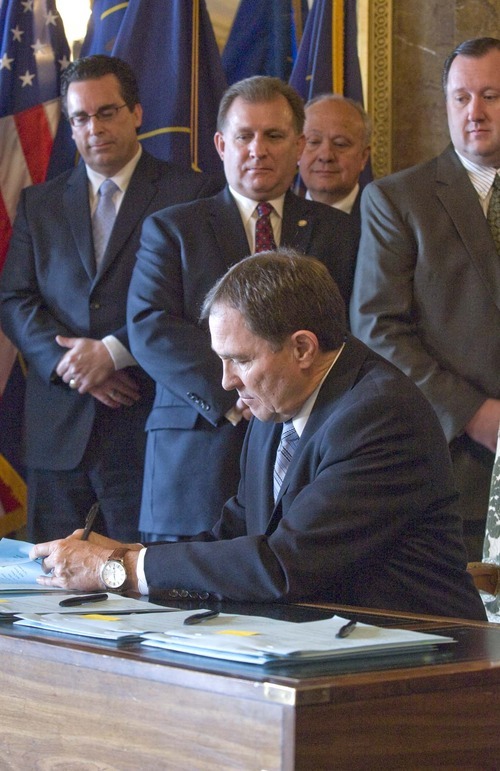
Different paths • Utah Gov. Gary Herbert smiles upon hearing a push is on in Mesa to adopt a version of The Utah Compact.
Herbert, who has taken flak for signing the guest worker bill, says while Arizona is a border state and has different issues, Utah had the benefit of watching the economic impact of SB1070 unfold for a year.
The Center for American Progress says within four months of it being signed into law, Arizona suffered a $140 million hit to its convention and tourism industry. But estimates of long-term effects are difficult to quantify — though the image issue remains a problem.
Sen. Kyrsten Sinema, D-Phoenix, recently went on a trip to China and was immediately confronted by people asking why Arizona politicians would pass such a law.
"Our image has been hurt worldwide," she says. "I love my state, but we took a wrong turn."
Herbert, who recently returned from a trip to China to explore more trade with the superpower, notes the business dynamics that happen within a state can ripple well beyond a nation's borders. Utah, according to the Governor's Office of Economic Development, exported $10.3 billion in goods last year, and trade with China has increased by 239 percent over the past five years.
"I think Arizona might've been quick on the trigger," Herbert says. "Maybe a knee-jerk reaction. We have been able to take a more methodical approach."
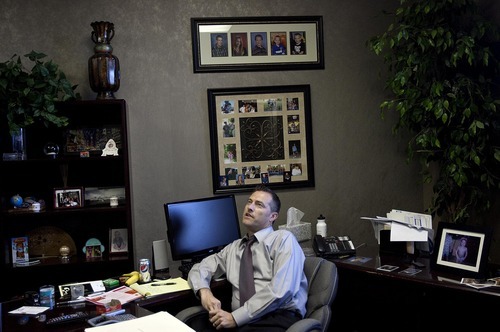
Chad Snow wished from the beginning that Arizona had taken that view, and he has the letter to prove it.
The workman's compensation attorney sits behind his desk a few miles from the Arizona Capitol and cringes at mention of Pearce and SB1070. He pulls out a letter, dated Feb. 12, 2010, that outlines worries about the economic impact and the potential image problem the state might face.
"Do you want Arizona to be known as the Alabama of the 21st century, criminalizing an entire race of people?" Snow wrote back then.
He not only stands by the letter, he believes its warnings have come to fruition. That's why he is working on an effort to recall Pearce.
"He is the symbol of divisiveness and mean-spiritedness," Snow says. "He is the poster child of what not to do in Arizona. He has turned us into Aribama."
Snow, who is a Republican, also says he was inspired by what he saw The Church of Jesus Christ of Latter-day Saints in Salt Lake City do with the issue — take a stand on compassion. As a Mormon, Snow says it is a natural flow from the teachings of Jesus Christ to take the opposite view of SB1070.
"My faith teaches you have to treat everyone with respect," Snow says. "That's not what 1070 is about."
—
The Mormon factor • The crowd flowing into the grounds at the LDS Temple in Mesa — right in the heart of Pearce's district — will top 10,000 for what is billed as the world's largest Easter Pageant.
With a cast of more than 400 and another 100 volunteers coupled with 2,000 costume pieces, it looks like a Cecil B. DeMille set.
Rich Crandall is dressed in full Roman centurion gear and smiles broadly as he walks among people settled in chairs eating pizzas and waiting for the 65-minute show to start. He's tired from being up until 5:21 a.m., when the state Senate finally wrapped up its session. The kids swarm him, wanting to check out the shiny sword or try on the gold helmet.
Crandall, a conservative Republican by most accounts, has proven to be a political nemesis for Pearce on immigration. They both represent Mesa — Crandall on the eastern side and Pearce on the west — but their divide on the issue has grown wide.
When Crandall joined five other Republicans to oppose the collection of immigration bills that failed in the Senate this session, he was labeled a part of "The Sanctuary Six." On the March 25 cover of the Arizona Capitol Times, his face appeared with 11 other lawmakers with "Wanted" signs in an Old West motif — referencing a likelihood they'll face primary challenges in 2012 based on those immigration votes.
It became apparent to him that Pearce had overreached on the latest series of bills.
"I just didn't see how penalizing kids in kindergarten was stopping the drug cartels," he says. "The cartels don't care about kindergartners getting educated. The bills just weren't logical."
He's also heard rumblings among key people in the LDS Church in Mesa who are beginning to make the humanitarian case for an estimated 400,000 undocumented immigrants in Arizona.
Two of those key people moving Mormon sentiment away from SB1070 are Grant Walker and Daryl Williams.
In a move that stirred the pot, the group Somos Republicans put fliers on the windshields of cars outside church in early April, urging attendance at "A Fireside on Immigration." Williams participated in the fireside.
On the flier, it countered members who support the "rule of law" as an article of faith by saying LDS Church founder Joseph Smith was himself a "scofflaw" who sought refuge from laws he deemed unrighteous.
"Perhaps, then, these Mormons accede to the easiness of the answer rather than consider its rightness," Williams wrote on the flier.
Walker attended the fireside and said about 40 people showed up. In the course of the meeting, he said The Utah Compact grew in stature and was embraced by the people there. He is now in the process of drafting an Arizona version of that set of principles.
And the City Council could get a copy of a Mesa version of The Utah Compact to vote on within weeks as it continues to gather steam with the Mesa Human Relations Advisory Board, which has held two public meetings on the matter already and plans to take action on it this month.
A favorable recommendation, according to Mesa City Councilman Dennis Kavanaugh, could go a long way in getting it before the City Council for adoption.
"I hope we see it," he said. "I think we need to do this."
There are approximately 60,000 LDS members living in Mesa, which was founded by Mormons in 1878.
"What was brilliant about The Utah Compact is that it was founded on principles, not legislation," Walker says. "It cares about families. It cares about individuals and that's what drives me on the issue."
But while this cause seems to be getting some traction, Mesa remains a conservative base with strong support for tough immigration laws. In 2010, Pearce won his election 56.5 percent to 34.3 percent.
Ron Middlebrook stands alongside Crandall at the Easter Pageant dressed in his Roman soldier gear and, while joking around with the senator, doesn't pull punches when it comes to the immigration issue.
Middlebrook has grown tired of what he calls "the drain created by illegal immigrants." He proudly wears a Russell Pearce shirt beneath his costume and sees no conflict with his faith and his desire to see tough immigration reform.
"There has to be respect for the law," he says. "Without it, you have chaos. I'm just tired of it and I think most other people are, too. This movement by the amnesty people is about cheap labor, plain and simple."
—
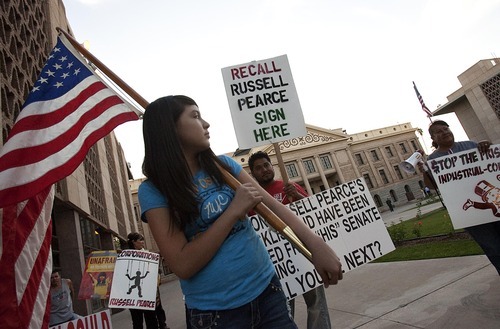
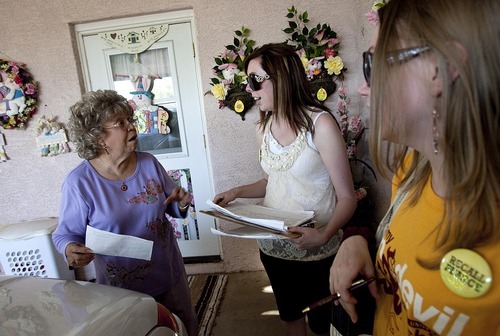
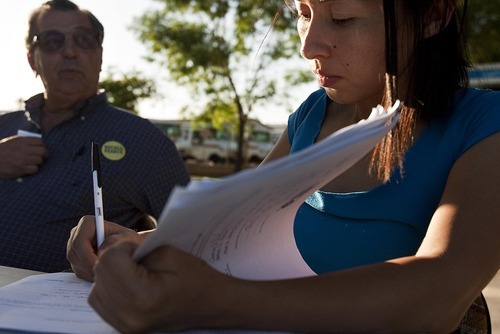
Recalling Pearce • The brewing discontent in Mesa is seen in a library parking lot, where signature gatherers are getting directions on which houses to hit for the Pearce recall movement. On this Sunday afternoon, 40 people have fanned across Pearce's district to knock on doors.
On a street largely bereft of both shade and Democrats, Amanda Casas spots a man pulling into a driveway and calls out to him, asking if he'd be willing to sign the petition to oust Pearce.
"I think he's doing a great job," the man yells back with a smile.
Casas thanks him, but as the man disappears into his single-story house Casas mutters about Pearce getting fired.
The 21-year-old student at Arizona State University loathes Pearce, the thrice-elected state representative for Mesa who is now serving his first term in the state Senate and was chosen to be its president. She believes the politician would hate her husband, whom she met while getting pancakes at IHOP five years ago.
Hearing his story about being undocumented, getting a green card and applying for residency while having to leave the country and live in violence-plagued Ciudad Juarez, Casas sees Pearce as the problem.
"He's ruined the state," she says. "Nobody wants to come here."
Thousands of petition signers seem to agree.
Randy Parraz, who has been leading the recall effort, says the law requires 7,700 valid signatures to be submitted to the secretary of state. Parraz expects to announce on Tuesday that the Pearce opponents have enough signatures to trigger a November recall election.
There isn't a candidate yet slated to take Pearce on, but Parraz believes just getting the signatures has been a strong indicator that Arizona is ready to move on from his policies.
Pearce says his opponents are misreading the electorate.
"They must really be worried about what I'm doing to put the energy into trying to remove me from the district that I'm very solid in," he says. "They will not be successful."
dmontero@sltrib.comTwitter: @davemontero Arizona immigration law vs. Utah law
Arizona's law (SB1070) was quickly challenged in federal court, and several provisions were blocked by court order. Utah's HB497 steered clear of those provisions.
—
Federal crime • SB1070 made it a state crime in addition to a federal crime to be in Arizona illegally. HB497 has no such provision.
Finding jobs • SB1070 prohibited undocumented immigrants from applying for or soliciting work. HB497 has no such provision.
Checking immigration status • SB1070 requires that for any lawful contact made by a local police officer where there is "reasonable suspicion" a person is unlawfully present in the country, a reasonable attempt shall be made to determine legal status. HB497 requires legal status checks of only those committing a felony or class A misdemeanor. Attempts to verify status on lesser misdemeanors are left to the discretion of local police.