


This is an archived article that was published on sltrib.com in 2013, and information in the article may be outdated. It is provided only for personal research purposes and may not be reprinted.
Emergency responders on Tuesday flocked to Chevron's third petroleum pipeline spill in Utah in less than three years.
Willard Bay State Park officials closed down the facility on the northeastern edge of the Great Salt Lake and evacuated two campers and the park manager's family after around 4,200 to 6,300 gallons of diesel fuel leaked from the pipeline just north of the park. They also rescued two beavers from the contaminated area and sent one off-site for cleaning.
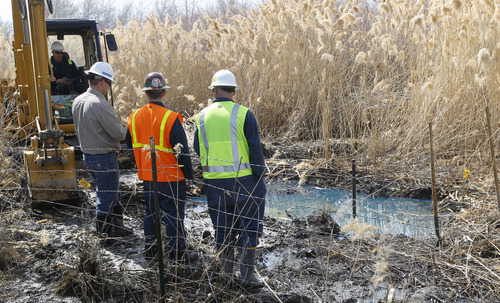
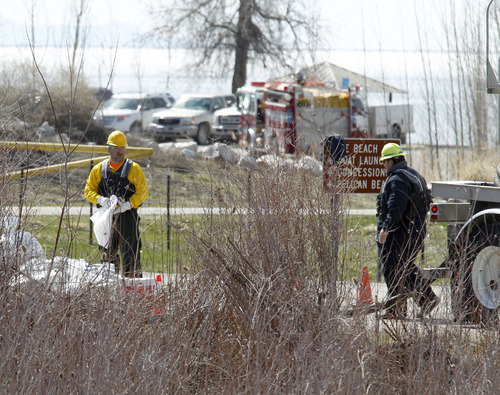
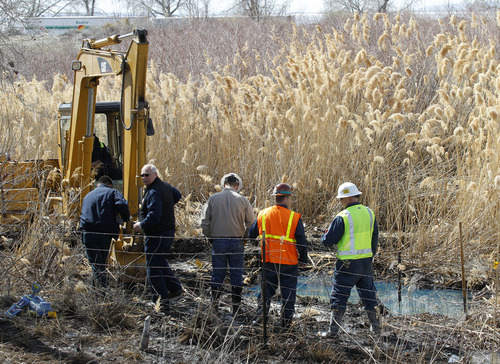
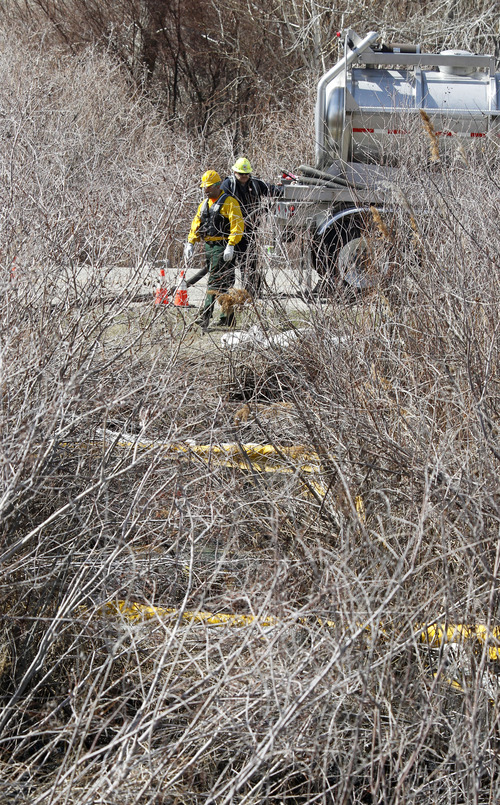
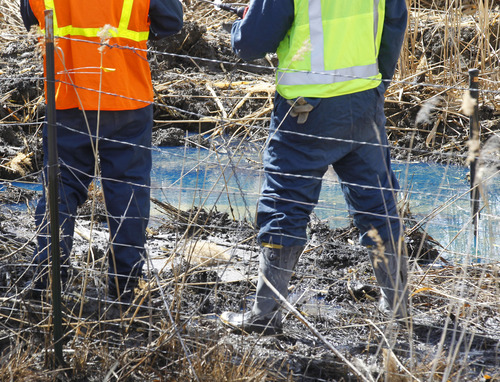
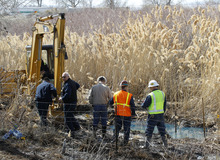
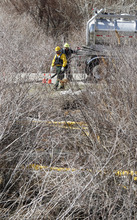
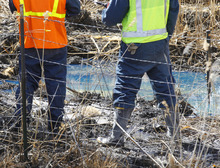
Meanwhile, investigators descended upon the scene to probe what happened and why as responders scrambled to find the leak's source. And Chevron dispatched dozens of cleanup workers to the scene to lay down absorbent booms to sop up the diesel and contain the damage to a ditch running between Interstate 15 and the freshwater reservoir on the edge of the internationally significant Great Salt Lake marshes.
John Whitehead, deputy director of the Utah Division of Water Quality, said he heard about the spill Monday night and had water-quality scientists on the scene early Tuesday to begin testing the water for contamination.
This is the third time his agency has been pressed into action on a leaky petroleum pipeline spill since the big Chevron crude oil leak in the Salt Lake Valley foothills on Red Butte Creek June, 11, 2010, and the smaller spill the following December.
"All the things we learned at Red Butte," said Whitehead, "we can apply here and have."
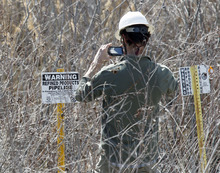
An investigator from the U.S. Department of Transportation's Pipeline and Hazardous Materials Safety Administration was headed to the scene Tuesday afternoon, according to agency spokesman Damon Hill.
Curtis Kimbel, the U.S. Environmental Protection Agency's on-scene coordinator for the spill response, said there is no evidence so far of diesel getting into the reservoir or the bay. Chevron crews were digging out the pipe late Tuesday and had tankers vacuuming the fuel from the ditch, he said.
The two big concerns, he said, are ensuring that the reservoir, which is jointly managed by the U.S. Bureau of Reclamation's Provo Area Office in partnership with the Weber Basin Water Conservancy District, remains protected and that migratory birds are not harmed.
"Our primary focus right now is to make sure diesel does not go into the Willard Reservoir," Kimbel said, "and that we come up with a strategy that cleans things up effectively and quickly."
Phil Douglass, Northern Region conservation outreach manager for the Utah Division of Wildlife, said the leak prompted evacuation of the park's North Recreation Area overnight. He was among the state officials on-scene, scrambling to determine the leak's potential impact on natural resources.
Douglass said the spill was contained to a small area by early Tuesday afternoon. But its effect on the sensitive aquatic environment of the area was not immediately apparent, he said.
"From the wildlife perspective," said Douglass, "we are obviously very concerned about how this will impact the wildlife and the fishery that exists in that area."
Willard Bay comprises nearly 10,000 acres of fresh water that is located atop the Great Salt Lake flood plain north and west of Ogden. In addition to wildlife, it supports populations of crappie, walleye, wiper and catfish in its popular fishery. The area is also popular with boaters.
Deena Loyola, spokeswoman for Utah State Parks and Recreation, said Tuesday's closure specifically targeted the park's North Marina and campgrounds and would be in effect until further notice.
Eric Bartlett and his wife planned to stop at Willard Bay's north marina on Tuesday to grill, picnic and spend the night in their RV, which they've been driving across the country since October. But as they pulled off I-15, they only found a closed gate.
"Nope, guess not," he said. "We'll just keep going."
Even with no sign the had fuel contaminated the reservoir or the bay, a fisheries biologist was to test the bay's nearby waters to make sure, said Park Manager James Morgan.
The company notified Morgan late Monday about the leak. He was advised to evacuate the two occupied campsites at the park, as well as his own family who lives on-site.
Morgan returned Tuesday morning to help with the cleanup taking place in a culvert between the Cottonwood campground and Eagle Beach. As of Tuesday afternoon, it wasn't clear what impact the spill has had on the bird life, including the ducks that use the area for nesting.
As it turned out, a series of beaver dams helped slow the fuel's flow and kept it out of the bay until crews could contain it. They'll have to tear out a dam that helped stopped the flow where two beavers had been living, and once those animals are ready, move them to another home.
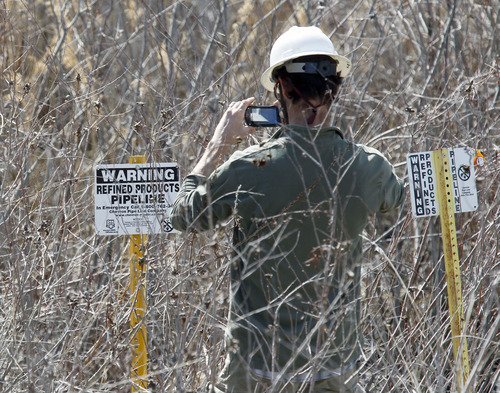
Chevron spokesman Greg Hardy said the leak — from a 168-mile pipeline that runs near the eastern shore of the Great Salt Lake from the Salt Lake City area to Idaho — was believed to have begun about 2:30 p.m., Monday, but was not confirmed until later in the day.
"We immediately shut the pipeline down [at valves placed along its length] and sent folks up to confirm the leak," Hardy said. "We then mobilized cleanup crews and implemented emergency procedures, including dispatching specially trained employees and contractors and their equipment."
The two 2010 leaks spilled 54,600 gallons of crude oil near Red Butte Garden in Salt Lake City's eastern foothills, and cost the company an estimated $43 million in cleanup costs, fines and other spill-related expenses. Monitoring is expected for years to come.
Lynn de Freitas, executive director of the Friends of the Great Salt Lake, said the latest spill raises broader questions about the cumulative impacts of all the pipelines snaking through Utah — not just this one, but all the others, including the 250-mile one that carries crude between Wyoming and the refineries on the lake's edge and another along the south edge of the Great Salt Lake that transports fuel to Las Vegas.
"It's part of a tapestry of habitats, and all of the habitats matter because they fill the needs of the wildlife and the birds that use it," she said.
"When is the next big one going to occur?"
Twitter: @judyfutah
Twitter: @remims
Tribune reporters Brett Prettyman and Michael McFall contributed to this story. What's next?
Chevron has 30 days to provide federal pipeline regulators with a report on what happened. Meanwhile, a variety of local, state and federal agencies will be monitoring the cleanup, any effects on water and wildlife and possible enforcement action, including fines that take into account the two 2010 spills. In light of the north marina's closure, Utah State Parks hopes to open the south marina by Wednesday.