




This is an archived article that was published on sltrib.com in 2013, and information in the article may be outdated. It is provided only for personal research purposes and may not be reprinted.
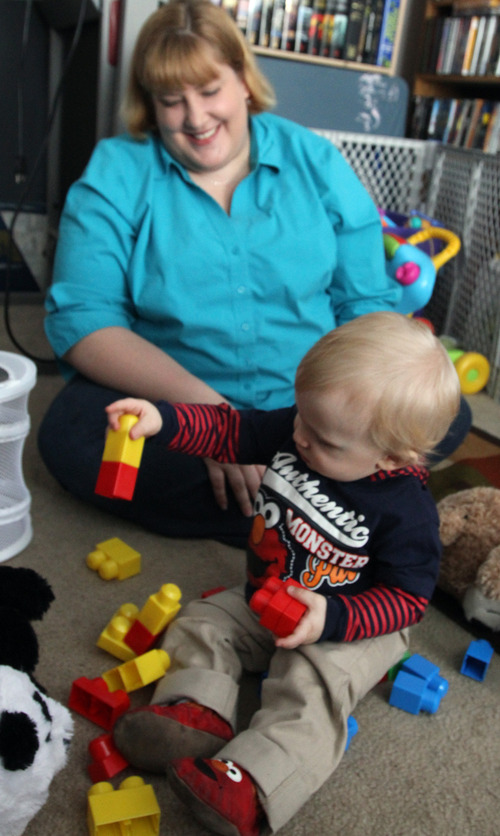
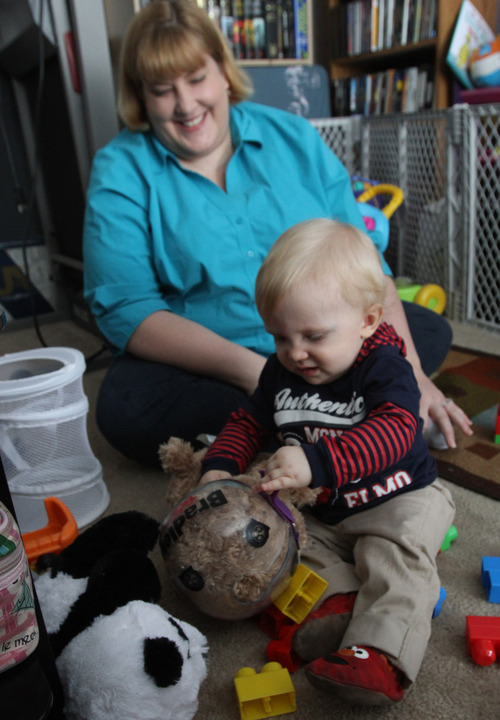
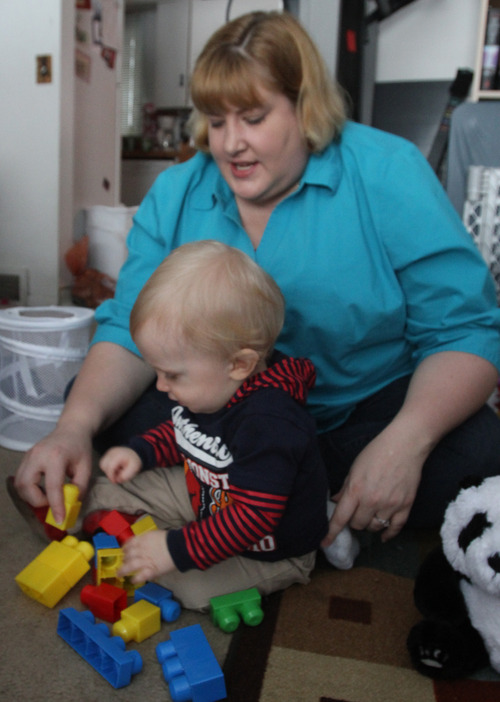
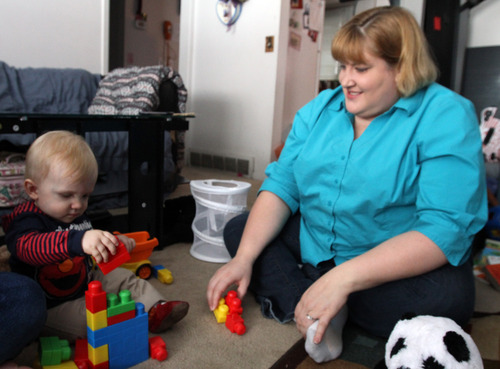
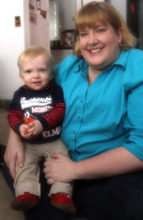
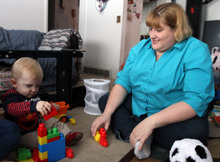
Jacy Morgan-Barnum heeded recommendations for avoiding Sudden Infant Death Syndrome (SIDS) and put her baby boy, Bradley, to sleep on his back.
As a result, like a growing number of infants, he developed a flattened head, or plagiocephaly. The fix prescribed by Bradley's doctor — a specially-tailored helmet to coax his soft skull back into symmetry — worked, but wasn't covered by the family's health insurance plan.
So Morgan-Barnum, taking advantage of a little known benefit of the Affordable Care Act, is fighting back.
New rules in the health law allow consumers to seek a second opinion on care denied or delayed by their insurance plan. If appeals to their insurer fail, they can request an independent review of their coverage denial.
The reviews are meant to ensure coverage decisions are based on medical need, not just financial considerations, said Deborah Reidy Kelch, a researcher at the California HealthCare Foundation. "People want some confidence that medical professionals have looked at their case and given it a fair, unbiased review."
Only a fraction of the thousands of Utah consumers who file complaints with the state Department of Insurance seek reviews. But those who do have good odds of prevailing.
Regulators commissioned 10 reviews in 2011 and 40 in 2012, finding in favor of the patient in 40 percent and 32 percent of the cases in those years.
"It's a good process for cases where there's some gray area," said assistant insurance commissioner Tanji Northrup. "When we investigate a complaint, all we can do is see if the insurer processed the claim according to its policy. But if a doctor is arguing something is medically necessary, that's where the appeals process can help."
Measuring their success nationally, however, is complicated by differences in how states handle and enforce the reviews.
"What's working and what's not working? Are there enough safeguards in place? Do people feel it's truly an independent process? These are important questions," said Kelch. " I don't know if we really know that yet."
In Utah's federally-approved process, the insurance department picks the reviewers, companies that hire medical experts solely for that purpose. They must be accredited by a nationally recognized accrediting agency and adhere to policies protecting patient privacy and impartiality.
A reviewer's decision is final and binding.
—
Taking the doctor's advice • Morgan-Barnum suspects consumers don't understand their rights.
"The only reason I knew to file a complaint was because someone on a plagiocephaly chat board recommended it," she said.
The Ogden school teacher and mother of two hadn't heard of "flat head syndrome" either, until her son was diagnosed with it. So if she had a choice of insurance plans — her Altius plan was picked by her employer — plagiocephaly wouldn't have factored into the purchase.
As she later learned, page five of her medical benefits brochure explicitly excludes coverage for helmet therapy for "benign" plagiocephaly.
"Treatment of this condition is primarily cosmetic in nature," Altius explained in a letter to the insurance department. The policy covers helmets for deformities resulting from disorders such as craniosynostosis, a premature closing of sutures in the skull, but only with prior authorization, the letter said.
Bradley's doctor, Mindy Boehm, concedes only the most severe cases of plagiocephaly put children at risk for jaw pain, migraines, chronic ear infections, impaired speech and psychological problems.
"It is cosmetic. I won't deny that," she said. "But infants acquire this because of a safety precaution we're telling them to observe."
Repositioning and physical therapy didn't work for Bradley. And waiting for his head to round out on its own risked missing the window for reshaping it, said Boehm. "By age 2 if a child's head is still skewed, it's going to stay skewed."
Morgan-Barnum's review is still pending, but she didn't wait, paying for a $3,000 Fit-Well helmet herself. The helmets are custom-molded by Food and Drug Administration-certified fabricators.
"We put our trust and faith in Dr. Boehm to make medical decisions that are in the best interests for our child's health," she said, arguing insurers should respect doctors' advice, too. "Insurance companies need to be held accountable for what doctors say is medically necessary. People shouldn't have to fight to get their medical treatments covered."
—
An 'unsung benefit' • Chris Hunsaker, general manager of the Fit-Well orthotic center in Salt Lake City, said some patients forgo the helmet when they realize their insurance won't cover it. More insurers cover it today, though, than "when we started doing this 14 years ago," he said.
And that's one of the unsung benefits of independent review, said Kelch, who studied California's decade-old review process.
Nearly 12,000 Californians sought reviews between 2001 and 2010. More than half of the cases involved orthopedics, neurology, mental health or cancer.
"Consumers who were denied tended to be unhappy and distrustful of the process. Those who won were satisfied," Kelch said. "At the end of the day, we want what we want and what providers say we need."
The reviews exposed wide variations in insurer policies on new medical technologies and treatments, such as gastric bypass surgeries, she said. This became a red flag for California's Managed Care Department, which gathered medical consensus on the merits of the surgery, taking cost and health risks into consideration.
The department shared its conclusions with providers, resulting in fewer insurance denials and appeals, she said. "That feels to me like a pretty positive outcome."
Twitter: @kirstendstewart —
How to appeal
For information about filing complaint about an insurer's denial for medical care , visit: https://insurance.utah.gov/health/review.php. —
Flat head syndrome
The U.S. government's "Back to Sleep" campaign, launched in 1994, has reduced rates of Sudden Infant Death Syndrome, but has coincided with an increase of children developing misshaped, or flattened heads.
Some cases are resolved by giving babies "tummy" time during the day, but others require cranial remolding helmets. Placid babies are more at risk.