






This is an archived article that was published on sltrib.com in 2012, and information in the article may be outdated. It is provided only for personal research purposes and may not be reprinted.
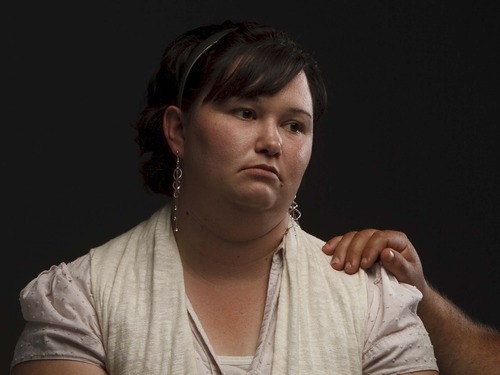
The Army that Kelly Alvesteffer Smith joined a month after graduating from Wyoming's Green River High School in 2001 taught her all about battle buddies.
She knew to always stick with a friend, especially when off a military base at night.
But nothing in her training prepared her for a reality that she and thousands of other servicemen and women face: sexual assault and rape at the hands of fellow soldiers, airmen, sailors and Marines.
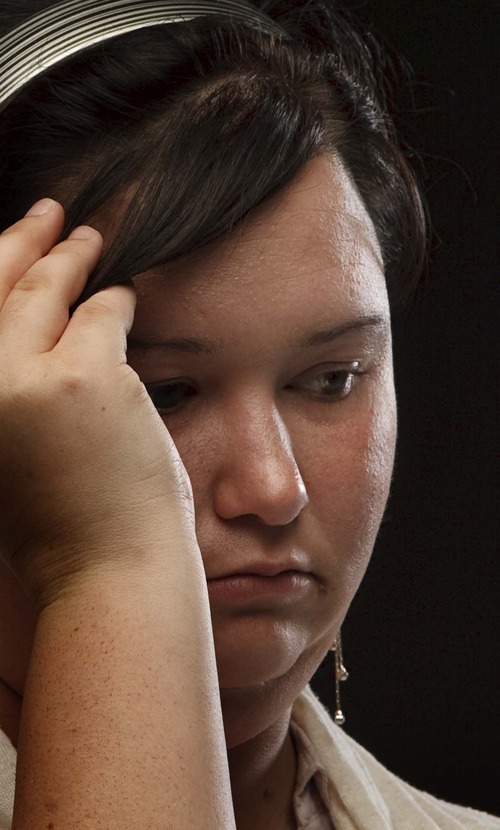
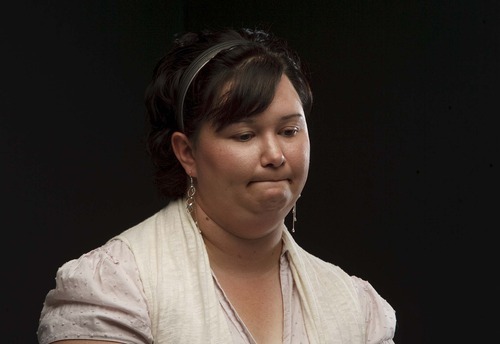
"They were trying to protect you from civilians when, it turned out, they weren't protecting you from the military," said Smith, now 29 and one of 19 plaintiffs in a federal lawsuit filed Friday in San Francisco.
Smith has lived in Utah off and on during the past decade, and moved to Texas in August. A second plaintiff and former soldier, Sascha Garner, also is from Utah.
The lawsuit brought by 14 women and five men who are current and former members of the Army and Air Force alleges that top military brass deprived them of their constitutional rights to due process, speech and equal protection.
They claim that in spite of promising reform for two decades, the military continues to foster a culture of sexual harassment and doesn't seriously investigate or punish sexual predators.
Defense Secretary Leon Panetta, his two predecessors and the secretaries of the Army and Air Force are named as defendants.
"The pattern is the same in all of them: The victim is blamed, ostracized, retaliated against. Rape kits are lost, evidence is lost, there is no court martial," attorney Susan Burke said in an interview.
—
'An epidemic that cannot be tolerated' • Burke, a Washington D.C. attorney, has three other lawsuits pending against Pentagon leaders in various courts across the country. Another is on appeal. She was a key figure in the documentary about the topic, "The Invisible War," which won the audience award at Utah's Sundance Film Festival in January.
Panetta has taken some good steps, but it's not enough, says Burke. "They have a huge imbedded population of sexual predators because they haven't caught them and put them in jail."
Burke was joined at a San Francisco press conference by two of the plaintiffs, including Kole Welsh of Washington state.
After five years in the Army, Welsh earned a scholarship to an ROTC training program at Fort Lewis. It was there in 2007 that he was sexually assaulted by his staff sergeant supervisor. A couple of weeks later, Welsh learned he had tested positive for HIV. He wasn't the only one.
"Young men that I knew were becoming infected with HIV because of this jerk," said Welsh, who was discharged shortly after contracting the virus. "He felt like he had a free pass, and he could do whatever the hell he wanted to."
Welsh said he complained to his superiors but his warnings went unheeded. It wasn't until two years later that the staff sergeant was sent to prison by a civilian court.
"Other victims I've met are so ashamed and devastated by the fact that they have been given HIV; they remain in the shadows," Welsh said. "The treatment of rape victims in the military is so humiliating, so stigmatizing, many would rather die (than come forward)."
Rep. Jackie Speier, D-San Francisco, was also at the press conference. She is sponsoring legislation that would take decisions on whether to prosecute away from the military's chain of command and give it to an impartial office.
"The military is becoming an institution that basically protects sexual predators," Speier said later. "The only answer is more prosecutions and more convictions."
Next week, she will be part of a Congressional visit to Lackland Air Force Base, site of the most recent scandal.
"You cannot continue to have 19,000 victims every year," said Speier. "This is an epidemic that cannot be tolerated."
—
'A great need' • The Department of Defense said it received reports of 3,393 victims of sexual assault in fiscal 2011, but a DoD survey the year before indicated there may be as many as 19,000 assaults and rapes each year.
Factoring in the unreported assaults, only 6 percent of perpetrators ever spend a day in jail, the DoD sexual assault report for 2011 said.
Breeze Hannaford, a therapist who coordinates the military sexual assault (MST) program at Salt Lake City's Veterans Affairs hospital, says many victims don't seek treatment for years after struggling with post-traumatic stress syndrome, depression or other issues.
But lately, the numbers are soaring. In fiscal 2011, 450 male and 484 female veterans were receiving care related to MST in the Salt Lake VA's region, which includes most of Utah and parts of eastern Nevada and southeast Idaho. "The numbers are dramatically increased since then," Hannaford says.
Group therapy often works well for such victims, and the VA has added more groups. Even so, the men's group, two women's groups and one co-ed group cannot keep up with demand, she says.
"We have a great need and not quite enough staff to do it."
Garner, according to the lawsuit, served with a U.S. Army Reserves unit in Ogden from January 2002 to July 2010. It alleges her commanders and peers harassed and retaliated against her after she reported being raped by a soldier from another platoon. The assault occurred while she was intoxicated and passed out in her bed in Afghanistan in 2009.
Her attacker "was charged only with adultery, indecent acts and lying on an official form," the suit said. "The military did nothing other than reduce the rapist's rank and impose a fine. The rapist was never incarcerated or discharged from the service."
Garner could not be reached for comment on Friday. The suit said she was stripped of her eligibility for promotion and threatened with punishment for drinking, even though no one else who was drinking was charged.
During the criminal investigation, she had to live in a tent separated from her attacker by one other tent, the suit said, and was forced to attend events and training exercises with him.
—
Hoping for justice • Smith says her rapist, who was then 55, was never disciplined and was allowed to retire with full benefits.
She was 17 when she enlisted in the Army Reserves on a delayed entry basis. She would drive to Fort Douglas in Salt Lake City to drill with her unit, and graduated from basic training the week terrorists struck the United States on Sept. 11, 2001.
Smith trained as a Korean linguist in Monterey, Calif., but her superiors sent her to Fort Lewis in Washington in the winter of 2003 for a medical board to determine whether she could stay in the Army. Stress fractures she suffered in basic training and a diagnosis of bi-polar disorder had superiors concerned about her future.
After five or six days of hospital evaluation, she was sent to the medical hold company, where soldiers await medical board decisions on their cases.
Her first night in the barracks, after an evening of camaraderie with 15 or so other soldiers, she awoke to find a man raping her.
She screamed, and two soldiers at the charge-of-quarters desk saw a man fleeing her room.
The assailant — a 55-year-old soldier who had acted grandfatherly to Smith the night before — signed a written confession, Smith said she was told by police.
Nonetheless, Smith said, he was never punished.
Her commander told her the Army would have to prosecute her for some unspecified crime if it prosecuted her rapist.
"They said they didn't want to ruin a career based on something like that," Smith said. "You don't expect that to happen to you when you're among people whose job is to protect."
Back in the hospital for psychological treatment after the attack, Smith was forced to attend group therapy with her attacker, she said.
Within months, Smith was honorably discharged and her life since has been a struggle. Suffering from PTSD and depression, Smith has moved often. She has had 38 jobs in 11 years.
Married now to an old flame, Randy Smith, she hopes they'll have better luck in Texas than they had in Utah. They were evicted from the last motel where they stayed because they didn't have money to pay.
The lawsuit may finally bring a measure of justice, Smith said.
"I hope that they change that man's discharge to dishonorable," she said Friday, "and make him pay back every benefit he received."
Reporter Gary Peterson of the Bay Area News Group contributed to this report.