






This is an archived article that was published on sltrib.com in 2012, and information in the article may be outdated. It is provided only for personal research purposes and may not be reprinted.
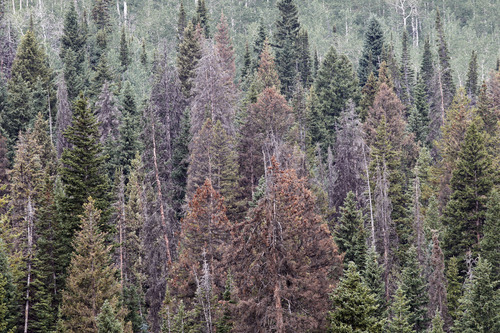
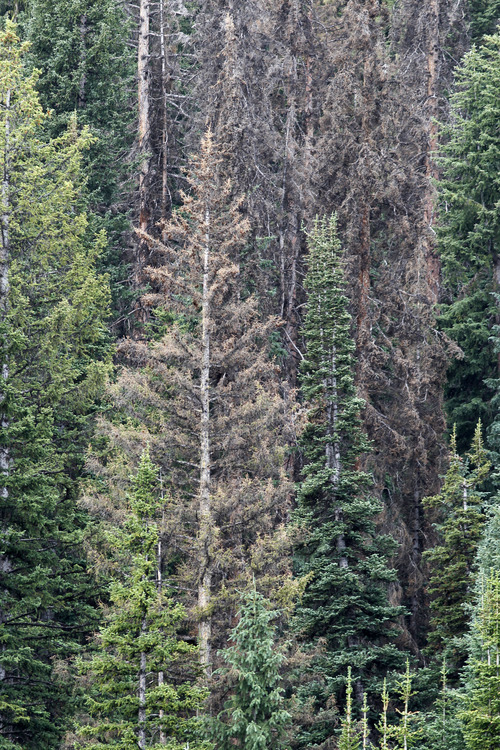
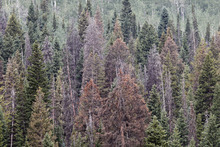
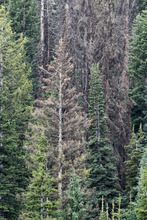
Kamas • As vast as Utah's wildfire season has been already, there are legions of dead, red trees in the Uinta Mountains quietly waiting their turn to burn.
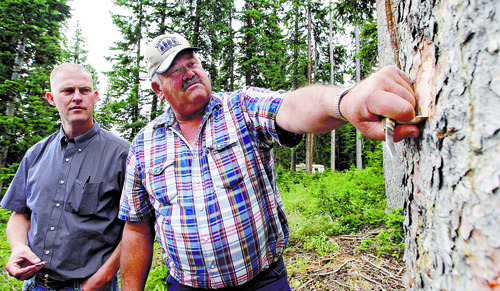
It didn't have to be this way, according to Kamas-based logger and lumber mill owner John Blazzard. He believes a stronger commitment to forest management would have slowed the spruce beetles now killing the range's Engelmann spruce and the mountain pine beetles that took out lodgepole and ponderosa pine before them.
"It's frustrating," Blazzard said, "to see our crop — we call it a crop because it's a renewable resource — just going to waste."
Others, including environmentalists who appeal and sue to block the timber sales Blazzard considers vital, believe fire could do the mountains some good — and that logging cannot stop the wave of native bugs anyway.
Nearly 400,000 acres of Utah have burned so far this year. Many of the larger blazes have been in brush and grasslands, but the 48,000-acre Seeley Fire in Carbon County is one critics believe more intensive management could have prevented.
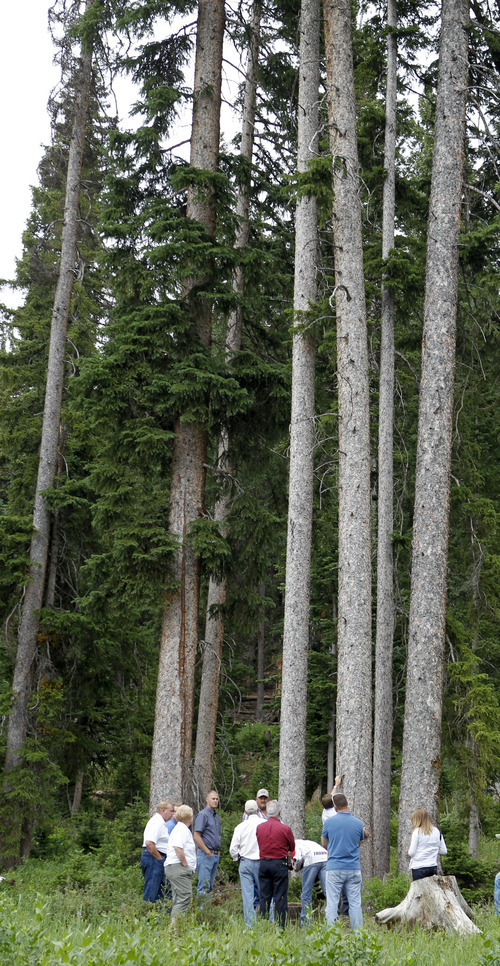
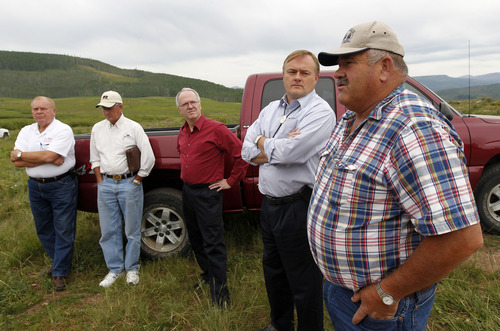
Stopping Friday by a girls' camp surrounded by dead spruce, Blazzard told a tour group organized by the Utah Farm Bureau that the fire danger is immense and frightening. He fears the flames could sterilize the earth and forestall regeneration.
Blazzard has a front-row seat for the 15-year-long beetle epidemic that has devoured 2 million acres in Utah and 40 million acres throughout the West. Government entomologists say climate change has played a role, both by thwarting hard freezes that kill beetles and extending growing seasons to enable the bugs to mature faster.
But the U.S. Forest Service also acknowledges that a century of fire suppression left many areas overstocked, leaving densely packed trees in competition for scarce moisture and susceptible to attack. That's especially true in a drought year like this.
There also is an economic reality. Kamas has three small mills, compared to the eight Blazzard remembers from his youth. While he wishes the Forest Service would sell more timber, he said it would be foolhardy for others to open mills to handle dead and threatened timber.
"Nobody in his right mind is going to build a sawmill," Blazzard said.
Across the West sawmills have closed. Forest Service critics point to an evolution toward recreation economies and preservation, though cheap Canadian timber also dented the market in recent decades. In southern and central Utah, foresters say a shift away from timber supports in coal mines doomed many mills, making them unavailable for enlistment in the current battle against beetles.
Blazzard said he could easily do more — and employ more — if the Forest Service would sell more. His mill, with about 20 workers, gets about 1.5 million board-feet a year, half of what it cut 15 years ago.
"We're surviving by downsizing," he said.
The Forest Service also is dealing with tough times in the face of the epidemic, with only half the staff and funding to address a fraction of the problem around the West.
"We're doing the best job we can with the resources we have," said Jeff Schramm, the Uinta National Forest's district ranger for the area that Blazzard logs.
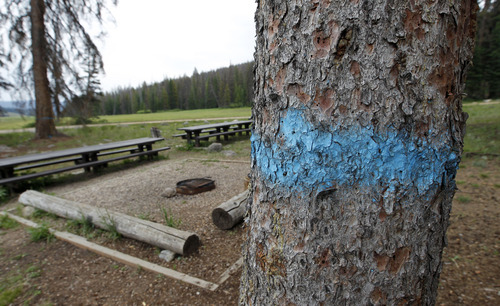
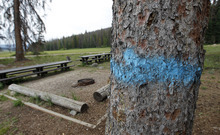
Priorities include campgrounds such as at Wolf Creek Pass, where the agency has marked trees for removal both for pest control and to eliminate falling hazards.
"We try to maximize our return," he said, "by managing all of our resources at once."
The Utah Environmental Congress frequently protests Utah timber sales, and sometimes stops them. Program Director Kevin Mueller said the common perception — that fire suppression and preservation set up forests for "catastrophic fire" — is simplistic.
"Up high," he said, "fire suppression has not affected the ecology of the forest."
His point is that high, relatively moist Engelmann spruce forests burn in nature only every 200 to 300 years. America's fire-suppression efforts, he said, haven't had time to mess up the high country.
What's more, Mueller added, fires that open areas for regrowth could be the best remedy for shutting down the beetles and renewing the forest. He could support logging to create fire-safe zones around campgrounds or the Mirror Lake Highway, but not as an ecological fix.
"Those are pretty wild, roadless mountains," he said, "and they should remain that way."
But the Uintas also have large stands of dead pines. Utah State University forest science professor Michael Jenkins said timber sales in the past created a more vigorous patchwork of age classes, with young trees better able to fend off beetles. Across the region, he said, fire suppression is a real factor.
"Many of our forests are over-mature because of the lack of fire in the system for the last 100 years, so we have many more older trees, higher fuel loads, increased mortality."
More thinning, he said, could help prevent big infernos.
Fire threat from beetle-killed trees is situational. New research suggests red needles clinging to trees — for the first several years after death — greatly increase the chance of fast-moving "crown" fires moving along the treetops, Jenkins said. After the needles fall, though, there's less fuel and potentially less danger than in a living forest.
Blazzard and his wife, Jackie, showed a green area in the Soapstone Basin that they logged during the past decade or so — half a century after Blazzard's dad cut in the same place. Blazzard envied his father, who axed more of the large trees that might be old and susceptible because he wasn't constrained by today's restrictions.
"He took away the food for the beetles," he said.
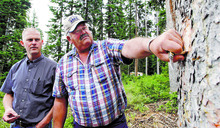
One large spruce rising next to a stump showed signs of beetle infestation. Loggers would have taken it down before that happened, but forest managers hadn't marked it for removal.
"They should've been more aggressive," Jackie Blazzard said.
Still, the area boasts more live trees than the surrounding forest and has young trees springing up.
Schramm, the forest ranger, said his district will offer another 300-acre sale in the Soapstone area next year to remove beetle-killed trees.
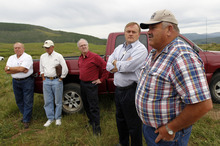
The Farm Bureau organized Friday's tour in part to support rural economies, including those that rely on Utah's remaining sawmills. Fire is one way to regenerate forests, said John Keener, adviser to the bureau's forestry committee. But it doesn't pay bills.
"Those that believe in management of the land," Keener said, "put a pretty healthy value on using the product that the forest produces."
Michael Mower, Gov. Gary Herbert's deputy chief of staff, said the administration agrees that saving small-town mills is a healthy prescription for forests and towns.
The governor is working with the congressional delegation in seeking more timber for mills. —
Online Read the series
O This story continues The Salt Lake Tribune's coverage of "Our Dying Forests." For previous articles, photos and a video in the award-winning series, go to sltrib.com/topics/dyingforests