


This is an archived article that was published on sltrib.com in 2012, and information in the article may be outdated. It is provided only for personal research purposes and may not be reprinted.
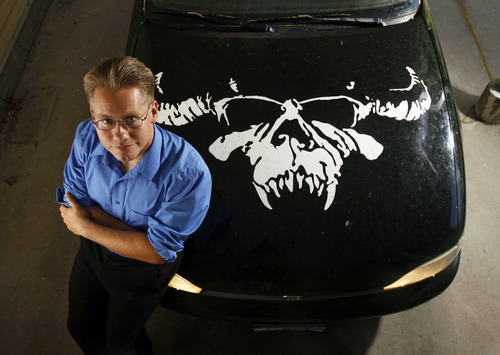
William Holloway is just the kind of guy expected to benefit from the Affordable Care Act: single, low-income and uninsured.
But the 28-year-old veteran of Iraq, who is still paying off doctor's bills from 2010 when he broke a jaw in a martial-arts fight, says he has no use for federal health care reform.
"Helping people is great, but you have to understand the limits of government power," says Holloway, a philosophy major at Utah State University who had anticipated the Supreme Court would strike down the law.
He is most troubled by the mandate that most Americans buy health insurance or face penalties, concerned that the federal government would require states and individuals to engage in commerce.
On Thursday, the Supreme Court upheld the mandate, characterizing it instead as a tax.
But the status of one provision expected to provide the greatest benefit to uninsured veterans — a broad expansion of Medicaid eligibility — is less clear.
—
Who are the uninsured vets? • A recent report by the Urban Institute highlighted the issue that not all veterans qualify for or use Veterans Affairs care.
Based on census data, it found one in 10 American veterans under age 65 have no medical insurance and do not use VA health care.
An estimated 11.5 percent of Utah's vets are uninsured, it said, falling between Montana's highest rate, at 17.3 percent, and the lowest rate, 4.3 percent in Massachusetts.
Compared to insured veterans, uninsured vets typically are younger, have served more recently, are less likely to be married and are more likely to be unemployed, the Urban Institute report said.
Healthy, low-income single adults with no dependents generally slip through Medicaid's existing safety net, which catches low-income families with children, people with disabilities, uninsured women with breast or cervical cancer, and, for a few months after their arrival, refugees.
But the Affordable Care Acts calls on states to take new federal funding for Medicaid and use it to cover those making less than 138 percent of the federal poverty level.
That's now about $11,000 for a single person with no dependents.
The Urban Institute estimated the act's changes to Medicaid would provide insurance to nearly 50 percent of America's uninsured veterans.
But while the Supreme Court upheld the expansion, it said the federal government could only withhold new Medicaid funding — not withdraw existing levels of funding — from states that opt not to participate in the expansion.
That appears to give states more flexibility to decide whether to do so, and could mean access for low-income veterans will vary state by state.
The Affordable Care Act also provides subsidies for Americans who still earn too much to qualify for Medicaid but meet income guidelines and don't have access to affordable coverage at work.
The Urban Institute estimated another 40 percent of uninsured veterans could qualify for subsidized policies sold through states' online health insurance exchanges.
—
On his own • Holloway broke his jaw in November 2010 during a martial-arts sparring contest at USU, where he enrolled after leaving the active-duty U.S. Army in 2006.
He had served a tour in Iraq, working on communications systems.
It didn't occur to him to travel 90 miles to the Veterans Affairs hospital in Salt Lake City, where he wasn't sure he would receive care. Besides, the pain was bad and his mind was muddled by painkillers.
Holloway had been to the VA before for knee pain and made something of a vow to stay away because he felt he was displacing worse-off veterans.
The civilian hospital he went to instead, in northern Utah's Cache Valley, wired his jaw together and reduced his $4,000 bill to less than $1,000.
He paid that off. But he's still paying $100 a month on the $4,000 doctor's bill.
If Utah takes its share of new money — estimated at $4.1 billion to $4.7 billion for the state between 2012 and 2019, the Kaiser Foundation estimates — and expands Medicaid, Holloway will qualify.
A college student who doesn't make much money, he earned $6,000 in his best year, when he spent the summer working in a bakery.
If his income rises to as high as 400 percent of the federal poverty level, Holloway will still likely get a subsidy to pay for medical insurance.
—
VA still a route to care • Determining which veterans qualify for VA care can be complex, and veterans advocates say some eligible veterans are missing out.
Jill Atwood, spokeswoman for the Veterans Affairs George E. Wahlen Medical Center, suggests Holloway check into whether he could be using medical benefits he earned in the Army.
When vets don't use the VA, it doesn't help other vets, she says. It means Congress appropriates less money.
Low-income veterans given honorable discharges can qualify for VA health care; the threshold is $30,460 a year for a single veteran with no dependents.
A veteran with five dependents gets health care if he or she makes less than $45,000.
The VA provides five years of cost-free health care to Iraq and Afghanistan veterans for any injury or illness associated with their service.
Beyond that, veterans get VA medical care — with varying co-payment levels — if they were injured during their service or if an illness is judged to be service connected.
A veteran held as a prisoner of war or a Purple Heart Medal recipient is eligible. So is a veteran who receives a VA pension or disability benefits.
"It's a bummer when someone doesn't qualify," says Atwood. But she notes the poor economy is having an effect. "We are seeing more veterans who do qualify." —
Where are our uninsured veterans?
An Urban Institute report used data from the 2010 American Community Survey. It said:
The states with the highest number of uninsured veterans are Texas with 130,000; California with 108,000; and Florida with 106,000.
The states with highest rates of uninsured veterans are Montana at 17.3 percent; Idaho at 14.8 percent; Oregon at 14.3 percent, and Louisiana at 14.1 percent.
An estimated 11.5 percent of Utah's vets are uninsured.