



This is an archived article that was published on sltrib.com in 2012, and information in the article may be outdated. It is provided only for personal research purposes and may not be reprinted.
Since the recession hit in 2008, Utah's Department of Workforce Services (DWS) has been asked to administer federal aid programs to a growing number of people in need — and do it with fewer workers and a smaller budget.
At the same time, the agency initiated modernization strategies under the leadership of Kristen Cox, who became executive director in March 2007.
While Cox has received national recognition for her leadership, DWS has come under recent scrutiny for an uptick in errors and an undercurrent of employee unrest.
"If there are problems at DWS, we need to know what they are so we can fix them," Rep. Jim Bird, R-West Jordan, said of the audit he requested after receiving scores of emails from former and current DWS employees, most preferring to remain anonymous. Their concerns began to hit his inbox in January, and Bird, who chairs the Economic Development and Workforce Services Interim Committee, was pleased that legislative leadership approved his audit request earlier this week.
Since 2008, public assistance cases have shot up 50 percent — from 121,712 to a projected 183,600 by the end of fiscal year 2012.
During that same period, full-time eligibility caseworkers shrank from 1,094 to 808. Operational costs decreased from $80 million to a projected $59.4 million by the fiscal year's end, which was achieved through attrition, reorganization and technology, said DWS spokesman Curt Stewart.
But a recent Salt Lake Tribune government records request yielded a stack of emails from current and former DWS workers, detailing their perceptions of an organization in stress.
"I am writing this to let you know that we are being bullied, coerced, threatened, degraded and misled by upper management," a DWS eligibility specialist wrote in an anonymous February email to Bird.
Other messages portrayed a pressure-cooker environment where workers who complained faced retribution in one form or another.
"Workers are afraid because it seems the only support we get when we are struggling is to be told to improve or we will lose our jobs," another eligibility staffer wrote.
—
Worker woes affecting clients? • While employee morale seems to have taken a dive, some clients say customer service is also waning, to the detriment of those who need it most.
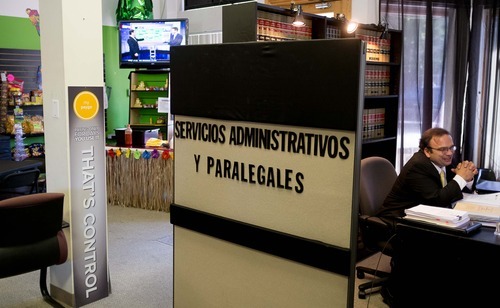
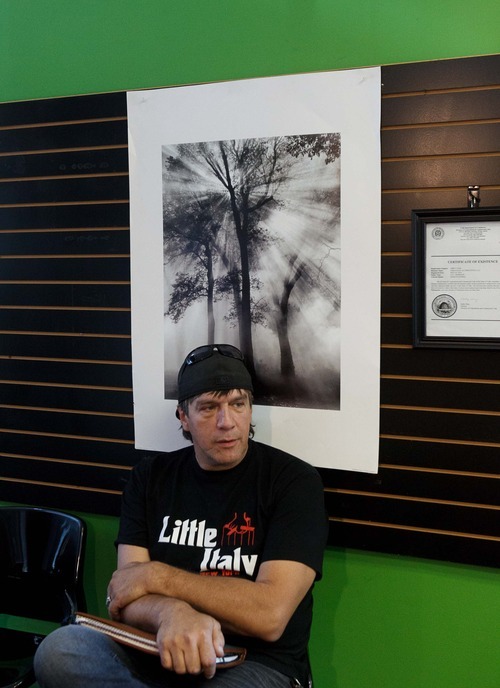
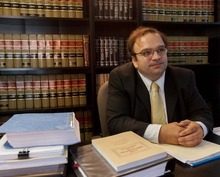
Steven Roe, a Midvale paralegal, pointed to a rise in agency errors that resulted in some food stamp recipients — himself included — having to repay the money.
Last year, Roe received notice to reimburse DWS for $2,021 the agency said he received in food stamp overpayments between 2009 and 2011.
For years, the single father of two had battled bouts of homelessness, drug addiction and incarceration, but eventually found the motivation to change course and trained to become a paralegal. He also succeeded in having his felonies expunged and obtained a full pardon from the state Pardons and Parole board.
In 2010, Roe launched his Midvale-based business, Paralegal Alternatives LLC, to help low-income clients decode legal jargon and fill out government and court-related forms. Roe said he earned about $9,000 in 2011, $8,000 in 2010 and far less in 2009.
Roe challenged DWS' handling of his case and attempted to work through its administrative appeals system, eventually emerging with a partial win — his debt was trimmed to $720.
While fighting his case, Roe sought government records regarding the agency's overpayment errors, and he discovered the bungled food stamp cases numbered 765 in 2009, 987 in 2010 and 1,198 in 2011 — or just over 1 percent of the rising number of food stamp cases the agency administered during that time.
Between January 2009 and December 2011, unemployment insurance overpayments occurred in 66,916 cases; an undetermined number were caused by agency error.
Roe said he has clients who are barely scraping by but who also were victims of agency overpayments.
"When you have a demand for quantity, you're going to miss quality," Roe said. "And then you have agency errors which the struggling poor have to pay back."
Roe, who teaches life-skills classes to inmates at the Salt Lake County jail and also volunteers in the Homeless Court held at Salt Lake City's Wiegand Center, contacted the U.S. Department of Agriculture with his concerns.
In a March 29 reply, regional Director Cheryl Kennedy told Roe that Utah's agency is operating under a corrective action plan to address error rates that result in underpaid benefits or their improper suspension or termination.
However, Utah's pursuit of overpayment reimbursement — in cases where households obtained more than they were entitled to receive — is in line with congressional intent, Kennedy said.
DWS spokesman Stewart said the corrective action plan deals with denial and closure errors, not overpayments. Supervisors now double-check cases before they are finalized, Stewart added, and further training is being provided to improve performance.
—
Cox defends her work • In legislative committee sessions this spring, Cox has defended her agency's track record: DWS handles eligibility for more than 150 programs, she said.
Cox, who receives a total annual compensation package of $187,616, said she has tried to maximize output with scarce resources.
"We focused on cost and quality over the past few years because those are essential during a recession," Cox told legislators, touting a decrease in cost per case from $57.66 to $35. "Our target this upcoming year is $31.86."
While the federal government allows up to 30 days for case determinations, Cox said her target is 12 (the agency now averages about 14).
She acknowledged that federal and state guidelines are not crystal clear when it comes to calculating eligibility.
"There are a lot of different rules around income," Stewart said. "We're working with the Department of Health to have a more consistent method across the system."
Cox also told lawmakers that the agency's work environment functions as a democracy, including an online "Ask Kristen" tool by which employees can give input.
That feature is supposed to be anonymous, but Rep. Bird told Cox during a May committee session that emails he'd received say "it's anything but." He also said he would use subpoena power to gather testimony from employees who otherwise would keep quiet out of fear.
"We're open to the audit and sharing this information," Cox responded. "Likewise, I hope that you would be open to understanding that a couple folks don't necessarily represent the agency as a whole."
Sen. Karen Morgan, D-Cottonwood Heights, said that during the past year she has received many calls and emails complaining about difficulties in accessing DWS services.
Between July and December 2011, the DWS call center averaged more than 100,000 calls each month, with wait times ranging from 13 to almost 20 minutes. About one-third dropped off before the calls were answered.
"It's a big issue," Morgan said.
Sen. Karen Mayne, D-West Valley City, compiled a list of client service questions to be considered during the upcoming DWS audit.
"[DWS] is the place to go for help," Mayne said. "Many who work there try to do the very best they can and our job is to give them the tools and the morale to do [that]."
Tribune staff writer Robert Gehrke contributed to this story.
cmckitrick@sltrib.comTwitter: @catmck —
Caseloads up, staff and budget down
The recent recession caused a flood of need while resources grew scarcer:
Public assistance cases • 121,712 in 2008; up to 183,600 in 2012
Food stamp cases • 53,907 in 2008; up to 113,946 in 2012
Eligibility workers • 1,094 in 2008; down to 808 in 2012
Operational costs • $80 million in 2008; down to $59.4 million in 2012
Source • Utah Department of Workforce Services