




This is an archived article that was published on sltrib.com in 2012, and information in the article may be outdated. It is provided only for personal research purposes and may not be reprinted.
Editor's Note: This story originally appeared in The Salt Lake Tribune on September 25, 2011.
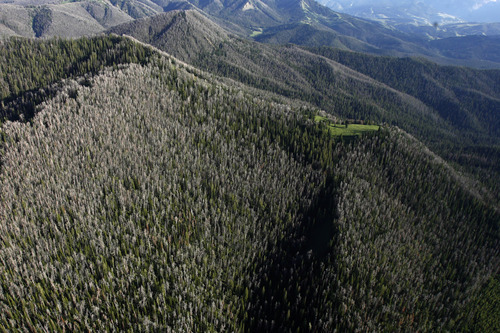
Jackson Hole, Wyo. • The view from the chairlift struck David Gonzales as odd, all those flat-topped, skeletal giants rising pale gray below him while the thinner conical evergreens stood in vibrant color on the slope.
He remarked on the mysterious bushy trees' apparent collapse at this ski and summer resort, and the rock-climbing partner riding with him said it wasn't just here. The whitebark pine, Gonzales learned that day a couple of years ago, was in free fall everywhere around Yellowstone.
At home, the former journalist, photographer and ski bum started some biological research that led to a new calling and a burgeoning career in conservation. Gonzales decided that whatever he could do to save this "keystone species," he must do.
The tree's seeds feed the birds, squirrels and bears that bring the high country - "my home," he emphasized - to life.
"They're up here in the coldest places, the thinnest soils, the harshest winds," he said, "but they provide the best food. And they do it for thousands of years. And yet, they're being wiped out."
The whitebark has been under stress for decades, suffering from an invasive blister rust spore that attacks seedlings and cone-bearing limbs. It wasn't until the past decade, though, that a new attacker pushed the tree quickly toward oblivion.
Scientists say relatively warmer winters on these frigid 10,000-foot peaks have welcomed tree-killing pine beetles that previously stuck to lower forests. Some believe the whitebark, having evolved mostly without the beetle threat, has less ability to make the sappy goo that other pines use to kill beetles.
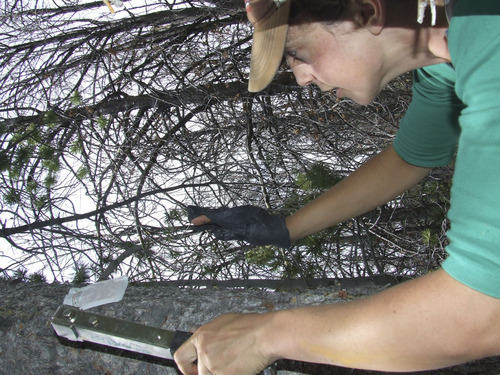
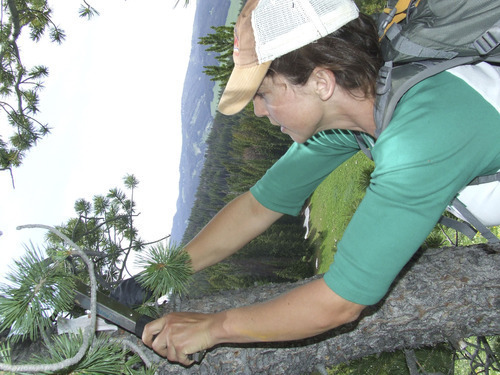
But there is a remedy to apply on whatever small percentage of the remote trees one can reach by hand. Pheromone patches, marketed as Verbenone, usually repel beetles if hung on the shady north side of a tree every summer, and that's how Gonzales has decided to spend his summers.
He founded a group called Tree Fight - a loosely organized troop using Facebook alerts to draw action-oriented environmentalists on field trips - with the goal of marching weekend volunteers into the mountains to apply the patches. He knows it's a bit like putting Band-Aids on select trees when the whole forest is bleeding, but it's better for the soul than giving up.
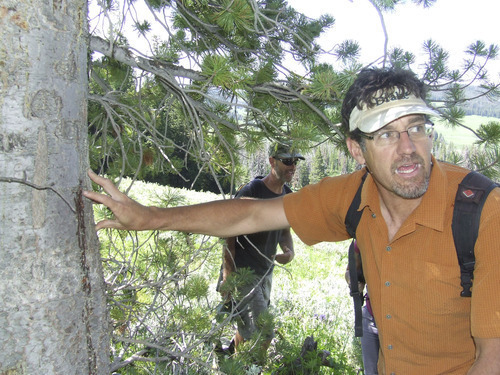
"If you can staple a pouch of pheromones on a tree that's lived for 1,000 years and that tree lives another year," he said during an early August volunteer hike, "that feels pretty good. When I come up here and I'm in these trees, it alleviates my helplessness."
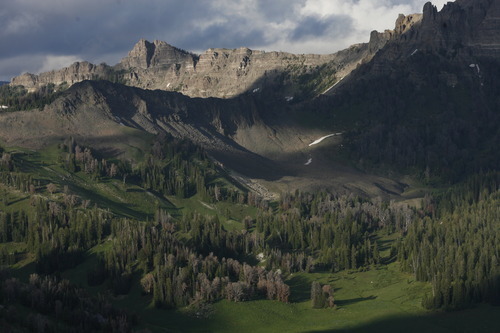
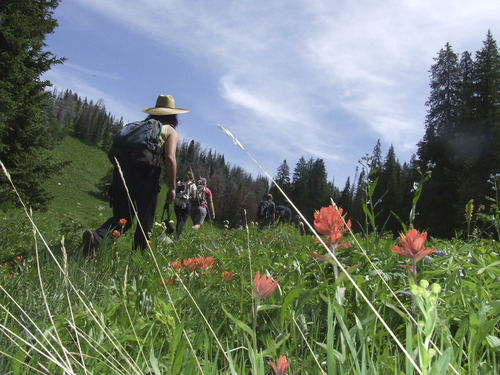
That Saturday morning Gonzales guided a new band of "Tree Fighters" (the name chosen in contrast to the ethereally sentimental "tree huggers"). They traversed alpine meadows above Togwotee Pass, the eastern portal to the Tetons and southern Yellowstone. The gray stalks all around testified to the beetles' work.
A cow-pie-size spread of grizzly scat, slick with berries, showed that the huge scavengers still rely on these forests. Gonzales said by fall the piles will teem with whitebark seeds. The volunteers were packing pepper spray for protection.
At the top, the group fanned out, slinging staple guns to affix their chemical weapons to the bark of the living.
"I feel like there would be a lot lacking if the whitebark were decimated," said Audrey Smith, a volunteer from the town of Jackson.
The loss would be personal for her, a frequent mountaineer and backcountry skier, because it would degrade the visual experience while also endangering her by removing an anchor against deadly snowslides.
The outing attracted more than locals. Steve Blanchard, of Melbourne, Australia, taking a motorcycle tour of the States, said he learned about it from a friend who lives nearby. He considered it a learning opportunity.
"If we can help slow things down," he said, "and generate some data for future projects, that's important."
The whitebark is different from other trees up here. It often grows with numerous stalks from a central shaft, the result of squirrels burying numerous cones in a single cache and sometimes forgetting them. Those caches are what bears sniff out and eat.
Atop, the tree fans an array of limbs upward rather than outward, almost resembling a leafy deciduous tree more than the pine that it is. The cones grow only on the very top, where Clark'snutcrackers pluck their seeds and inadvertently help transport them to new soils.
"I just find these trees very majestic," said Rebecca Fix, a volunteer who works for the Jackson Hole Wildlife Film Festival, "and David's passion is definitely contagious."
At one point, despite the group's combative moniker, Fix found herself actually hugging a tree. She gave it a pep talk: "You're pretty. Love you. Keep growing." Then, at a dead tree where Gonzales peeled back bark to reveal tunnels of beetles and larvae, she lectured the insects.
"You're just beetles and you don't know any better," she said. "Stop being so aggressive."
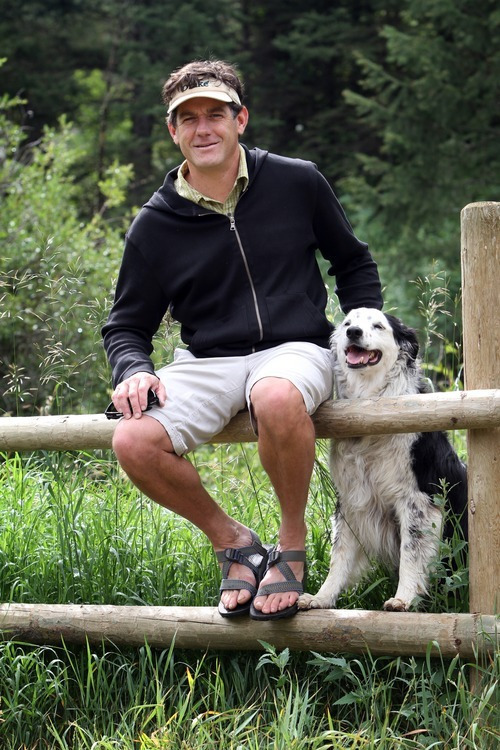
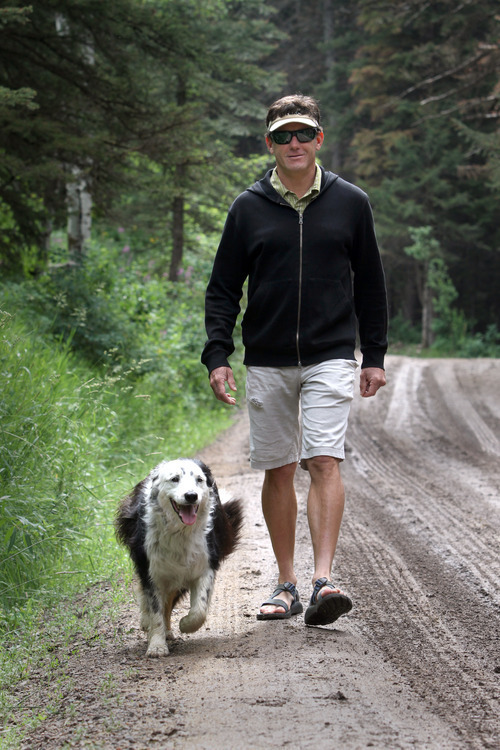
Gonzales has the look of so many outdoorsy men who have come to this valley: tall with the sinewy torso of one who scales cliffs and skis uphill.
He dug into his own pockets to fund his group's first season last year, putting $7,000 on credit cards to buy Verbenone, which ended up on 600 trees. In a sense, it's an outdoor-recreation expense the same as climbing gear or skis, but he's quick to protest that, unlike some who follow their passions to a resort town, he still has to work - photographing occasional weddings or editing commercial videos.
"I'm no 'trustafarian,' " he said.
This year, the Forest Service donated Verbenone and offered suggestions for places the agency wants cone-bearing trees to survive. It's a way for the feds to increase their reach.
The conservation work is becoming something of a job for Gonzales. By contracting with Jackson Hole Mountain Resort, he has started going back to where it began on that chairlift and taking tourists to the top to learn about the dying whitebark.
Those visitors pay $100 for the ecotourism experience of applying Verbenone, and his share helps him focus more time on the volunteer excursions instead of side jobs. More important, he said, tourists get to reach out and feel an organism that climate change is afflicting.
"When you bring people out here," he said, "you're involving them in the story in a way that you can't involve them with melting ice caps or bleaching corral reefs."
It's a connection he hopes will make a difference in how people use energy, the root of this forest's collapse, he believes. In the demise of an otherwise-invisible alpine forest, Gonzales thinks visitors might foresee what excessive carbon-dioxide emissions could do to all life.
"It's up to the American consumer to decide whether we want to choke to death on our own farts. That's embarrassing." Gonzales said. "It's up to us to decide we could live proportional lives and not flagrantly use so much more energy than we need."