






This is an archived article that was published on sltrib.com in 2012, and information in the article may be outdated. It is provided only for personal research purposes and may not be reprinted.
Greasy chips, sugary chocolates and saccharine sweets are speaking up.
But kids might not want to hear what they have to say: The snacks are telling them to make healthier choices.
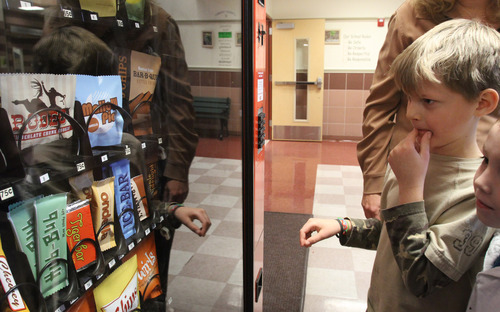
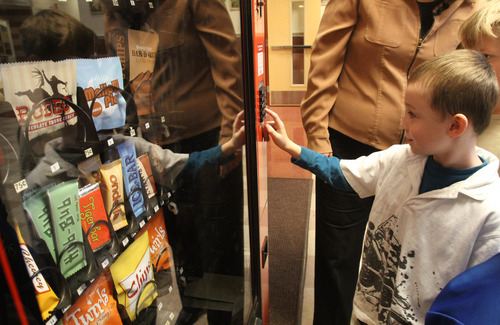
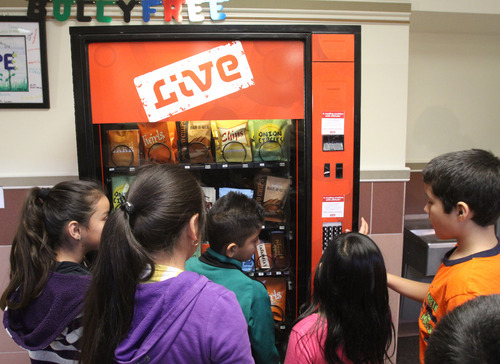
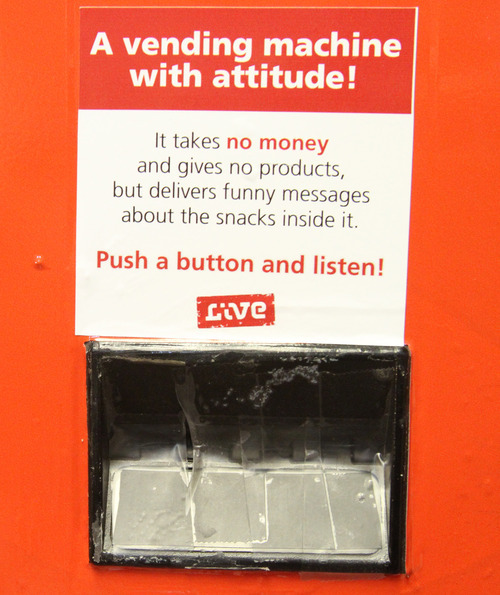
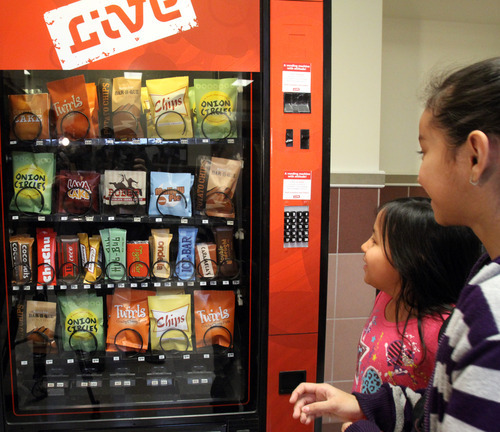
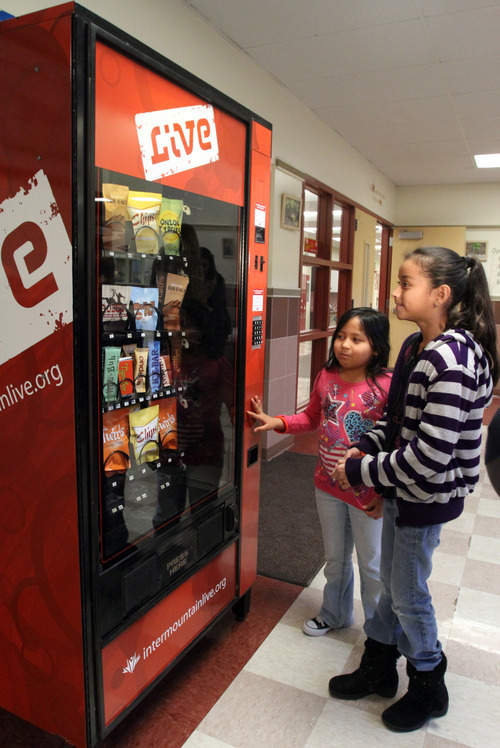
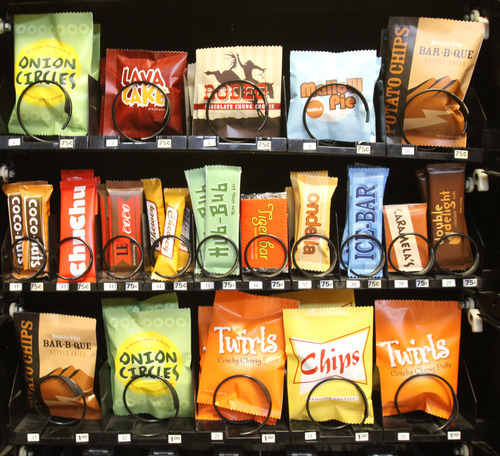
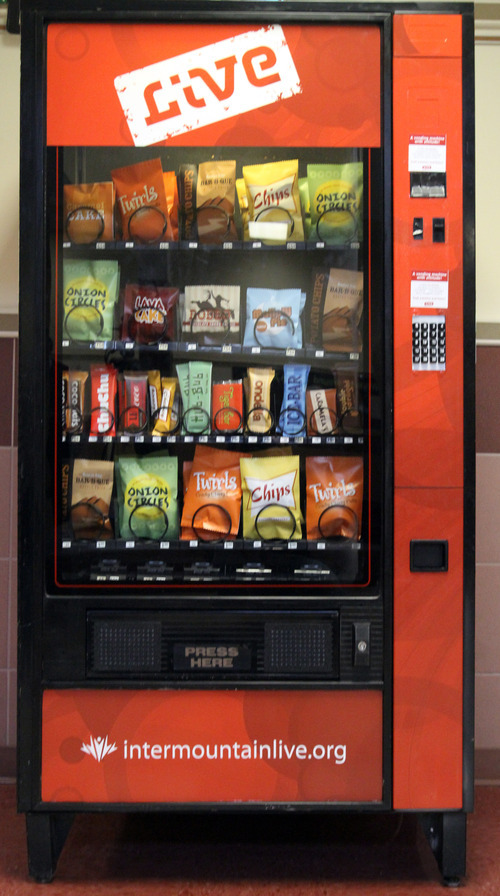
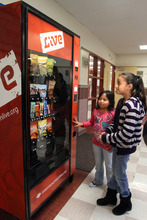
As part of its LiVe public service program, Intermountain Healthcare has installed a fake, talking vending machine at Rose Park Elementary School in Salt Lake City. The machine is filled with faux snacks and doesn't take money. But when students press its buttons, looking for gooey, crispy or chewy goodies, they instead get playful nuggets of wisdom.
"I'm a vending machine and can't move without someone's help," a cartoon-like voice says when a student chooses a Lava Cake. "Keep buying food like this and we'll have that in common."
The idea is to make kids think twice about eating junk food, but in a fun way, said Tamara Sheffield, Intermountain medical director for community health and prevention. Nutrition is a serious issue that children need to think about, she said, especially because about one of every four kids in Utah is overweight or obese.
And vending machines, of course, are something kids usually associate with junk food. Only 18.2 percent of Utah middle and high schools did not sell candy or fatty, salty snacks in vending machines in 2008 — the lowest percentage of 40 states surveyed, according to a report from the Centers for Disease Control and Prevention. Fifteen Utah school districts and one charter school did not allow vending machines in elementary schools, one district did not allow them in middle schools, and 32 charter schools had no vending machines as of April 2009, the most recent data available, according to the Utah State Office of Education.
The new imitation machine will likely travel to schools around the state, spending a few weeks at each.
"What we want to do is do things that actually get kids' attention," Sheffield said. "If they have fun with it, they're more likely to listen."
The bright orange machine definitely held kids' interest at Rose Park Elementary on Thursday. Students clustered around it, taking turns pushing buttons and giggling at the responses.
"Hey, it's me, your body," the machine said in a whiny voice, when a student pushed a button for a look-a-like candy bar called a Chewy. "We need to talk about our relationship. What did I ever do to you? Text me."
Or upon choosing Onion Circles, "Uh, never mind what these do to your body, think what they would do to your breath."
Angelo Huggins, 9, said when he first approached the vending machine, he didn't know it wasn't real. He said he almost kicked it to dislodge the treat before he realized it was phony and laughed instead.
"The first time I tried it, it was like really funny," Huggins said. So funny that he later took his brother, who is in kindergarten, to the machine to try it on him.
"I told him it's fake," Huggins said. "It just tells you what [the food] does, what it can do to your body."
Other kids were also fooled.
"I thought it was real candy," said Louie Sanchez, 7, adding that the machine's advice could help people "lose fat."
Marlen Diaz, 9, said she was a little startled when she first heard the machine talk.
"It kind of scared me because I didn't know it could talk because other machines don't talk," said Diaz, who was soon laughing at its messages.
Intermountain chose to send the machine to Rose Park partly because it already has a partnership with the school, which is connected to a community center with a health clinic run by Intermountain, said Daron Cowley, Intermountain spokesman. It's actually the second Utah school that's housed the machine. Intermountain tested it at Sandy's Peruvian Park Elementary in the fall, Cowley said, and Intermountain is now working on creating a second machine.
Ray Betancourt, community school manager at Rose Park Elementary, said the machine is consistent with the school's policies in terms of promoting health. Rose Park is already a Gold Medal School, meaning it's met certain Utah Department of Health criteria related to physical activity and nutrition.
"We're trying to find fun and creative ways to promote healthy habits and healthy behaviors," Betancourt said. "It helps them to at least stop and think."
Third-grader Mary Maestas said she thinks the fake machine could change the way some kids look at junk food. "I think it's really good, and it will help people be able to choose healthier choices and food because it can tell you what can happen to you if [you] choose unhealthy food." —
See the fake vending machine
P To see an online simulation of the fake vending machine now making the rounds at some Utah schools go to intermountainlive.org. Schools and businesses may also go to that site to request a chance to host the machine, which is part of Intermountain Healthcare's LiVE public service program encouraging kids to eat healthy and be active.