


This is an archived article that was published on sltrib.com in 2011, and information in the article may be outdated. It is provided only for personal research purposes and may not be reprinted.
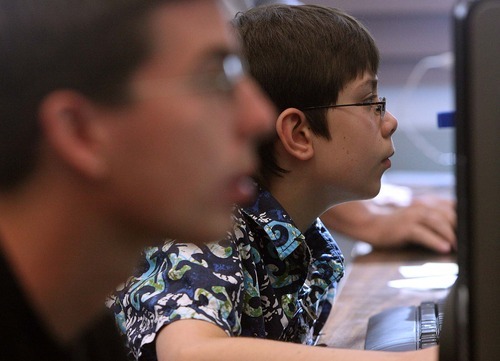
When 11-year-old Christopher Charles designed his super zoo last week, the dinosaurs, dragons and gigantic bugs came to life with computer software that may one day help him find a job.
Thanks to free Google software called SketchUp, Christopher, who is autistic, created a 3-D zoo with the same tools used by architects, video game and theme park designers. He put himself in a cage, but reassured his parents that the dinosaurs were herbivores.
Now in itssecond year,iStar, a University of Utah program for high-functioning autistic people, is unique in the nation. The software provides an outlet for their creativity and builds confidence, family members say. With sessions throughout the year, the camp creates a community of kid designers and new friends.
Its Google advisers hope to see it duplicated across the country to help the growing number of autistic children learn key skills, both technical and social. Employment can be challenge for autistic adults, who in some cases shine with technology but stumble in social situations.
Christopher's parents hope SketchUp is part of the solution.
"It's something he can actually excel in, which is a big thing [autistic kids] don't always get," said his mom, Kay Charles of Salt Lake City.
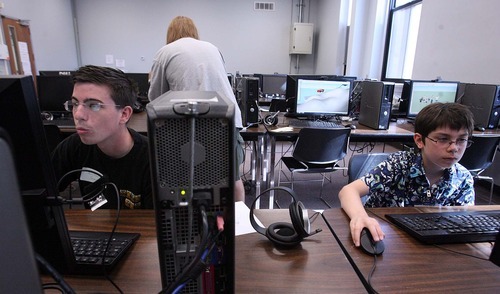
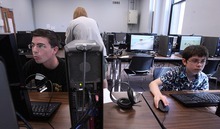
On Friday morning in a computer lab on campus, Steven Sargetakis, 11, showed off an army of characters that looked like him; his "army of me" was allied with Japanese Pokemon creatures to battle a group of assassins.
Autistic children are often gifted both visually and spatially, qualities Google discovered when it began receiving calls from parents about SketchUp several years ago. That launched an ongoing effort called Project Spectrum, providing online access to information about SketchUp for the autistic community.
The University of Utah's Cheryl Wright, an associate professor of family and consumer studies,is collecting feedback from the participating students' parents and grandparents. Her team is also analyzing video of the students working in the lab and presenting their creations throughout the community. The goal is to evaluate how the project can be replicated and what strategies are successful with the students.
"We've shown how you use technology to facilitate social engagement," she said.
With Google as their cheerleader, iStar could one day be advising other programs.
"Ultimately, what we hope is that the work that iStar is doing is creating a template other communities can replicate across the country and across the world," said Tom Wyman, manager of business development at Google. "The data will motivate people to do this."
For many autistic adults, the challenge of mastering social skills makes keeping a job difficult, whether it's working with others or understanding social cues.
"Most of our adults, when they graduate from the school system, they end up on the couch at home," said Jim Ball, chairman of the Autism Society board of directors. "They're underemployed or not employed at all."
Kathy Gilmour, director of special education at Salt Lake City's charter school Open Classroom, helped with the camp last week. She said students' greatest growth came as they worked in teams and asked for help from each other.
"They are now the experts," Gilmour said. "And that's a huge impact in the way we think about [autistic] kids."
The iStar program does not have any space for new students right now, but researchers are seeking funding to expand to serve more families.
Wright's brother, Steve Gross, is a designer with Universal Studios and the iStar SketchUp expert who also worked on the new Harry Potter attraction in Florida, giving him instant credibility with the kids. He sees some students advance quickly.
"The really cool thing with SketchUp is you get the 'wow' factor really quick," he said.
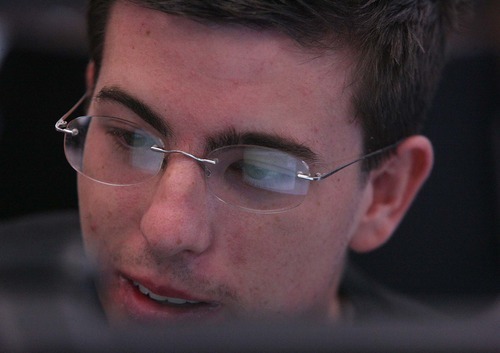
Colton Magill, 18, rushed his grandmother out the door each morning because he was so eager to get to iStar. He was typically in the car before her.
"I hope they don't stop," she said. "From day one, I can see improvement."
Want to learn more about SketchUp and autistic kids?
O Go to sketchup.google.com/spectrum for more information.