

This is an archived article that was published on sltrib.com in 2011, and information in the article may be outdated. It is provided only for personal research purposes and may not be reprinted.
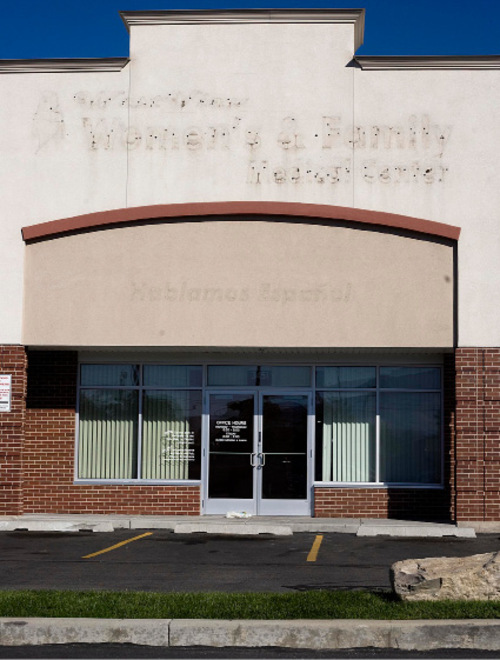
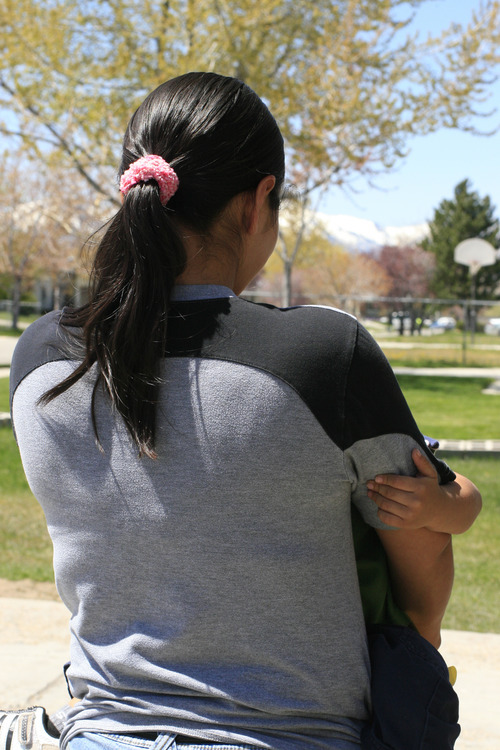
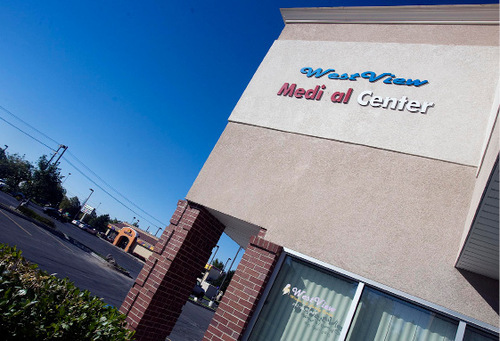
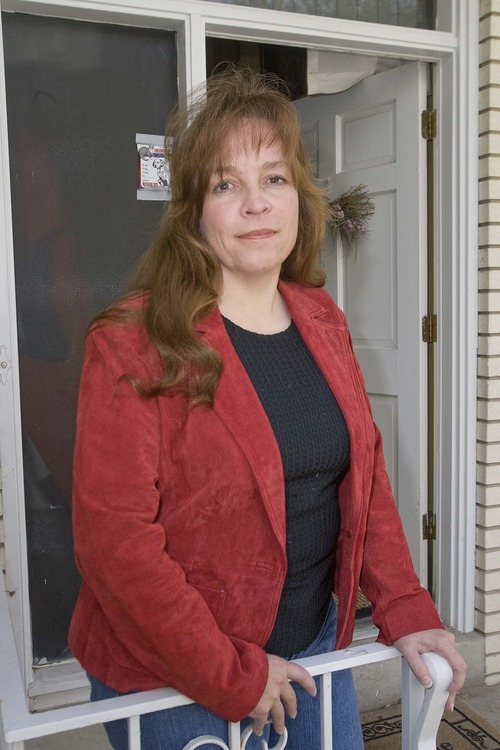
Rosa Flores showed up at WestView Women's and Family Medical Center in the spring of 2008, poor, uninsured and pregnant with her first child.
A financial counselor at the West Valley City clinic told her how to apply for Baby Your Baby, temporary Medicaid insurance that pays for up to two months of prenatal care.
As an undocumented immigrant from Mexico, the 21-year-old was not eligible. And she didn't have a Social Security number, which applicants are asked to provide.
Neither barrier posed a problem.
The clinic counselor urged her to claim, "Yes, I'm a legal resident," recalls Flores, identified by a pseudonym because she risks deportation.
And the Utah Department of Health-authorized Baby Your Baby worker who enrolled her simply provided a nine-digit alternative — which happens to be the Social Security number of a deputy police chief in Maine.
State health officials defend the practice even though many of the numbers they've handed out could match the Social Security numbers of people in Maine and New Hampshire. They say they cannot challenge applicants who claim to be legal residents who have lost, forgotten or never owned a Social Security number.
But Utah's tactic has tripped alarms at the U.S. Social Security Administration's Office of Inspector General, which is "looking into it," said agency spokesman Jon Lasher.
Immigration policy critics, meanwhile, question the "don't ask, don't tell" policy of assuming Baby Your Baby applicants are eligible, which they say leaves the program vulnerable to fraud — the same accusation state authorities have leveled against WestView.
"It sounds like it's a case of willful blindness on behalf of the people who administer Utah's program," said Ira Mehlman, a spokesman for the Federation for American Immigration Reform.
—
A need for numbers • Baby Your Baby, funded by state and federal tax dollars, provides care to low-income expectant women while they wait 35 to 45 days for their Medicaid applications to be screened. To obtain the temporary benefits, women need only attest to their income and status as a citizen or legal resident.
Federal law forbids states from requiring proof for Baby Your Baby and other "presumptive eligibility" programs, said Utah Medicaid director Michael Hales.
For Utah applicants without Social Security numbers, the agency has provided nine-digit "program" numbers since 1987, said Hales, who added they're needed to track claims and speed prenatal benefits to women early in their pregnancies when it matters most.
For years, Hales said, the state added the letter "V" at the end of the program numbers to "avoid conflicts." The letter was dropped, however, last summer when Medicaid switched computer systems.
Other states use different solutions. Wisconsin issues 10-digit numbers, said Beth Kaplan, a spokeswoman at that state's Department of Health Services.
North Carolina also uses 10-digit codes and assigns them to all clients in place of Social Security numbers. "We began doing this some years ago due to privacy and identity theft concerns," said Brad Deen, a spokesman at the state's Department of Health and Human Services.
Hales says Utah's numbers aren't meant to replicate Social Security numbers.
"We needed a nine-digit number to fit into our system," Hales said. "They could just as easily conflict with a person's driver's license number or any other nine-digit code."
The first digit is always a zero, explained Hales. The following three digits identify the local health agency, hospital or clinic that authorized the Baby Your Baby application, and the last five are a sequential count of applicants.
Hales concedes the state could have devised a 10 or 13-digit number but said it would have incurred programing costs.
—
"A significant risk" • Hales' explanation doesn't comfort Ricky Bonneau, who confirmed last week that the "program" number on Flores' Baby Your Baby benefits card is his Social Security number.
"It looks and smells like a Social Security number, and I'm the only one authorized to use it," said the deputy chief of police for Showhegan, Maine. "What's to stop this illegal immigrant from turning around and using it to establish credit? It doesn't take a lot of research to figure out who I am."
Bonneau said his department has software that randomly assigns identification numbers for crime suspects and victims who don't have Social Security numbers. But he said they're not uniformly nine digits and they are only used internally — the suspects or victims never see their numbers.
"I've investigated many cases of identity theft, and it's a long drawn-out process to clear one's name," he said, adding that he plans to complain to his elected officials.
Concerns about identity theft drove Congress to forbid states from publishing Social Security numbers on driver licenses. Nothing bars health insurers from using them; Medicare does.
Universities once issued "dummy SSNs" to undocumented immigrants as student ID numbers until the federal government objected, Lasher said.
"A nine-digit number is a nine-digit number, but issuing it in official circumstances when it mimics a Social Security number creates a significant risk of misuse and identity theft," he said.
Health officials are taking new steps to guard against abuse. As of this month, Baby Your Baby coordinators tell women who forget their numbers to come back when they remember them. And they ask more questions of applicants, such as requesting the date that they received their green card.
But the changes have more to do with new federal requirements than the WestView investigation, Hales said.
—
"I didn't know" • State authorities allege that over a five-year period, WestView and an affiliated billing center, All Medical Billing Inc., coached hundreds of undocumented immigrants to lie in order to obtain Baby Your Baby benefits. In court documents they say a medical assistant at the clinic, Sandra Hernandez, told patients to lie about their citizenship status.
It's a scenario corroborated by Flores, who says she alerted Hernandez that she was not a legal resident. "[Hernandez] told me not to worry about it, that they would help me," Flores said. "I didn't know that this program was only for American citizens."
Hernandez did not respond to requests for comment. She has not been charged with a crime.
Nor have the clinic's owners, including LaRohnda Dennison. The Utah Attorney General's Office is still sorting through evidence obtained from a search of the clinic in August.
Dennison was offered a plea deal, which she rejected.
"I've done nothing wrong," said the 45-year-old. If Hernandez coached patients, she said, it wasn't with her knowledge or blessing.
WestView opened in 2004. It wasn't until 2006, when a string of patients surfaced with "odd" identification numbers, that Dennison sought an explanation from state health officials, she said.
"I knew they weren't Utah [Social Security] numbers or Idaho numbers of California numbers, so I asked [state employee] Debby Carapezza to train us so we understood the process and what these numbers were all about," recalled Dennison.
She said Carapezza, the state's Baby Your Baby manager — then and now — confirmed that some of the temporary numbers given to patients were bumping up against other people's Social Security numbers.
"She said she knew it was a problem and that they were working on it, but she made clear that if they come in with a Baby Your Baby card they have been authorized and you can treat them," Dennison said.
It was only years later, after WestView came under scrutiny, that the significance of that conversation dawned on Dennison, says her lawyer, Tara Isaacson.
"The state wants to say LaRohnda should have known what a rogue employee was doing," Isaacson says. "But as she began looking at information, LaRohnda began to notice, 'Hey, wait a minute, there are other things going on here. It makes sense that I wouldn't know if the state didn't know' " that applicants were lying.
Dennison said that of the 4,500 women who delivered babies under WestView's care, about 1,000 had Baby Your Baby cards with nine-digit numbers provided by the state.
"I assumed the health department did their job and that if they said they're eligible, they're eligible," Dennison said. "I had no way to know otherwise."
Ahora Utah reporter Normand Garcia contributed to this report. —
Clinic probe
WestView Women's and Family Medical Center is suspected of defrauding Medicaid of more than $1 million. Authorities allege that over the past five years, the clinic coached undocumented immigrants to lie about their citizenship status in order to obtain coverage under Baby Your Baby, a publicly funded prenatal program.
The clinic then billed the program for care that wasn't medically necessary, according to court documents.
No criminal charges have been filed. An investigation is ongoing. She is an undocumented immigrant who investigators say was coached by a private clinic to lie in order to obtain a state ID entitling her to public prenatal benefits. The nine-digit number given to her by the Utah Health Department is the Social Security number of a Maine police officer. No one admits fault, yet they're all playing....