






This is an archived article that was published on sltrib.com in 2013, and information in the article may be outdated. It is provided only for personal research purposes and may not be reprinted.
Fitness lovers with a competitive streak, picture this: a wearable electronic device that does the trash-talking for you.
Dave Scott did. He's 27, big into cardio and cross fit and wanted to brag about his personal bests. So did his buddy Abe Carter, 24. They thought a device that collected data on repetitions, duration and speed would be cool, but they also wanted that information in real time so it could be shared and used to compete virtually with friends.
"We're just two guys with a crazy idea," Scott said.
They teamed up with Max Mann and Nahom Workie from MIT and got some initial funding through a Dubai venture-capital firm. But eventually they turned to the crowd, launching a crowdfunding campaign on Kickstarter with a goal of raising $90,000 to get the product through the manufacturing phase. So far, they've raised more than $470,000 on Indiegogo for their Amiigo Fitness Bracelet.
"We hit our goal on day two of the campaign," Scott said. "We're stoked with the response we've gotten so far."
—
Crowdfunding defined
Crowdfunding is quickly joining the ranks of banks and angel investors as a funding source, redefining how entrepreneurs get seed money, how small businesses finance expansion and how anyone with an idea or cause can turn a dream into a reality.
At its core, crowdfunding is an online pitch. You post a bit about your project and how much you need on a crowdfunding website and appeal to the Internet "crowd." Then, if they're convinced, funders can click to pay a certain amount. In return for an investment, many campaigns offer public radio-type goodies, such as a mug; others offer an actual product hot off the manufacturing line or a feel-good reward such as a handwritten thank you note. And later this year, new federal rules will allow ventures to offer equity stakes in crowdfunding campaigns.
It's a relatively new fundraising tool, with the world's first crowdfunding platform launching in 2008 right here in Utah at the Sundance Film Festival. Indiegogo was founded to raise money for independent film projects, but the site has since generalized and emerged as one of the big-three crowdfunding platforms, along with Kickstarter and RocketHub.
The growth in crowdfunding and crowdfunding platforms has caught the eye of market watchers and analysts. According to a 2012 survey conducted by Crowdsourcing.org, more than a million campaigns raised nearly $1.5 billion through crowdfunding in 2011, with the average campaign taking about 10 weeks from launch to completion.
The trend certainly captivates Bill Cherry, an entrepreneur who formed the Utah Crowdfunding Association a couple of months ago. He was introduced to the crowdfunding concept at a seminar in Kaysville last year and was "blown away."
"There's so little access to capital [through banks] and a high percentage of all business loans are denied," he said. "With crowdfunding, it is 'the' new way to finance a business."
Cherry estimates there are roughly 200 crowdfunding campaigns run by Utahns on the three major platforms at any one time.
"People are so excited about it when they learn about it," said Cherry. "A light goes on and they see that maybe they can get their business going after all. It's kind of fun to see people get excited."
But hype aside, crowdfunding raises red flags for consumer advocate Preston Cochrane, president of AAA Fair Credit Foundation.
"In Utah, where we've had so many scams, I hate the next wave of fraud to be crowdfunding."
—
Success stories
Currently ranked second in the nation for creating start-ups, the University of Utah has clearly been working hard to take new inventions and research coming out of its labs to market. Part of that equation is, of course, funding, and in mid-December, the university's Technology Commercialization Office entered the crowdfunding universe. They partnered with RocketHub to create the University Tech Vault crowdfunding platform, said Taylor Bench, TCO's director of economic development.
Bench said they started with four campaigns, one of which is to raise funds for something called the Active Desk, sort of computer-desk-meets-recumbent exercise bike. So far, the Active Desk campaign has raised more than $10,000.
"We started small because we didn't know how well it would take off," Bench said. "But we've pushed into social networks, we've got a lot of people saying, 'I want to buy one,' and groups like telemarketing companies and AARP have started looking at the campaign. It's fantastic."
Bench adds that crowdfunding is not just about raising capital.
"We're getting a lot of great market feedback," he said. "If we can expose more people to the research, that's just more people we get to engage with potentially."
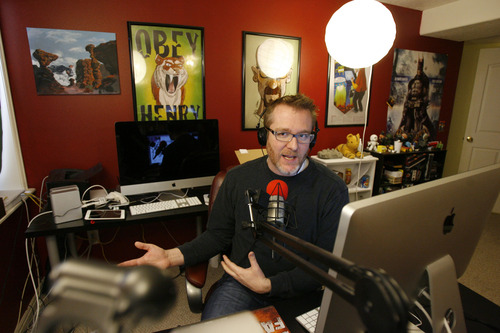
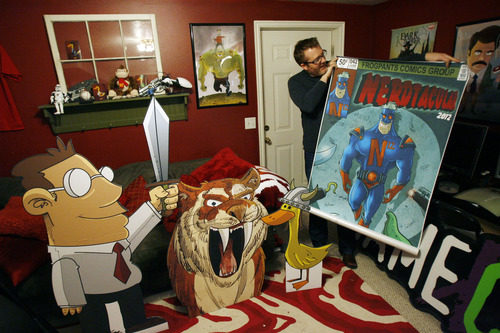
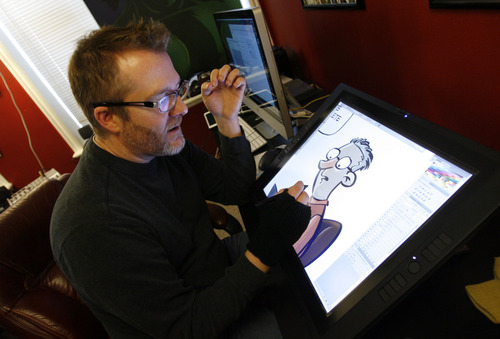
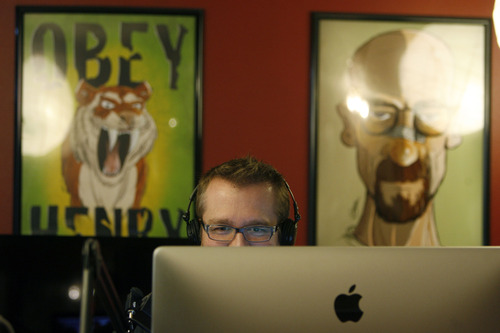
Podcaster Scott Johnson agrees that crowdfunding is more than a fundraising tool. His passion for video games and science fiction led him to podcasting out of his Eagle Mountain home, which led him to create an annual in-person event for his fans called Nerdtacular. Johnson says the event, which is now paid for through crowdfunding, is a way to build community.
"It dispels this idea that geeky, computer-savvy nerds just sit in a room in the basement and play video games," Johnson said. "People who are into that are also extremely social creatures who want to be with other people like them."
Johnson said Nerdtacular has evolved into a two-day convention that draws hundreds from around the globe. To fund the 2013 Nerdtacular, he's raised more than $30,000 so far on Kickstarter.
—
Creating a successful campaign
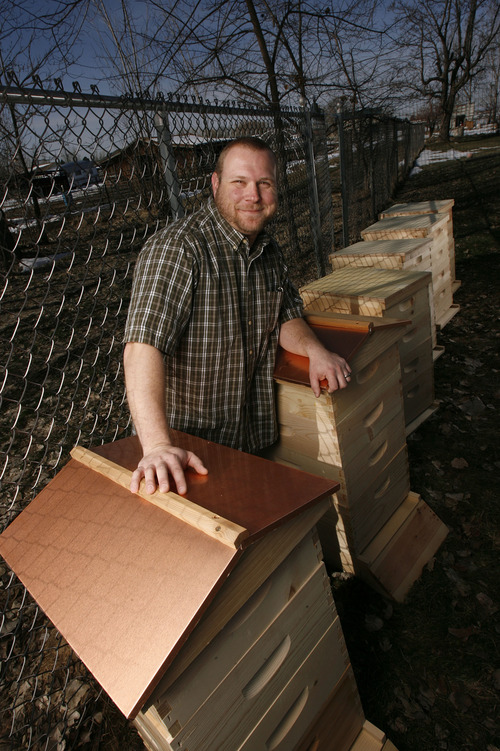
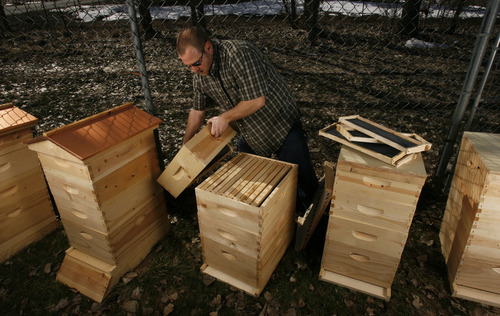
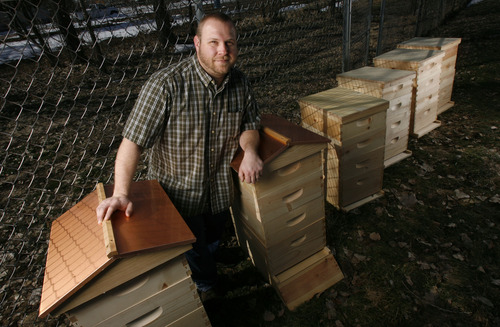
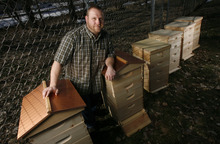
Kenny Olsen describes himself as an IT guy-turned-farmer. Two years ago, he bought a 5-acre plot in West Haven, hoping to teach his young children the value of hard work and to find fertile ground for his passion for gardening and beekeeping. For seed money for an apiary, he turned to Kickstarter. He set a goal of $4,000, but in the end, he only raised $1,207. On Kickstarter, an unsuccessful pitch gets no money.
"I had to learn about how the process works and what brings in pledges," Olsen said.
Not discouraged, Olsen tried again, this time making a pitch for a new tiller. He said having a short video, online updates, an appealing message and perks (he offers jars of honey, T-shirts and field trips to the hives) added up to success.
"I realized that it's not about people just giving you money," said Olsen. "It needs to be a project that everyone wants to succeed and they want to share in that success."
A new pitch for the apiary earned $1,085, well over his $337 goal.
Olsen's experience lines up with Indiegogo's tips for a successful campaign. The platform has found that campaigns with a video component on their site raise 114 percent more than those without and 93 percent of successful campaigns offer perks.
—
New crowdfunding platforms
Just as the interest in crowdfunding has exploded, so has the number of online platforms that enable the activity. The Crowdsourcing.org survey showed that there were 452 active crowdfunding platforms worldwide as of April 2012 and that number was expected to balloon to 530 by the end of 2012.
One of those is Utah-based RallyMe, a crowdfunding platform that caters solely to athletes and sports teams. Founder Bill Kerig is also a documentary filmmaker whose latest production is "Ready to Fly" about women's ski jumping. He got the idea to build a crowdfunding platform after following around athletes and watching them constantly fundraise. He says crowdfunding is more efficient and more effective than sponsoring a dinner.
"Five years down the road, every athlete and team out there is going to use some sort of crowdfunding, for sure," Kerig said. "They're not going to keep doing yard sales."
Since launching in November, he says more than 50 campaigns from little league hockey teams to Olympic athletes have raised thousands on RallyMe, including Utah ski jumper Lindsay Van, who raised $20,000 to support her training for the 2014 Winter Games in Sochi.
—
Protecting the investor
No doubt, there's the potential for fraud when it comes to crowdfunding. An enticing pitch could end up just lining someone's pocket instead of supporting a cause or business venture, warns Cochrane of AAA Fair Credit Foundation. He says many people expect a return on a crowdfunding investment instead of considering the contribution a donation, so consumers need to read the fine print.
"It's such a new concept. It's basically peer-to-peer lending and anytime you invest money in something you don't know a whole lot about, just be careful," Cochrane said.
He said in some ways, the crowdfunding model sounds a lot like affinity fraud, an issue that's especially plagued trusting Utahns.
But TCO's Taylor Bench argues there is safety in the crowd.
"If I put up a campaign thinking I'm going to defraud people, it doesn't work well when I'm asking personal friends to invest. I'm not willing to risk my social capital with the people I know and love," said Bench. "The crowd is a very good policeman."
Indiegogo spokeswoman Rose Levy confirmed their site has had "virtually no fraud."
"It's up to the crowd to determine what's 'legitimate,'" she said. "The social dynamics and democratic nature of crowdfunding make it much more difficult to raise funds for fraudulent campaigns."
She advised those looking to contribute to a campaign to closely examine the pitch, check to see if the campaign has active links and updates, and to follow the crowd.
"If the campaign doesn't have at least 20 percent of their goal met [within a few days], proceed with caution," she said.
Twitter: @jnpearce —
Before you crowdfund
Do your homework • The more information available about the pitch, the more legitimate the campaign is likely to be.
Check out initial funds • Friends and family typically provide the first 20 percent of funding to a campaign, so be careful with campaigns that have raised less than that in the first few days.
Look for active links • Official websites, social media presence and press coverage can be used to help validate campaigns.
Keep an eye out for updates • Has the campaign owner provided updated information about the campaign? If you see updates every one to five days, the campaign is more likely to be legitimate.
Source • Indiegogo