



This is an archived article that was published on sltrib.com in 2012, and information in the article may be outdated. It is provided only for personal research purposes and may not be reprinted.
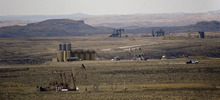
Myton • The center of Utah's latest crude oil boom is a tiny hamlet in eastern Utah, built more than a century ago near the only bridge that crossed the Duchesne River.
It is here in Myton (pop. 659), on the outskirts of Roosevelt, that the largest oil-producing company working in the state is developing 230,000 acres of fields — nearly one-third the size of Rhode Island.
Newfield Exploration Co., an independent energy company based in The Woodlands, Texas, has invested more than $1.7 billion in its Utah holdings, producing a low-sulfur oil the consistency of boot polish. In Salt Lake City, 175 miles to the west, three of the state's five refineries are planning upgrades or expansions to process more of this Utah crude —most of it supplied by Newfield.
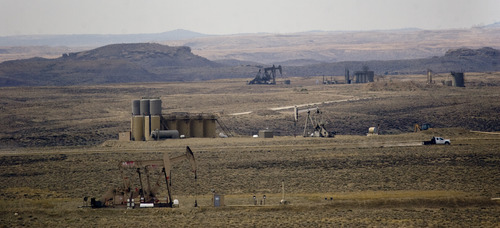
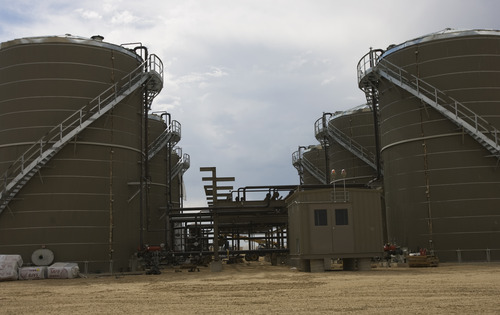
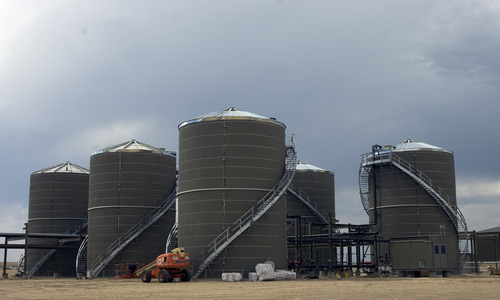
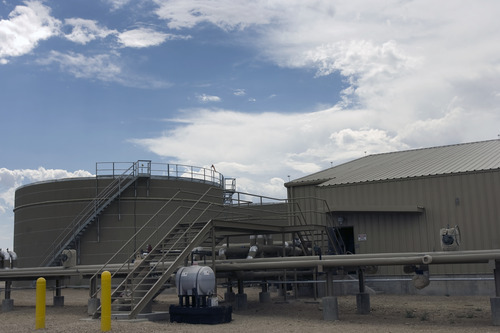
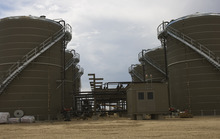
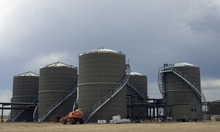
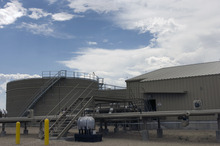
The crude is so thick that it must be heated to get it out of the well bore. Each day, about 100 insulated tanker trucks pump the oil from Newfield's surface tanks at wells dotting gravel roads that wind their way through flatlands, canyons and majestic buttes.
The company supplies nearly 30 percent of Utah crude — twice the amount produced by second-and third-ranking Resolute Natural Resources and El Paso E&P combined. In all, about 75 percent of the state's crude is coming out of the Uinta Basin — and that total is expected to increase, given the number of new wells, said John Rogers, an associate director with the Utah Division of Oil Gas & Mining.
The boom created by all this activity is generating two distinct feelings in the region — one, that this aura of oil prosperity may actually endure for a few years, and, the other, that amid this time of plenty there are more than a few challenges to worry about.
"I've seen five or six booms and busts," said Ken Bassett, the city manager of nearby Vernal, a 35-year veteran of local government. "But this time, I believe the boom will be consistent — without a bust."
Of course, with the good almost always comes some bad, including the fact that despite all the development generated by Newfield and others, infrastructure in the oil-rich Uinta Basin is minimal at best. Day and night, oil tanker trucks rumble along U.S. Highway 40, speeding the high-maintenance crude to Salt Lake's refinery row, adding to environmental concerns associated with the rise in production. Hotel rooms in the region typically are booked two to four weeks in advance.
The largest municipality is Vernal, 40 miles to the east of Newfield's Myton headquarters. But even that hardscrabble town has no major rail line, and its population has yet to break past 10,000 souls.
"I can see crude oil production increase tenfold over the next five years, but the question is what do we do with it?" said state Sen. Kevin Van Tassell, R-Vernal. "We can continue to add congestion on the highways, but in the long run this is not sustainable."
For now, the drilling goes on.
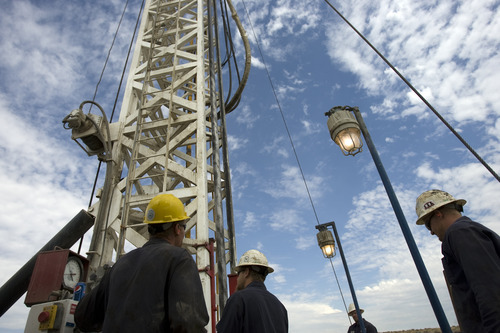
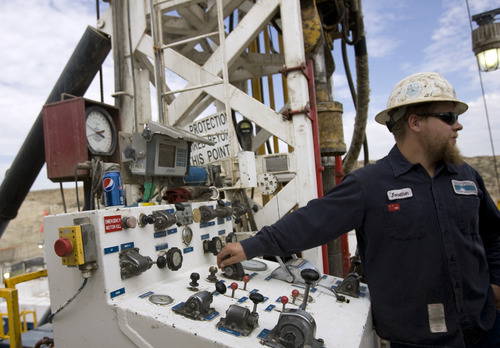
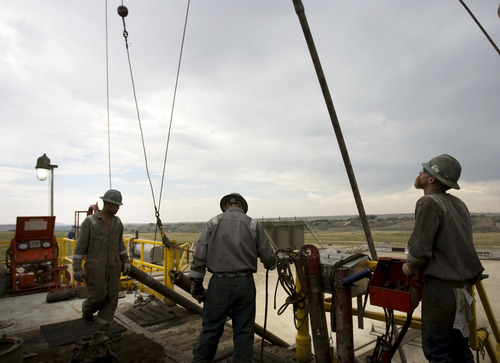
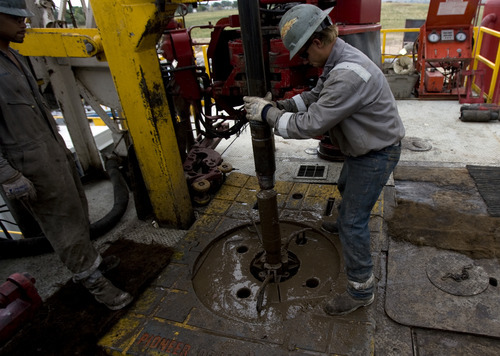
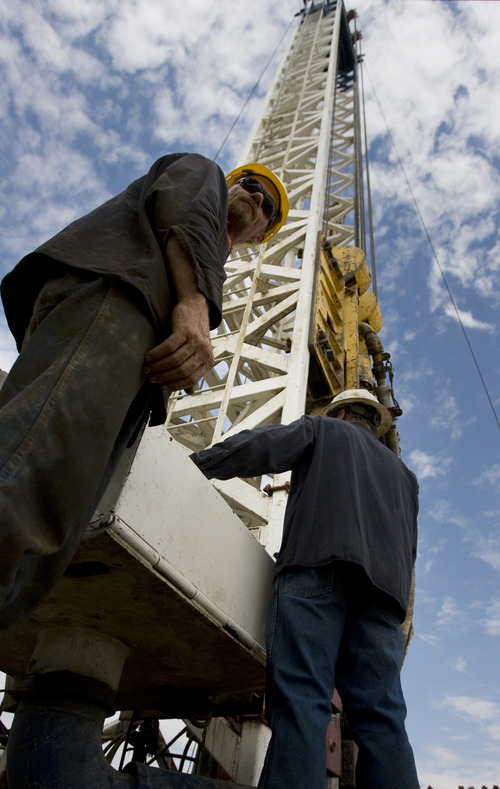
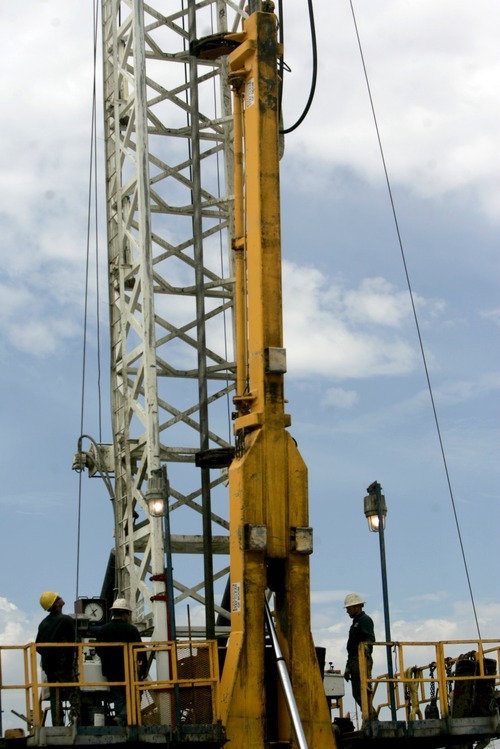
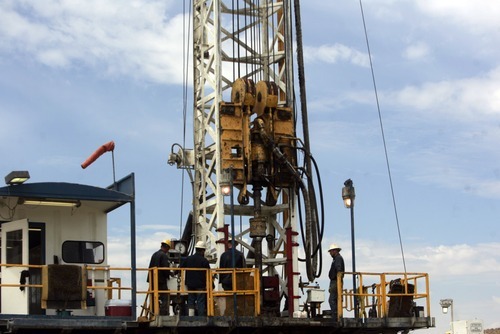
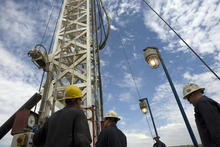
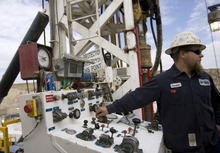
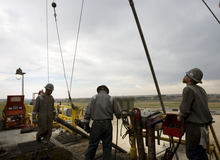
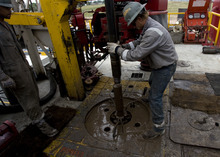
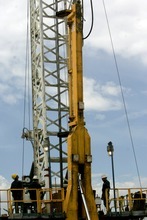
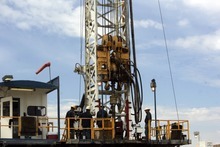
Full bore • Newfield is running three rigs in the shallow Green River formation on its Greater Monument Butte holdings with nearly 1,800 productive wells pumping about 25,000 barrels of oil per day. Each rig can drill 45 wells to 90 wells per year.
Monument Butte, comprising 80,000 acres, is known as a water-flooded secondary recovery area, referring to a common method of extraction in which water is injected back into a reservoir to increase pressure and stimulate production.
Daryll Howard, vice president of Newfield Rocky Mountain Business Unit called Monument Butte "the largest federal secondary-recovery unit in the lower 48 states."
To the north, Newfield also has four rigs in its nearby Central Basin area, acquired last year to target oil in deeper geologic formations. This area, 80,000 acres of private lands and about 60 ,000 acres from deals with the Ute Tribe, is producing 7,500 barrels of oil per day.
"We're getting encouraging results from horizontal wells," said Steve Campbell, Newfield vice president of investor relations. "A lot of our growth in the next several years will be driven by the Central Basin."
The company estimates that there are 6,000 potential wells on its holdings with 700 million barrels of oil in place.
"It's very important for America to have more crude production," said Leslie Haines, editor-in-chief for the Houston-based Oil and Gas Investor. "Newfield used to produce mostly natural gas, but like many companies it has had to diversify to have a mixture of both oil and gas. It's an important asset for Newfield."
In December, Newfield signed a seven-year deal to provide 18,000 barrels of oil a day to Tesoro's Salt Lake refinery, which plans to double its current capacity within the next two years. The next month, Newfield inked a 10-year contract with HollyFrontier Corp. to supply 20,000 barrels a day. HollyFrontier plans to process 40,000 barrels daily after 2016, up from its capacity of 10,000 barrels a day. In addition, Chevron is updating its refinery to take more Utah crude, but declines to release figures.
Environmental costs • The production and contracts are important, because even though Utah, Colorado and Wyoming have some of the largest known oil shale deposits in the world, Utah imports 70 percent of its crude, mainly from Canada, Colorado and Wyoming.
But producing crude in Utah isn't easy. Although advances in technology have aided in the extraction of what's commonly known as black and yellow wax oil, Utah oil is so thick that it solidifies unless kept warm. Unlike sweeter varieties that can be shipped via pipelines, most of the crude from the Uinta Basin is trucked in insulated tankers, which must reach their destination within a few hours, making Salt Lake refineries the only viable market right now.
Despite these challenges, industry analyst and financial writer Bret Jensen, based in Miami, said , "I still like Newfield. They are moving more to oil and liquid production, and Utah is an extremely friendly business state. There's always been mining and [agriculture], and now throw in oil in a state that's conducive to furthering those businesses, that's a huge plus."
At this point, though, state officials have said they don't know how to handle the transportation issues. In December, the first phase of a study is expected to be completed that is weighing options such as converting US-40 — now just a two-lane road in many stretches — into a "super highway," adding a railroad to the basin, or building facilities to partially refine crude there so that it could be transported through pipelines.
There are other environmental costs associated with oil development.
Last week, early findings of a $5 million study were released on why eastern Utah has logged some of the nation's highest ozone-pollution readings in recent years. The key pollution culprits making the Uinta Basin's wintertime air unhealthful appear to be oil and natural gas wells, along with exhaust from cars and trucks. Weather also was listed as an important factor.
The Winter Basin Ozone Study comes on the heels of federal land agencies approving another 5,329 gas and oil wells for the basin in addition to the 10,000 or so already in operation.
Kathleen Sgamma, with the energy trade group Western Energy Alliance, is pushing to continue the study "so that effective mitigation can take place, while providing energy for America and jobs in the Uinta Basin."
Taking steps • Newfield officials say they have taken steps to lessen environmental impacts.
In April 2011, the company opened a state-of-the-art water- treatment plant. The main portion of the Sand Wash facility recycles up to 10,000 barrels per day of the water that comes out of the well bore along with oil and gas. The water is injected back into the producing formation for enhanced oil recovery. The facility also can recycle up to 18,000 barrels per day of water needing additional treatment that otherwise would be unusable.
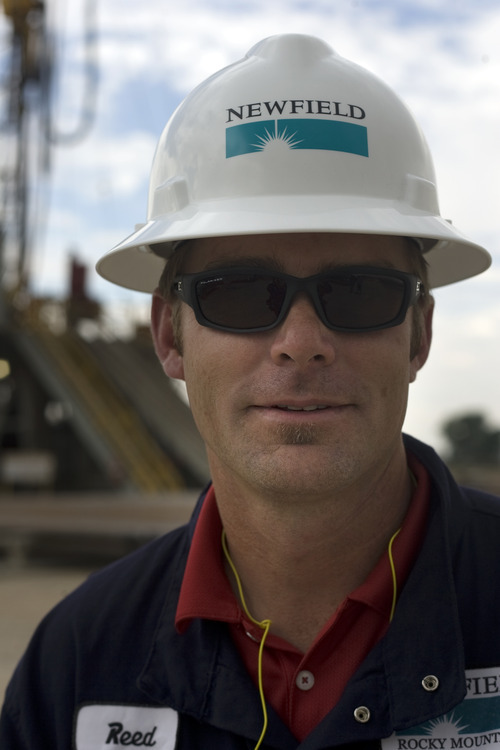
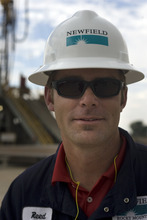
Reed Durfey, Newfields' Uinta Basin district manager, said traditional oil field operations generally send water to an evaporation pit or disposal wells, but "we recycle all of our water."
Starting in November, Newfield will open its gas and oil separation plant, designed to process up to 30,000 barrels per day of produced water and oil mixture (emulsion) from more than 200 wells. Here, the oil will be separated and prepared for sale, while the water is to be sent to the Sand Wash plant for recycling. This facility, along with an associated gathering system, will allow Newfield to send water and oil to a single delivery point, eliminating the need for up to 300 truckloads of produced water per day.
Newfield's expansive operations don't intimidate Myton Mayor Kathleen Cooper, who notes the company uses the town's address, even though its offices are just outside the municipality's boundaries. She remembers contacting Newfield for help on the opening day of the Myton Daze June festival when the town's only worker was called away.
"There was nobody else who could set up all of our tents and tables," she said. "Within a few minutes, Newfield sent out several truckloads of people asking what we needed them to do. They seemed like white knights."
Twitter@DawnHouseTrib —
Unita Basin: Newfield Exploration Co.
Ranking • Largest oil producer in Utah by twice over second- and third-ranked companies combined
Platforms • Running three rigs in Monument Butte, four in nearby Central Basin in eastern Utah
Producing wells • More than 1,800 in Monument Butte; exploratory work in newly acquired Central Basin
Firm • Based in Texas, with operations in Rocky Mountains, mid-continent, Texas, Gulf of Mexico, Malaysia, China