


This is an archived article that was published on sltrib.com in 2012, and information in the article may be outdated. It is provided only for personal research purposes and may not be reprinted.
Here's a story FBI Special Agent Jim Malpede likes to tell:
FBI agents and the Utah Division of Securities quickly put together evidence against a Utah County resident who was running a $40 million foreign exchange scam and then got a search warrant for his home.
Unknown to the agents, the day they went to serve the warrant was the suspect's birthday.
"So we show up at 10 a.m. and pound on the door," said Malpede. "He comes to the door and goes, 'This is great,' which is not the typical response you get when executing a raid. I'm like, 'What?' and he's like, 'It's my birthday. Who put you up to this?' "
The upshot was that when the confusion cleared, the agents got a tape-recorded confession.
—
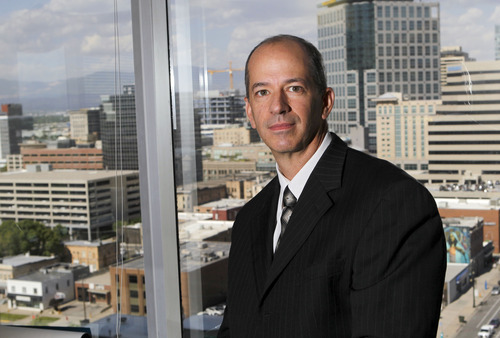
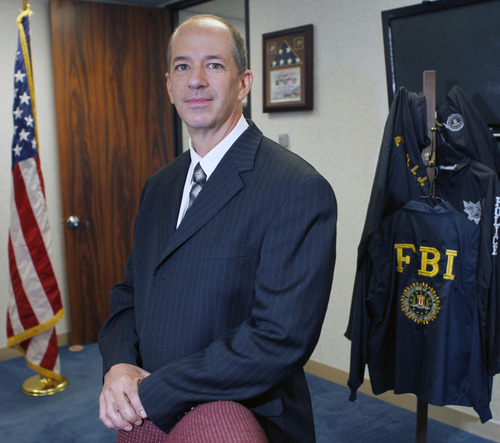
White-collar watchdog • The story is one Malpede tells as he is rotating out of his post after eight years as the supervisor of the FBI's white-collar/public corruption crime squad of 13 agents in the Salt Lake City office.
Malpede's time in Utah, including stints in Provo and Ogden, has coincided with a tsunami of Ponzi operations, pyramid schemes, mortgage and bank fraud and other financial crimes that helped propel Utah to infamous heights nationally. His tenure probably will turn out to have exposed the largest financial frauds in state history — at least, he says, until the next wave hits.
"Kind of anecdotally, having seen the program from my time here but also from a national perspective, on a per-capita basis we've got to far exceed anywhere else in the country in terms of the volume and dollar losses," Malpede said in a recent interview. "Cases that we work have losses that exceed many of the cases we're see in many of the large metropolitan areas."
—
Assignment: Utah • Malpede grew up in San Francisco, got a finance degree at San Diego State and then worked in banking for six years. He became an IRS special agent and then went to the FBI.
Malpede's first assignment was in Provo, where he was stationed until September 2003. From there he became a supervisor in Ogden for nine months before he came to the Salt Lake City office to direct the white-collar crime unit. That's where he's been since, except for a 20-month stretch in Washington, D.C.
Keith Woodwell, director of the state Division of Securities, praised Malpede's work as head of the white-collar crime unit. Malpede made a financial-fraud task force of federal and state agencies into a productive group that helped investigators use stretched resources more efficiently, Woodwell said. Malpede also has brought energy and commitment to battling fraud, he said.
"You can't help but feel his passion for this cause, and it's infectious," Woodwell said. "He is extremely motivated to do something about this problem."
—
Rampant scams • From 2002 to about 2008, the Salt Lake City office was among the Top 5 or Top 10 states in mortgage fraud, Malpede said. In 2010, the FBI put the Salt Lake City office on its lists of the Top 5 "Ponzi hotspots."
Earlier this year, Malpede estimated there was about $2 billion worth of fraud either in courts or under investigation by federal, state and local agencies. The amount of fraud is so great that the FBI in Utah largely concentrates only on cases involving investments of $10 million or more.
"Whereas in many offices they'll work cases that are $1 million or $2 million, for us to work on something under $10 million there has to be something that grabs our attention, some reason for us to get engaged in the case, just because we have so many cases that are above $30, $40, $50 million."
—
Affinity fraud • One of the reasons Utah is so hard-hit by financial fraud is that many con artists market their schemes through what officials call affinity fraud, in which members of a group who share close bonds of respect and trust are targeted. In Utah, that most often means members of The Church of Jesus Christ of Latter-day Saints who make up about 60 percent of the population.
A snapshot of why the state is so inundated with fraud is Utah County, which has a higher concentration of residents who are LDS members than the state as a whole, and a high level of fraud, as well. Malpede cited the closeness of people in LDS wards such as the ones he interacted with in his five years in Provo.
"With the concentration comes that built-in marketing network," Malpede said. "You get one person in a ward to truly buy into your investment program or your fraud scheme, or whatever it is, and boom, it immediately cycles through there. And those connections spread out to the stake or family relationships."
—
Scammer tactics • Some of the scammers start out aiming to operate a legitimate business, but suffer reverses that cause them to begin cutting corners and engaging in small frauds that just get bigger and bigger, he said. The scammers then try different schemes they hope will get them out of the mess, often falling victims to other criminals.
"That's probably another thing that's very unique to Utah is that every case we work in the fraud division almost inevitably ties in way shape or form to another fraud case we're working," Malpede said. "So this subject [of an investigation] may be this guy's victim, and this guy's victim may turn into this subject. It's very strange."
Fraudsters appear to be good and honest people with an outgoing, attractive personality, he said.
"I've sat through many subject interviews where we have the bad guy on the other side and it's a very pleasant experience because they are so friendly and nice," he said. "They have magnetic personalities."
The scammers create a lavish lifestyle to attract attention to themselves so those who observe the outward trappings of wealth will want to emulate their success and ask how they did it, often without doing any research or asking tough questions about investments being offered.
"It's that greed gene that our victims have that he [the fraudster] must be doing something right," said Malpede.
—
Problem cycles • Fraud follows economic cycles, with agents and regulators cleaning up the messes during the downturns, only to see a resurgence during the next upticks, Malpede said.
In Utah, the FBI is seeing a slowdown in complaints. But from his experience here, Malpede says each cycle of fraud in Utah seems to generate a new and larger investment schemes with each successive wave.
"I expect as the economy comes back we're going to be right in the swing of it again," he said. "In Utah, what has been unique is every time we cycle, our dollar loses go higher."
If that cycle continues, "where are we going to be in the next round?" Malpede said. "It's going to be unmanageable."
Despite the gloominess of that observation, Malpede said he is proud of the impact he believes the FBI and other federal and state agencies have had in working together on Utah's financial fraud problem.
"We've had a huge impact," he said. "I bet we're prevented hundreds of millions of dollars in losses just by making sure people were aware."
—
Drawn to Utah • For his part, Malpede has elected to stay in Utah as a special agent, foregoing the opportunity for advancement because he likes the lifestyle here, the family-friendly atmosphere, the low crime (violent crime, he makes sure to say) and the great outdoors nearby. He's just built a new house.
And, of course, there's plenty of work to be done.
Twitter: @TomHarveySltrib