












This is an archived article that was published on sltrib.com in 2012, and information in the article may be outdated. It is provided only for personal research purposes and may not be reprinted.
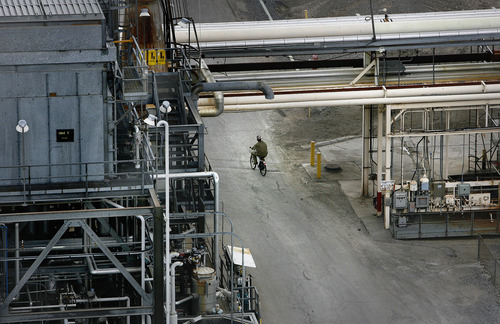
Improved technology and higher oil prices for the first time are making it economically feasible for oil refineries to tap more of Utah's large reserves of crude oil as thick as boot polish, potentially bringing jobs and millions in revenue to the state.
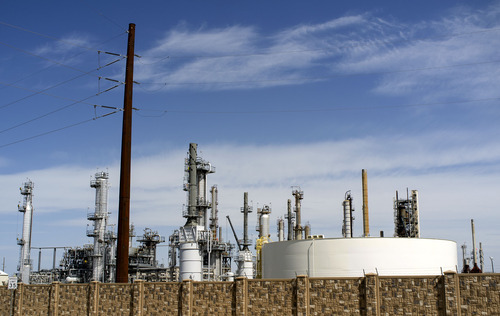
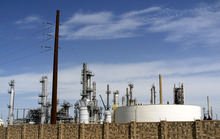
Upgrades proposed or under way at three of the state's five refineries will enable them to process three times the amount of the paraffinic-based crude, commonly called black or yellow wax petroleum, as they could six years ago.
But development will come at a cost.
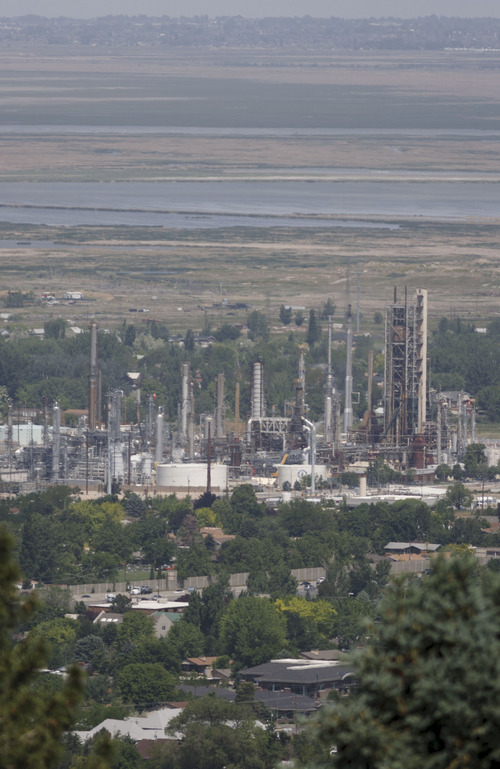
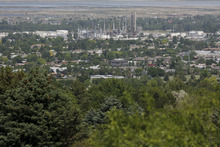
Boosting production capacity could also increase certain environmental risks, based on refinery safety records over the past decades. Hundreds more oil tankers are expected to travel the 170 miles from the rich oil fields in eastern Utah to the refinery row that straddles the Salt Lake and Davis county lines, negatively impacting air quality, neighborhoods and traffic.
HollyFrontier points out not all the implications for air quality are bad. Company officials say they expect to reduce the refinery's normal emissions by 10 percent to 12 percent because Utah's waxy crudes are especially low in sulfur.
Only time will reveal how the pluses and minuses balance out.
—
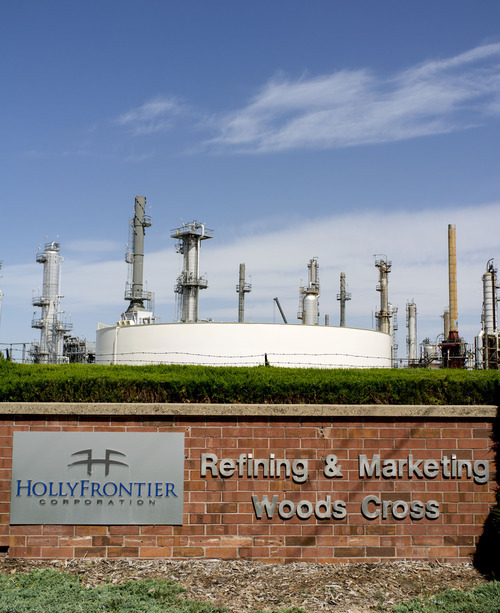
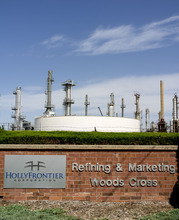
Increasing capacity • Within the next two years, HollyFrontier plans to process 20,000 barrels a day of Utah wax crude at its Woods Cross refinery and a total of 40,000 barrels daily after 2016, up from its current capacity of 10,000 barrels a day.
Tesoro, the state's largest refinery, and the first to submit a proposal to the state Division of Air Quality, DAQ, plans to process nearly 20,000 barrels of Utah crude a day within the next two years, doubling its current capacity.
Chevron is upgrading its Salt Lake City facility to take more Utah crude, but it won't say by how much.
And although Silver Eagle and Big West aren't expanding, the latter refinery in North Salt Lake has the capacity to process upward of 11,500 barrels of black wax per day. Silver Eagle's Woods Cross plant now refines yellow wax exclusively.
Black and yellow wax petroleum are refined into products such as gasoline, diesel, jet fuel, lubricating oil, paraffin and asphalt. Together, they made up 77 percent of the state's oil production last year, with nonwaxy crudes from San Juan and Sevier counties contributing most of the remaining amount.
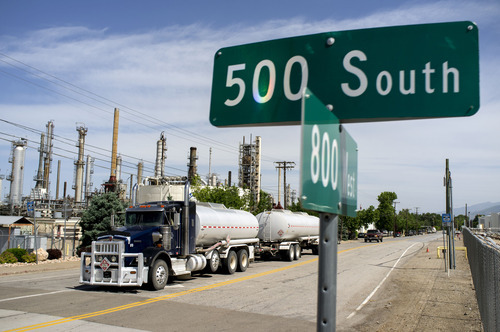
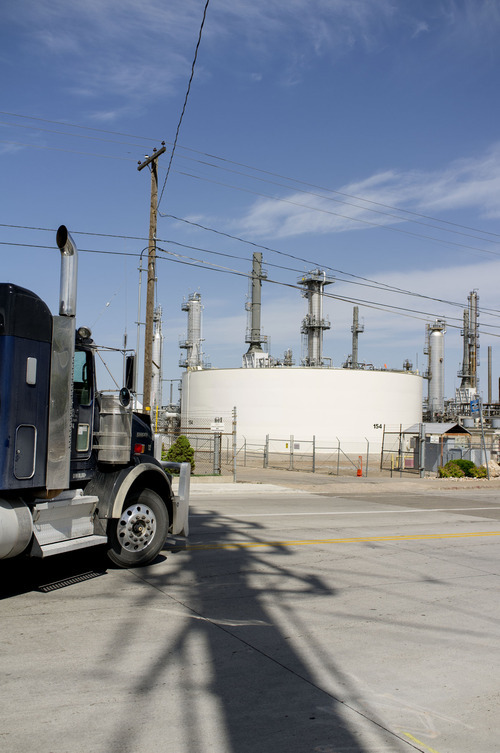
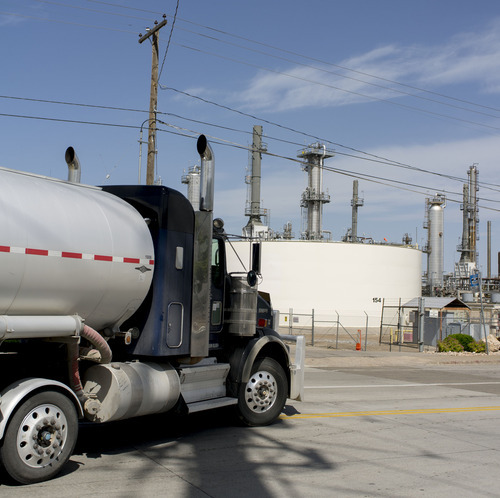
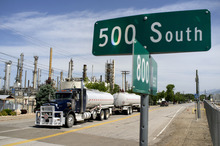
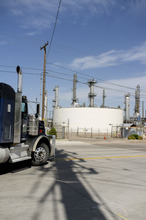
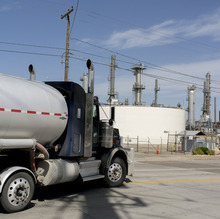
Utah's waxy petroleum is cheaperper barrel than the so-called sweeter crudes, which can be shipped via pipelines. Unlike sweeter oils, Utah crude is so thick it solidifies unless kept warm. Most of the crude is trucked to Utah's refinery row in insulated tankers, which must reach their destination within a few hours, making Salt Lake the only place in the region it can be processed.
Despite its transportation challenges, Utah crude offers refineries several advantages, said Alan Walker of the University of Utah's Energy and Geoscience Institute. Its low sulfur content aids in refining for lower emissions. And in the Uinta Basin, it lies just 3,000 to 4,000 feet underground, making drilling comparatively cheap.
"It's an extremely valuable resource," Walker said. "The public has this perception that it's bad crude oil, and nothing could be further from the truth."
With the refineries proposing to pump out millions more barrels of waxy crude, one might expect they'd be belching that much more pollution. But it turns out the opposite is true, based on what the plants are projecting.
—
'An exciting time' • Holly, which submitted its waxy crudes plans to the DAQ last month, projected a decrease in overall pollution by 239 tons per year thanks to the low-sulfur input and additional pollution controls. The company projects sulfur dioxide will be reduced by nearly 400 tons per year. In addition, nitrogen oxides and volatile organic compounds, key factors in Utah's pollution-forming emissions, are expected to decline by 45 tons per year and 21 tons per year, respectively. Holly said it expects just two pollutants to increase, carbon monoxide and Hazardous air pollutants.
DAQ engineers say they expect to review the proposal and double-check the pollution estimates in the next few months.
The division's analysis of Tesoro's emissions seems to bear out that company's pledge that pollution won't increase much or could be reduced. The state's review showed Tesoro's Salt Lake City refinery will release 9 tons more pollution into the air annually after the expansion. That's not even ½ of 1 percent more than the 1,806 tons a year the refinery now releases of key pollutants, including volatile organic compounds, sulfur dioxide, nitrogen oxides, PM10 and PM2.5.
Division Director Bryce Bird calls the refinery expansions "an exciting time." Reviewing the plans, working with industry to update technology and implementing long-term plans to deal with pollution — all of it means progress toward cleaner air, he said.
The refineries have been steadily cutting their emissions for years. The Clean Air Act has forced some of the reductions. So have settlement agreements that refiners nationwide have signed with the U.S. Environmental Protection Agency. So the proposed expansions, in combination with an air-cleanup plan the state must submit to the EPA by year's end, give Bird's division an opportunity to talk with the refineries about adding the latest and best pollution controls.
—
Safety record • To some in the community, that's not enough.
Linda Johnson, who tracks environmental issues for the Utah League of Women Voters, noted that many Utahns will balk at making sacrifices to help clean up the air when they see regulators allowing the refineries to pollute more.
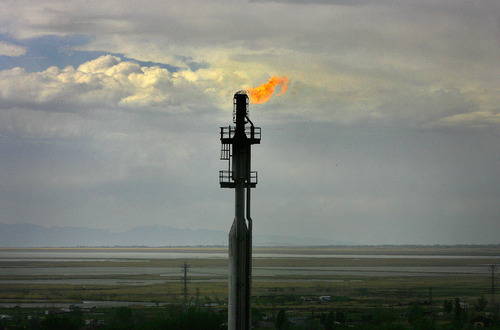
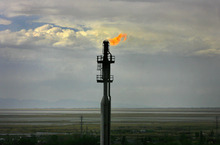
"People here are good, and they are willing to sacrifice if it's going to be shared," she said. "But they are not going to turn down their thermostats to reduce their own emissions when they can see the refinery plumes burning."
Brian Moench, president of Utah Physicians for a Healthy Environment, charges that the DAQ "has once again given industry whatever it asks for, no matter how much we violate the air pollution standards, no matter what the consequences are to public health. And they can't even wait long enough to study what refinery pollution is doing to us already before they go ahead and permit even more."
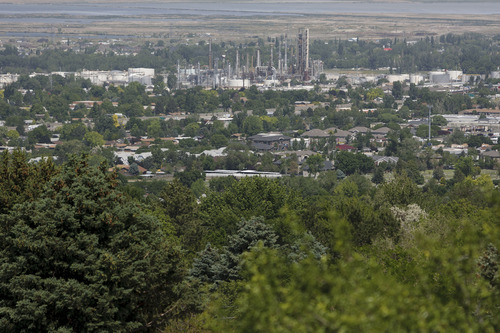
Neighbors living near refinery row also have concerns. In April, about 65 people attended a meeting in West Bountiful with Holly Frontier officials. Concerns centered on noise and pollution from the refinery, the effect on groundwater, impacts on health, a drop in real estate values and a decline in the quality of life.
"How much value can you put on human life?" resident Merrill Shupe asked.
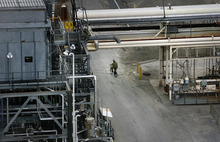
Opponents also cite refinery accidents, noting that a leak, spill, fire or similar incident occurs every nine days. While that's an accurate average, incidents mentioned in state records range widely in severity, from hundreds of episodes of temporarily elevated air pollution levels from refinery stacks to at least three explosions — one in 2009 that was massive enough to damage nearby homes.
State regulators investigated 501 environmental accidents at the five refineries from 2000 to 2011, according the Utah Department of Environmental Quality. Fully 85 percent of those incidents occurred at the Chevron, HollyFrontier and Tesoro refineries.
Going back to 1990, the most frequent kind of refinery accident by far involved equipment failures that led to excess sulphur-based compounds, usually sulfur dioxide, hydrogen sulfide or sulfuric acid, being released through the plants' flares or spilled onto the ground. In hundreds of cases, pollution releases were caused by malfunctions in the plants' sulfur-recovery units or by power outages.
Records also document at least three refinery explosions: at the Chevron refinery in 1992; at Flying J, now Big West Oil, in 1994; and a massive explosion and fire at Silver Eagle on Nov. 4, 2009. That blast damaged about a dozen homes severely and nearly 300 area residents filed claims against the company. All were settled out of court except one, in which a Woods Cross couple this year won a $325,000 jury award.
—
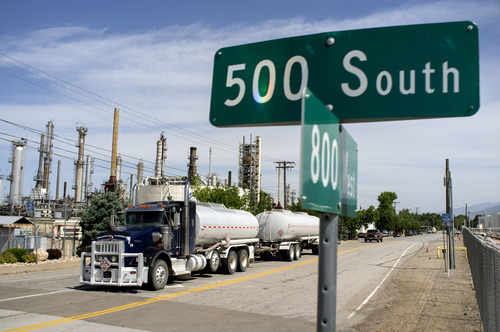
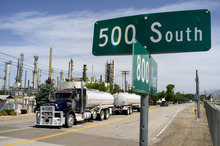
Truck traffic • Neighbors also complain about traffic congestion from tanker trucks, particularly off Interstate 15 at 500 South in West Bountiful. HollyFrontier alone expects truck traffic to increase from 40 tankers a day to 160 trucks after 2016.
Bountiful residents Dale Ann Petersen and Kathleen Dennis insist the air is getting dirtier because of emissions from the refineries and the trucks that deliver the crude oil. Increasing the number of vehicles will make the situation even worse, they said.
"There are days when it's so bad you can feel it in your lungs," Dennis said.
But that's only part of the congestion problem. The highway taking the brunt of the trucks is US-40, which is only two lanes for much of its length in Utah. Shane Marshall, director of the Utah Department of Transportation's Region 3, said US-40 can handle most current and expected traffic as the trucks travel from the basin to Salt Lake "but we do get congestion in some towns, and things back up."
UDOT plans to spend $10 million in the next few years to add more passing lanes, and several million more to improve some problem intersections that act as choke points. UDOT also has had to design US-40 to take more punishment than normal highways because of the wear and tear from the heavy trucks.
A new law also may help provide extra money for future upgrades to US-40. Last year the Legislature passed SB229 to earmark 30 percent of growth in sales tax revenue for highway construction. Gov. Gary Herbert vetoed the bill, arguing that setting aside so much sales tax for roadwork would hinder the state's ability to address other needs, such as education. But the Legislature overrode Herbert.
In April, the Utah Transportation Commission adopted a list of projects approved to use money from the growth in sales tax, and it included adding passing lanes along a 30-mile stretch of US-40 in Duchesne County at a cost of about $5 million.
—
Jobs and revenue • Against the backdrop of the transportation, air quality and other issues, HollyFrontier refinery Manager Lynn Keddington said the first phase of the expansion project will add 40 more jobs to the plant's 195-person workforce, whose average salary is $81,360.
It also will create more than 1,500 jobs in related work such as truckers, wildcatters and all the services they require. In addition, HollyFrontier will pay $64 million in state tax revenue, up from $32 million, and contribute $801 million to Utah's gross state product, nearly double the current total. The numbers will only get better with the second phase, expected to be completed after 2016, he added.
"The expansion allows us to take advantage of Utah crude, creating more Utah jobs and state revenue — when the alternative is to buy Canadian crude with none of those advantages," he said.
About 72 percent of the crude oil consumed in Utah comes primarily from Canada, as well as Wyoming and Colorado. The state's population growth will only put more pressure on oil imports. Based on increases in consumption during the past 10 years, petroleum-based transportation fuel use is projected to increase from 45 million barrels a year to 52 million barrels during the same period, according to the state's Energy Initiatives & Imperatives report.
That could change as refinery row ramps up production. When completed, the refineries will take 99,000 barrels of Utah crude a day — up from 20,000 barrels six years ago.It's difficult to say what the savings will be, but waxy oil typically costs around $10 less per barrel less than sweeter crudes.
HollyFrontier, based in Dallas, will invest $225 million during the next four years to increase production by 45 percent. San Antonio-based Tesoro Corp. expects to invest $180 million to increase processing capacity by 7 percent, and Chevron, based in California, has said it plans to spend $83 million upgrades to its Salt Lake refinery.
As part of its expansion, HollyFrontier signed a 10-year agreement with Newfield Exploration Co. to supply 20,000 barrels per day of Utah crude produced from the oil company's Uinta Basin properties. Tesoro signed a similar supply agreement with Texas-based Newfield.
Newfield, by far the state's oil production leader, plans to invest $500 million this year as it steps up its drilling and assessment operations. Last year, Newfield contributed 7.7 million barrels of black wax to the state total of 26 million barrels. Of the eight producers exceeding 1 million barrels, six pumped black or yellow wax exclusively.
John Baza, director of the Division of Oil, Gas and Mining, said there's plenty of black wax in the Uinta Basin to sustain increased production for decades. "The question is if the refineries expand and the transportation problems are solved, how much more could you produce?" he asked.
Possibly millions more barrels of Utah crude.
Tribune reporters Judy Fahys, Lee Davidson, Tony Semerad, Brandon Loomis and Pamela Manson contributed to this story. —
To learn more
O The Utah Division of Air Quality has posted information about the Tesoro application and seeks public comments on the company's plan through June 7. A public comment period on HollyFrontier's application is expected to be announced in the next three months. Visit bit.ly/J9UBew