




This is an archived article that was published on sltrib.com in 2012, and information in the article may be outdated. It is provided only for personal research purposes and may not be reprinted.
Next month, Lutherans across the globe will celebrate the birth of the Protestant Reformation — as they do every year at this time.
The Reformation began, they believe, when a Roman Catholic priest named Martin Luther nailed his famous 95 Theses on the door of the Castle Church in Wittenberg, Germany, on Oct. 31, 1517, spelling out his criticisms of the church he served.
Luther, a devout believer who was troubled by what he saw as corruption in the church, had no intention of leaving the Catholic faith, only reforming it. Within four years, however, he was excommunicated by the pope for his refusal to recant his critiques. He also was expelled from the Holy Roman Empire. Popes and princes ruled the people with separate but equally autocratic authority.
"The monarchy determined one's place in this life," writes the Rev. David Nichols, pastor at Salt Lake City's Mount Tabor Lutheran Church. "The papacy determined one's place in the next."
Ultimately, Luther rejected Catholic authority to dictate the path to salvation. He translated the Bible from Latin, which only the monks could read, to German and made it available to the people.
The former monk "began to teach the masses that Christianity was an egalitarian, not a hierarchical, religion," Nichols writes. "He declared that all people are created equal before God."
Today, there are nearly 75 million Lutherans worldwide, including more than 12 million in Germany, according to the Lutheran World Federation. The United States is home to more than 7 million Lutherans.
If you add the five branches of Lutheranism in Utah, that denomination is the state's largest mainline Protestant group, the latest U.S. Religion Census shows, with 10,618 members in 38 congregations.
The Rev. James Gonia was installed this week as the Evangelical Lutheran Church in America's bishop for the Rocky Mountain Synod, which includes Utah.
"As a church and as individuals we are called to participate in God's work of restoring and reconciling communities in Jesus Christ's name throughout the world," Gonia says in a news release. "In my work and ministry, I have come to believe that 'accompaniment' best describes how we are called to live and work with our brothers and sisters in Christ throughout the world."
So who are the Lutherans? What do they believe? How do they worship and how are they organized? How do they relate to other Christian denominations?
Let's start with that dissatisfied monk.
What were Luther's chief issues with the Catholic Church?
Most people have heard about Luther's frustration with the Catholic practice of payment or "indulgences" in exchange for sins. The pope needed the money to restore St. Peter's Basilica, and many Catholics wanted what they thought were longtime pardons. Luther argued that forgiveness from God couldn't be bought.
He believed that people should be able to read the Bible themselves, rather than rely on priests. He, thus, translated the Latin into German. His central teaching was that salvation comes "by God's grace through faith alone." It is not earned by good deeds.
How do Lutherans worship?
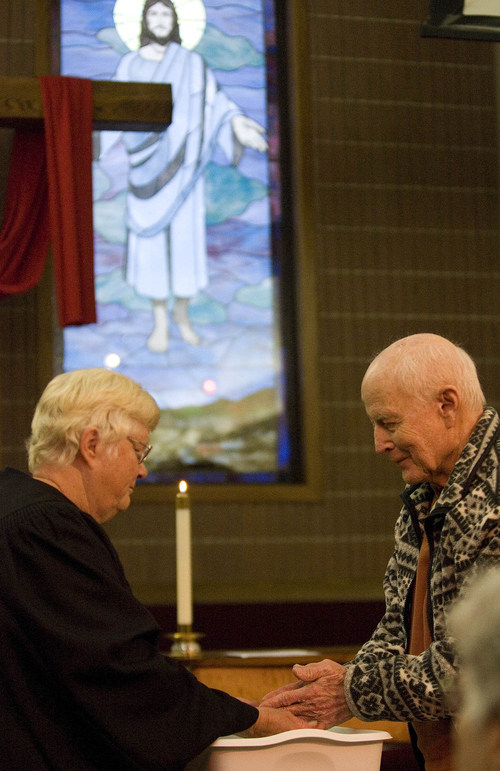
Unlike the Catholics' seven sacraments, Lutherans have two: Holy Communion and baptism.
Luther retained the Lord's Supper, believing that the bread and wine were the body and blood of Christ. He also continued the sacrament of baptism, but did not specify the form, whether it be infant baptism or for adults.
For Luther, baptism was "a gift of grace alone," Nichols says. "We need not understand what is happening in order to receive a gift: A child is loved and fed without understanding why, or the recipe for the food. Thus, people of all ages, especially infants, receive the gift of God's love at the baptismal font."
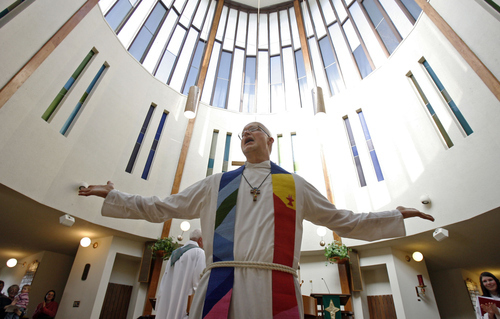
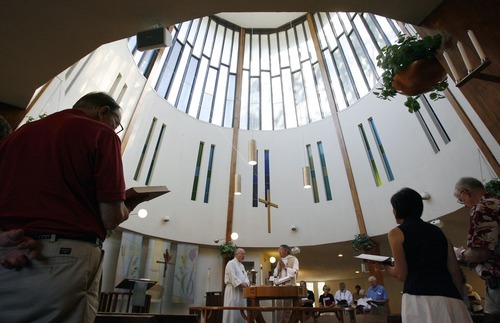
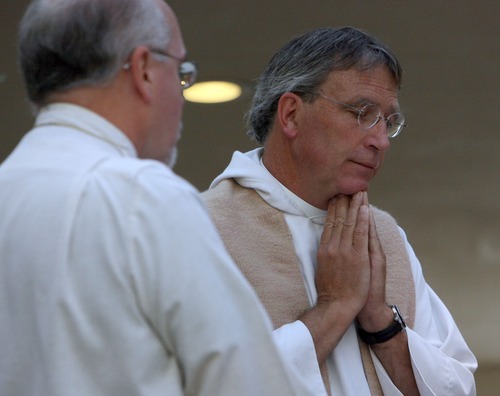
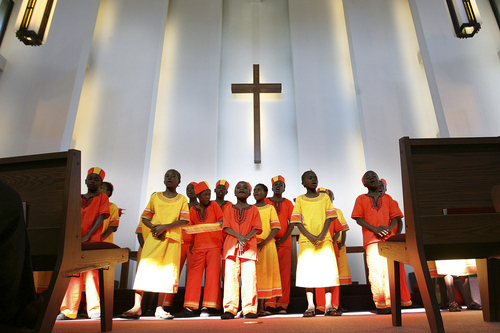
Lutherans follow the Catholic "liturgical calendar," which laid out the order of Scripture reading and celebrations throughout the church year. They wear robes and kneel before altars much as their fellow Catholics and some Protestants do. Music is a central part of Lutheran worship.
What are the similarities between Lutherans and other Christians?
Lutherans, Episcopalians and Roman Catholics share a common liturgical tradition, meaning they follow an order of worship they believe is traced back to the apostles.
"We see ourselves as catholic (meaning part of the whole Christian Church), evangelical (meaning our witness to the good news of Jesus Christ is based on scripture), and reforming (meaning we are open to ways of communicating the good news in ways that are always relevant to modern society," Nichols writes in an email.
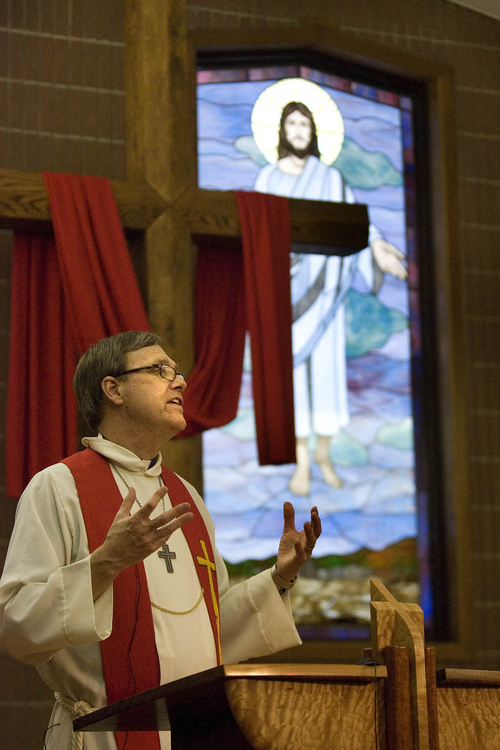
Worship services of other reformed churches such as Presbyterian, Methodist and Baptist, "are more free form," he says. "If you went into their sanctuary, you would see that the pulpit is the focus, while the central focus of Lutheran, Episcopal and Catholic sanctuary is the altar. This is an important distinction."
How many Lutheran groups are there?
There are at least 14 separate groups in the United States. The three largest are the ELCA, with 4.2 million members, Lutheran Church-Missouri Synod, with about 2.6 million members, and the Wisconsin Evangelical Lutheran Synod, with about 400,000 members.
What issues divide them?
Like other Protestant denominations, Lutherans are divided on theological and social issues.
The ELCA is the most liberal. It ordains women, allows same-sex marriage and believes that Holy Scripture is historical but not always literal.
Lutheran Church-Missouri Synod does not ordain women, but does allow them to be church officers. Gays cannot be ordained nor is same-sex marriage allowed.
Wisconsin Evangelical Lutheran is the most conservative. Women cannot be ordained or serve as officers. The Bible is considered inerrant.
How do Utah Lutherans fit in the picture?
In Utah, the Religion Census shows, there are 12 ELCA churches with 3,186 members. The Missouri Synod has 19 congregations and 4,070 members, and the Wisconsin Synod has two congregations, with 484 members.
Utah's ELCA churches are "the conduits for ecumenical conversation and cooperation," says Pastor Jeffrey Louden of St. Matthew's Lutheran Church in Taylorsville. "We work together with Episcopal, United Methodist, Presbyterian (USA), Church of the Brethren and United Church of Christ pastors and congregations."
Such collaborations are especially important in Salt Lake City suburbs, he says. "They are places that don't build communities easily. Our community of faith could make a real difference, could be a place of respite and hope."
What is the denomination's future?
Here's what Nichols, the Salt Lake City pastor, says: "Luther dared to stand before the powers of his day and ask 'why?' He questioned the assumptions of those who called for blind submission to both religious and political authority. He empowered the masses of his time to read for themselves, seek the equality that liberated their lives, and work for the common good."
This band of believers will "strive to continue this reforming spirit in our mission and in our community," Nichols writes. "We aspire to embody the Lutheran values of equality, inclusivity and critical reflection in our life together."
Sources: Lutheran World Federation; ELCA.org, http://usalutherans.tripod.com; U.S. Religion Census: Religious Congregations and Membership 2010; http://christianity.about.com/od/denominations/a/lutheran.htm.