




This is an archived article that was published on sltrib.com in 2012, and information in the article may be outdated. It is provided only for personal research purposes and may not be reprinted.
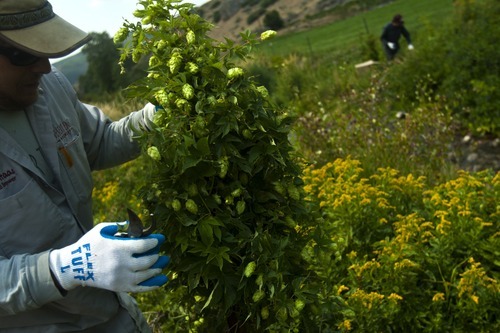
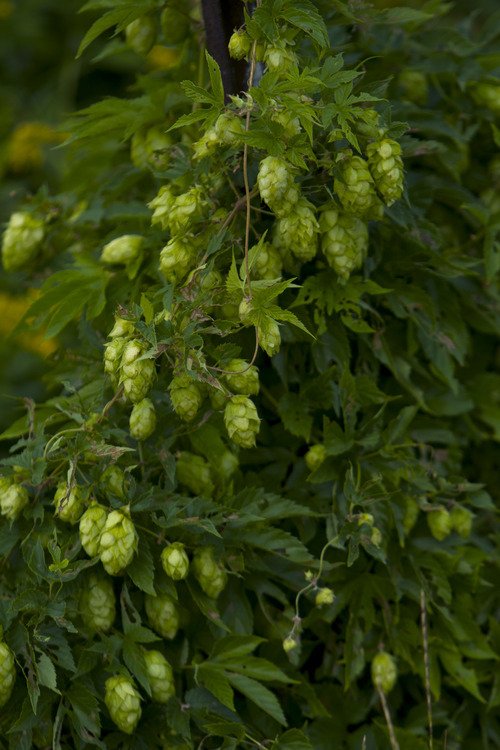
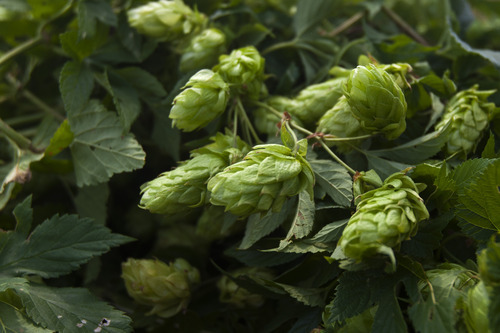
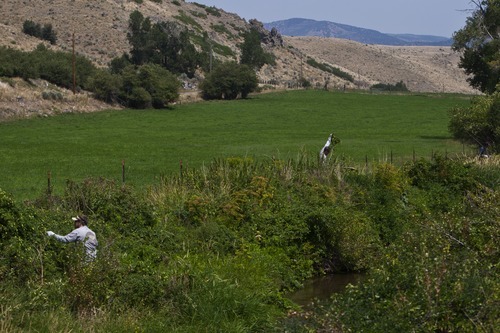
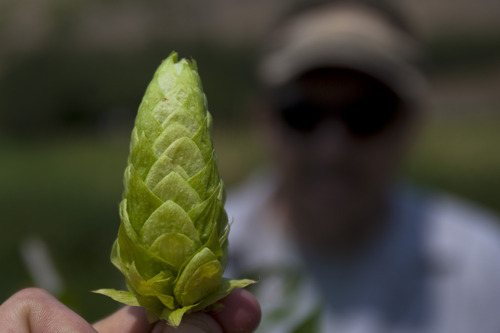
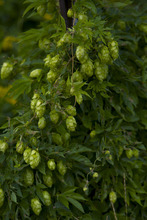
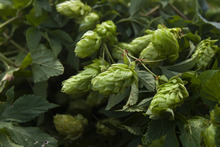
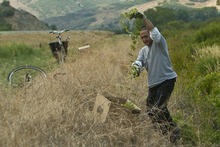
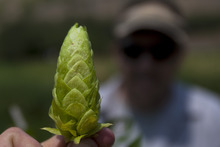
Somewhere in Summit County • Between the cattails and yellow wildflowers, Chris Haas spots lime green cones dangling from dark wiry vines. The sight turns the Utah beer brewer as giddy as a child at Christmas.
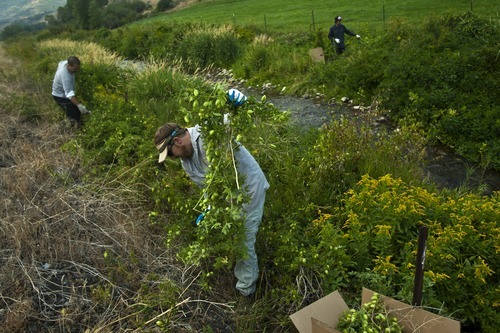
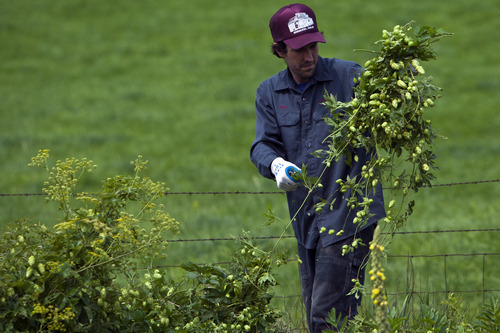
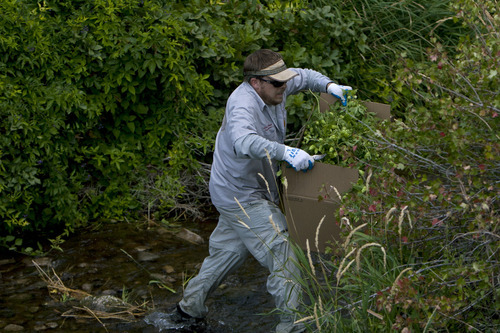
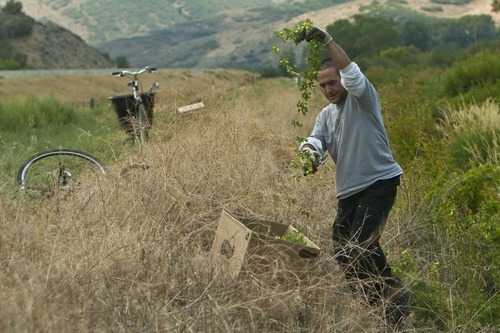
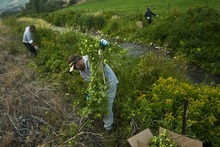
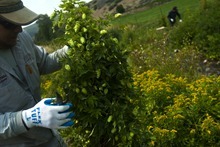
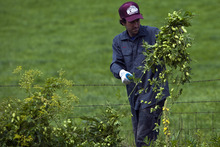
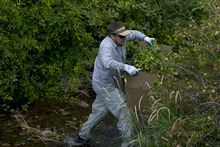
Haas, of Desert Edge Brewery, scurries down a small embankment toward the hops, with their paper-thin leaves and spiked tips. He chops off the vine near the base, stuffs it into a cardboard box and starts foraging for more.
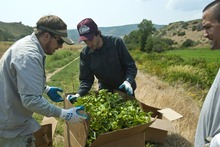
It's the sixth year that Haas — and some of his beer-loving friends — have harvested wild hops to make Radius, one of the brewery's most interesting fall beers.
The golden ale is made with ingredients grown or produced within a 150-mile radius of the Salt Lake City brewery at Trolley Square. Haas gets the grains from Idaho, but with no commercially grown hops in the area, foraging is required.
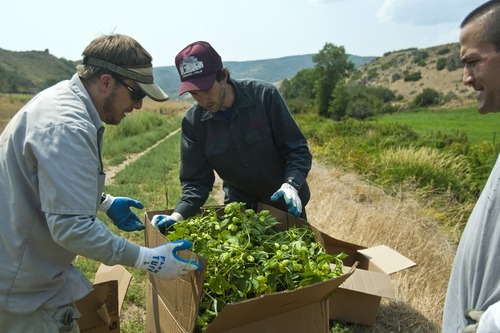
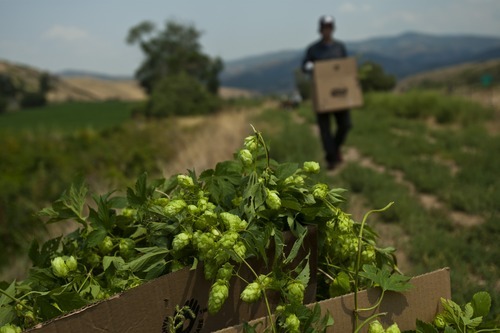
Initially Haas collected the hops that were growing in backyards, hillsides and other odd locales in the valley. Then four years ago, a friend pointed him to a secret stash in Summit County. This year, the cones matured about two weeks earlier than usual and were especially plentiful — the group collected 19 buckets (seven gallons each) of hops. That's three buckets more than last year.
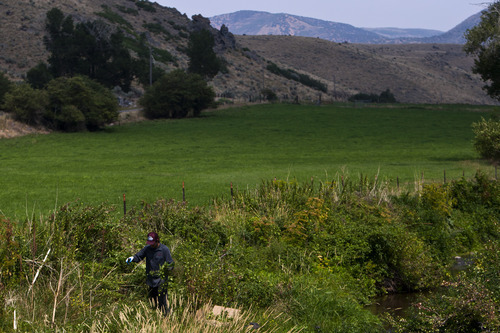
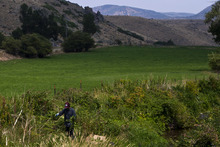
Haas allowed The Tribune to follow along on the excursion as long as the exact harvesting location wasn't revealed. Good beer is at stake, said Haas, who has a bit of a love-dread relationship when it comes to the Radius-making process. He enjoys making an all-local beer for customers. But the hot, sweaty 12-hour day spent harvesting hops is no picnic.
The next day isn't much better: It's spent picking the spongy cones off the vines — technically called bines — by hand. Fortunately, Haas has plenty of interested fans willing to stop by the brewery to help.
The actual brewing happens on day three, while the final product will be available on draft at Desert Edge sometime after Labor Day.
—
The wild hop chase • Haas isn't the only local brewer to harvest hops in the wild. Four years ago, Matt Beamer at Wasatch Brew Pub in Park City noticed how many hop bines grew around the area and decided to collect them for brewing.
"To get what we needed, we would knock on people's doors and asked if we could pick the hops in their yard," recalled Beamer. Many home owners gave him quizzical looks, saying "You want that weed?"
On one or two occasions, if Beamer and fellow harvesters knocked and no one was home, the crew would just cut the vines and run for cover.
"We loved the adventure of it," said Beamer, who ultimately named the beer Hop Bandit after their exploits.
Today, the Wasatch crew stays on the up-and-up collecting the hops near Heber City and Wanship. Beamer plans to harvest over Labor Day weekend, and his 2012 Hop Bandit, a light amber ale, should be ready by mid-September.
While Summit County seems to be the preferred spot for Haas and Beamer, hops are a native Utah plant and can be found throughout the state from Cache County to Washington County, said Jason Baker, the curator of plant records at Red Butte Garden. "You'll see them in the foothills and mountains, anywhere there's plenty of moisture."
—
Like a lottery beer • Collecting wild hops is a bit of gamble for a professional brewer because the amount of bitterness in the cones can vary from year to year, Beamer and Haas say.
"One year it could be very bitter and another year not bitter at all," said Haas. "It's a bit of a wild card."
But Beamer said some years there have been unexpected flavors — like peach and nectarine — that come from the wild hops he collects. "It's kind of like a lottery beer."
Part of the excitement for both brewers is the chance to make a beer using fresh hops. Most beers, they said, are made using dried hops, which are added at the beginning of the boiling process. All the time spent in the hot mixture means a lot of the hop flavors and aromas evaporate.
But fresh hops are added near the end of the boil, which keeps the flavors in the beer. Fresh hops don't have the same intense flavor as dry, so brewers must add significantly more to the brew to get the desired flavors.
"When you put the hops in at the end, you capture their essence," Beamer explained. "It's shockingly different than a normal brew. You pick up grassy and vegetative notes from all the green material. It's really unique."
—
Trying this at home • Utah home brewers are taking a cue from their professional counterparts, and planting hops in their backyards.
"Every year we get more and more people who want to grow them," said Dave Watson, an assistant manager at Salt Lake City's The Beer Nut.
The beer-making supply store sells cuttings — mostly from commercial growers in Washington state — around the first of April. Watson said American hop varieties such as Cascade and Centennial grow best in the Utah climate.
"The first year they will grow, but until they get established you won't have a lot of yield," Watson said. "But by year two or three, they are really producing."
A member of the Hemp family, hops have vigorous rhizomes and can grow in just about any soil, said Baker, from Red Butte. However, they thrive when there's ample moisture and lots of sunshine. In these ideal conditions, the bines can grow anywhere from 2 feet a week to 12 inches in a single day. Hops like to climb trellis' and fences, so they are a good water-wise plant for those wanting to create a natural screen in their yard.
The only thing to watch for are the hop bandits who come out in the fall.
Twitter: @kathystephenson —
Making beer with Utah-grown hops
Radius • A golden ale made with ingredients produced within a 150-mile radius of Salt Lake City. Available after Labor Day at Desert Edge Brewery, 625 E. 400 South, Salt Lake City; 801-521-8917.
Hop Bandit • A light amber ale with a bit of sweetness. Available mid-Septemeber at Wasatch Brew Pub, 250 Main St., Park City; 435-649-0900