

This is an archived article that was published on sltrib.com in 2012, and information in the article may be outdated. It is provided only for personal research purposes and may not be reprinted.
He knew his feelings weren't normal.
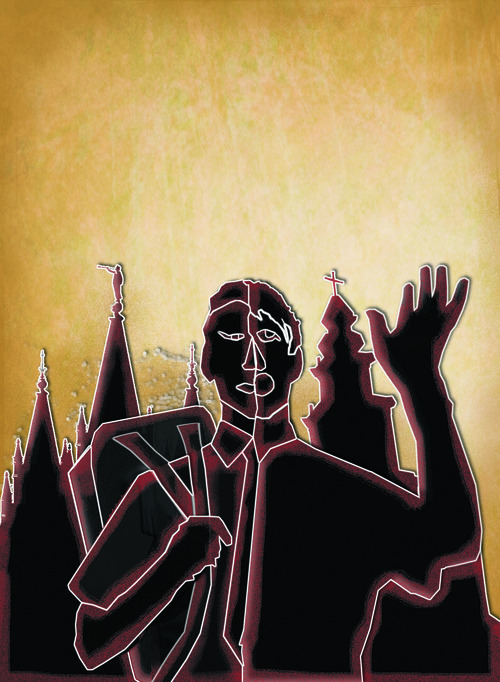
As a Mormon teen about to go on a mission, Ross Anderson should have radiated excitement, hope and piety. Instead, he felt confused and disillusioned.
"That's a pretty serious commitment, and I kind of had to decide whether or not I owned the teachings of the church and believed it strongly enough to make that sacrifice," said Anderson, now 57. "That sort of precipitated a process of self-evaluation and investigating my relationship with the church, and I just began to discover things that I didn't think added up."
Anderson never went on that mission. Ultimately, he left The Church of Jesus Christ of Latter-day Saints, eventually becoming a teaching pastor at Alpine Church in northern Utah.
Now, he and his church are trying to help others with similar stories. Anderson's church is among more than a dozen in Utah hosting discussions and viewing groups centered on a new video series, called "Transitions: The Mormon Migration From Religion to Relationship" and aimed at supporting Latter-day Saints making the switch to evangelical or mainline Protestant Christianity.
The Utah-based Western Institute for Intercultural Studies, a Protestant evangelical nonprofit organization, produced the series in hopes of helping people traverse the often-tricky terrain that comes with such a change.
"At the time they're going through these tremendous challenges, they don't have the support of their families or religious institutions around them," said John Morehead, institute director, "which is why there's a need for a resource that understands that process of the journey and can help them deal with all the challenges they face."
The videos and accompanying workbook address some of the biggest challenges Mormons face when converting to evangelical Christianity or mainline Protestantism: identity, relationships and the differences between church cultures. They also explain views on man's origin, the reasons for man's existence and the future of humanity.
Scott Trotter, a spokesman for the LDS Church, declined to comment on the program.
Morehead acknowledged "Transitions" is not the only resource out there for such searchers, but he said it approaches the topic from an LDS point of view. That's important, he said, given how many Mormons leave their church each year.
The LDS Church welcomes many converts; more than one in four Latter-day Saints in America came to the faith from another religion, according to a 2008 survey by the Pew Forum on Religion & Public Life. And the church has its own programs to help ease the way of those converts.
But the faith, like every other, also loses members. About 29 percent of Americans reared LDS end up leaving the fold, with about half converting to another religion, according to the Pew survey.
—
Fractured relationships • Panning over the snowcapped Wasatch Mountains and Salt Lake City, the first "Transitions" video explains that today's spiritual migrants can, in some ways, be compared to immigrants to America in the early 1900s.
Black-and-white images of boats pulling into Ellis Island, the Statue of Liberty and women in headscarves hauling luggage sacks accompany the narration.
"Today, many who were once part of The Church of Jesus Christ of Latter-day Saints are migrating away from their religious homeland of Mormonism in search of a new land," the male narrator says. "For the Mormon whose entire way of life has been woven into the fabric of their LDS Church, the fears and obstacles they face in leaving are unprecedented. Even so, every day, people all over the world are transitioning out of Mormonism."
Those fears and obstacles, the videos explain, include losing one's identity, damaging relationships with family members and adapting to a new culture.
"If people don't have some help or know there's someone else on the journey with them, it can just be very difficult," said Anderson, who also appears in the videos, talking about the topic. "It's such a strongly rooted identity and culture."
Anderson said he had it relatively easy when he left Mormonism because his family was kind — and he wasn't living in Utah, with members on every block and meetinghouses seemingly around every corner.
But many who leave don't have as smooth a progression. Understandably, Mormon family members often get upset, especially since their eternal goals revolve around kin.
Latter-day Saints believe that almost all people who die end up in one of three levels of heaven. Only the devout, who follow all the church's laws and ordinances, they believe, may attain the highest level, known as the Celestial Kingdom, where they will continue their family associations.
It has been 15 years since Logan resident Jonathan Edgar left the LDS Church, and he said tension still persists between him and extended-family members who remain active Mormons.
"We talk and we're polite and all that," said the 37-year-old father of five, "but we don't really have deep relationships anymore."
That stress, he said, likely comes partly from an inability to discuss their religions with one another. He said his loved ones may also feel betrayed — that by rejecting Mormonism, he has rejected them.
And they're concerned, he suspects, for his immortal soul.
"With people you care about, you do worry about their ultimate destiny," he said. "You do worry about where they will end up."
Edgar's transformation began when his wife, a Mormon convert, left the church after her father's death. His passing raised questions in her mind about the afterlife.
Ultimately, her questions led her to become a born-again Christian, and her husband followed, feeling touched by God during a service at the couple's new church.
Edgar attended a screening of the videos with his pastor at Logan's Cache Valley Bible Fellowship to see if they would work for members of that congregation, a few of whom came from the LDS faith. The church bought the program and hopes to implement it soon, said Pastor Eldon Peterson.
Edgar said a program such as "Transitions" would have helped him years ago.
"A lot of the things in the videos I kind of had to learn the hard way, kind of through trial and error," he said. "It probably did take me five to seven years to transition from Mormonism to being a Christian. … Sometimes I feel like I had a lost five years of my life where I had to unlearn things and learn new things."
—
Learning a new way • Learning a new culture, new doctrine and new beliefs is a challenge for many Latter-day Saints who trade Mormonism for other forms of Christianity, said Morehead, who followed a similar path himself, leaving the Community of Christ, formerly known as the Reorganized Church of Jesus Christ of Latter Day Saints.
Phil Hughes, pastor at Mount Olympus Presbyterian Church, said his east-bench church sees anywhere from half a dozen to a dozen Mormons each year exploring the faith. Mount Olympus has also purchased the "Transitions" program.
"We see them not understand some of the language and some of the culture, and some of the beliefs of mainstream Christianity," Hughes said, "so we try to help them adapt to that and understand that so they can fully enter into the Christian faith."
Sheila Barnish, an ex-Mormon who worships and works at Mount Olympus, said it can be disorienting at first.
Lent and Pentecost are unfamiliar terms. Certain words, such as "deacon," "heaven" and "elders," suddenly hold different meanings. Women are allowed to be ministers.
"There a lot of things within a traditional Christian church that, coming out of the LDS Church, you have no idea [about]," said Barnish, adding that the "Transitions" videos, which address some of the differences, were "right on target."
Barnish quit the LDS faith as a teen, saying she couldn't subscribe to Mormon beliefs about the afterlife. But she never lost her faith in God or Jesus. She eventually returned to religion for her children but soon found herself feeling at home in her new church as well.
She remembers the moment when it all seemed to click.
As a child, Barnish's mother taught her the Lord's Prayer. Barnish said it every night before she went to bed.
During her first service at her new church, the Lord's Prayer — an expression of God's greatness and a request for provisions and forgiveness — was recited.
"That prayer, in itself, was just something familiar enough to me that I felt comfortable," Barnish said. "That prayer really led me to saying, 'OK, I am somewhere where I'm supposed to be.' "
Twitter: @lschencker —
Learn more about "Transitions"
"Transitions: The Mormon Migration From Religion to Relationship" is a video series and workbook aimed at supporting Latter-day Saints making the switch to evangelical or mainline Protestant Christianity. It was created by the Western Institute for Intercultural Studies, an evangelical nonprofit organization.
The first video addresses finding new individual and collective identity; the second covers friends, loved ones, marriage and children issues; the third goes over sorting out new church culture; the fourth examines "God's Grand Story"; the fifth explores the mission and community of God; and the sixth looks at "life in the new heavens and new earth."
To learn more, go to http://www.ldstransitions.com.