


This is an archived article that was published on sltrib.com in 2012, and information in the article may be outdated. It is provided only for personal research purposes and may not be reprinted.
More than 75 years after young writer and artist Everett Ruess vanished in the desert near Escalante, the mystery of his disappearance still intrigues wilderness advocates and storytellers of all stripes.
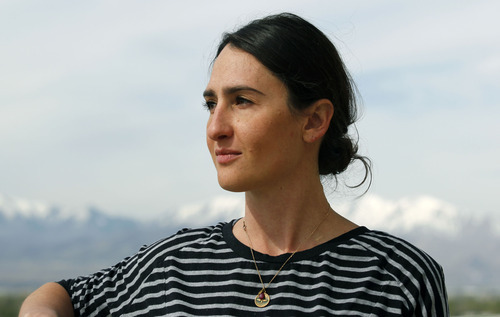
Now comes "Everett Ruess: Wilderness Song," a new documentary film by Utah-raised filmmaker Lindsay Jaeger. It was her mentor Jonathan Demme, the Academy Award-winning director of "Silence of The Lambs," who advised the Utah-reared filmmaker to follow her own passion for Ruess' story.
"I felt really strongly that if I didn't make this film, it might never be done," Jaeger said, after a draft of the film was screened to a select audience at Salt Lake City's Tower Theatre in April. "I wanted to see the faces and hear the voices of the people in this film, and I wanted other people to hear them as well."
The screening marked the 32-year-old Jaeger's passage from a self-confessed suburban kid to emerging filmmaker. Afterwards, Salt Lake City bookstore owner Ken Sanders offered a generous assessment: "After watching the credits roll, I feel lucky to be alive."
That's because Ruess disappeared in 1934. And because many of the figures Jaeger interviewed for her documentary, which she launched in 2009, have since passed away. It's also because her sources, both living and dead, captured the risk and danger of Ruess' journeys into the Utah wilderness decades before technology and electronic communication made such trips safer.
"There's so many trails a film like this could have gone down," said Steve Jerman, a Salt Lake City artist who sells T-shirts and art prints centered around the Ruess legend. "She took the right path. Interest in Everett is getting more intense all the time. It's just going to keep going."
Jaeger hopes her documentary will help to keep the interest alive, not just in Ruess as an icon but also as a conduit to a fascination and respect for wilderness lands. Outside of Utah, it's rare to find people who know who Ruess was. It's only once they connect his legacy to the larger canvas of environmental concerns that his appeal clicks into view, Jaeger said.
"The breadth and depth it accorded Everett was very impressive," said Steve Roberts, founder of the Everett Ruess Arts Festival in Escalante, who saw Jaeger's film at the April screening. "Edward Abbey was the patron saint of the wilderness, as they say. Ruess was one of the first to write about it, and make it an interesting story."
—
High romance and high mystery • Ruess was the son of a Unitarian minister whose family who settled in Los Angeles. As a young man, he expressed disenchantment with mainstream, work-a-day society. His wasn't an original sentiment, of course, as Henry David Thoreau detailed it decades before in Walden.
But Ruess articulated, decades earlier, the vagabond spirit that inspired Jack Kerouac and other alienated Beat writers. Unlike the Beat writers attraction to smoky dives and jazz clubs, though, Ruess found art and poetry in the stunning beauty of southern Utah's red-rock landscapes.
"I prefer the saddle to the streetcar and star-sprinkled sky to a roof, the obscure and difficult trail, leading into the unknown to any paved highway, and the deep peace of the wild to the discontent bred by cities," the 20-year-old wrote in his last letter to his brother in 1934.
Through his copious journal entries, letters and art works, Ruess' reputation as the original member of the Utah wilderness fan club fermented over the decades into a flavor so full he attracted a cult following.
Ruess made southern Utah and northern Arizona his virtual backyard, exploring its cliffs and canyons by burro and on foot, often spending months alone. In a last letter to his parents in Los Angeles, he wrote that he was headed toward Lee's Ferry, Ariz. Four months after he disappeared, a search team found two burros near his last camp in Davis Gulch, Utah.
Speculation as to the cause of his disappearance included murder, an accidental fall from a cliff or even marriage to a Navajo woman. In Davis Gulch, there's an inscription marked "Nemo, 1934," an alias Ruess was believed to have taken from Jules Verne's novel Twenty Thousand Leagues Under the Sea.
Wallace Stegner recounted Ruess's story in the 1942 nonfiction classic Mormon Country. Then came W.L. Rusho's book A Vagabond for Beauty, published in 1983 and still a steady seller. Two recent documentaries have also kept the story alive: Diane Orr's "Lost Forever: Everett Ruess" and Dyanne Taylor's "Vanished."
Salt Lake City audiences were reintroduced to the story in Utah playwright Debora Threedy's "The End of the Horizon," which Plan-B Theatre Company produced in 2008.
All of that literary backstory fueled a fever pitch of interest in 2009, when it was announced in the April issue of the National Geographic that his remains had been found at Comb Ridge near Bluff. About five months later, DNA tests proved the bones belonged to a Native American man. For now, Ruess' disappearance and presumed death at age 20 remains locked between double doors of high romance and high mystery.
—
The 'fatal intoxication' of the landscape • Jaeger first heard of Ruess when her parents volunteered for the Escalante Arts Festival named for him. She later read Rusho's popular biography, but it was Demme, however, who convinced her to leave her everyday Brooklyn life to trace, through film, Ruess' steps through southern Utah.
Jaeger felt ready to strike out on her own, having worked with Demme on several of his "portrait" films, including "I Am Caroline Parker."
"I remember just tripping out on the mystery and poignancy of the whole story," Demme said during a call from Rocklin County in New York state, where was working on another in a string of documentary films. "I told Lindsay, 'It sounds like you've got to get to work.'"
What captivated him most, Demme said, was the sense of "fatal intoxication" Ruess felt for the southern Utah landscape. "From a strictly moviegoer's reaction to Lindsay's film, I don't see Everett as a social misfit looking for an escape, or even a search," Demme said. "He was drawn in, and Lindsay's work reflects that. Her camera devours the ecology of the area."
Starting in 2009, Jaeger began a series of drives criss-crossing the Escalante area where Ruess ventured, into the nearby Navajo reservation in Monument Valley where he relied on tribal hospitality, and down into Tucson, Ariz., to interview such figures as Randolph "Pat" Jenks.
Jenks, a New Jersey native, was 98 years old when Jaeger interviewed him on film. He had moved to the American southwest to cure his sinus condition, and first ran into Ruess in the desert June 1931, when Jenks and a friend were headed toward Flagstaff in a pick-up truck. Ruess was only 17. Jenks was 19. The two later carried on correspondence through letters.
Eerily, Jaeger's film is filled with people who felt an affinity with Ruess and are now deceased.
The line from Ruess to DeChristopher • Jenks died not soon after Jaeger interviewed him for her film.
Rusho, whom Jaeger filmed in his Salt Lake City kitchen, died last year at age 82 of non-Hodgkin's Lymphoma. Salt Lake City artist Bob Moss, famous for his wood-burned folk art, described Ruess for her as "a secret pillar of the world" and "an extremely beautiful fool." He died in December at age 58 in his sleep, at his parents' house. Jaeger said she feels fortunate to have captured all three men for posterity.
Throughout, the film captures the romance of the Ruess legend, but also the danger he flirted with and the courage he inspires. Few today understand the risk of a simple hike in Escalante without enough water, provisions or emergency plans drawn beforehand. The message is clear: A life of romance surrounded by nature has its costs, and there can be no true wilderness experience without peril. There's but one living person central to carrying the flame of Ruess' spirit, Jaeger's film concludes.
In a Q&A session following the Salt Lake City screening of "Wilderness Poet," bookseller Ken Sanders said he was most impressed by the line Jaeger draws from Ruess to Tim DeChristopher, the environmental activist serving two years in federal prison for his 2008 fake bids during a federal oil and gas lease auction, and whom she interviews extensively as part of the documentary.
"We all bring our biases to a figure like Everett," said Sanders, who admits he has been obsessed with Ruess' story for more than 30 years. "People make him what they wish to be, but the fact is he was a 20-year-old child when he disappeared and died. He sought truth and beauty, and he found it. But he did so without ever getting real. Tim DeChristopher took it all a step further. Tim got real."
—
Journey toward a final edit • Even with Demme as an executive producer backing the film, every dollar counted. Jaeger went on what seemed like a filmmaker's version of a wilderness trek. She recalls the cheap food she subsisted on, the countless granola bars and potato chips she consumed during months of shooting, relying on peppermint bubble gum to freshen her breath for documentary interviews. She recently reached her $10,000 goal via the online fund-raiser Kickstarter, which she hopes will cover costs for picture and sound editing. With that done, she'll begin submitting it late summer through early fall to film festivals nationwide.
Demme expresses confidence that "Wilderness Song" will find a distributor, if not through the film festival circuit, then through a heavyweight such as HBO, who he said has tracked Jaeger's effort from the start. "They don't say that if they don't like it," Demme said. "They've got plenty of other things to look at."
Jaeger said she hopes viewers will see her film as a document linking Ruess' journey, both personal and cultural, with their own stories. She hopes Ruess's life will serve as a guidepost.
"Hearing his letters read aloud, you can sense him becoming a man, and aware that life isn't always easy when you devote yourself to certain ideals," Jaeger said. "By the end of the film, I did see him as a younger, idealistic person where I was older now. I'd moved through his journey with him. I wasn't on his level anymore, but there will always be parallels between now and then. Freedom is having nothing left to lose, and he accomplished that."
Twitter:@Artsalt
Facebook.com/nowsaltlake —
More about 'Wilderness Song"
Watch a video clip of the documentary, and Lindsay Jaeger's overview of the project at: http://www.kickstarter.com/projects/wildernesssong/everett-ruess-wilderness-song
To keep up with the documentary-in-progress, track the Facebook page: http://www.facebook.com/pages/Everett-Ruess-Wilderness-Song/234307136650807 —
A treasure trove of Ruess material at U. of U. library
On his death at age 98 in 2007, Waldo Ruess, Everett's older brother, donated his papers, more than 78 boxes of family papers, photographs, journals and art to the University of Utah J. Willard Marriott Library. It's a rare gathering of material, says archivist Elizabeth Rogers, who spent a year organizing the collection. "I have to admit, I was obsessed," she says. "I read almost everything. This is really one of a kind. And it's not just Everett. This family was the 20th century."