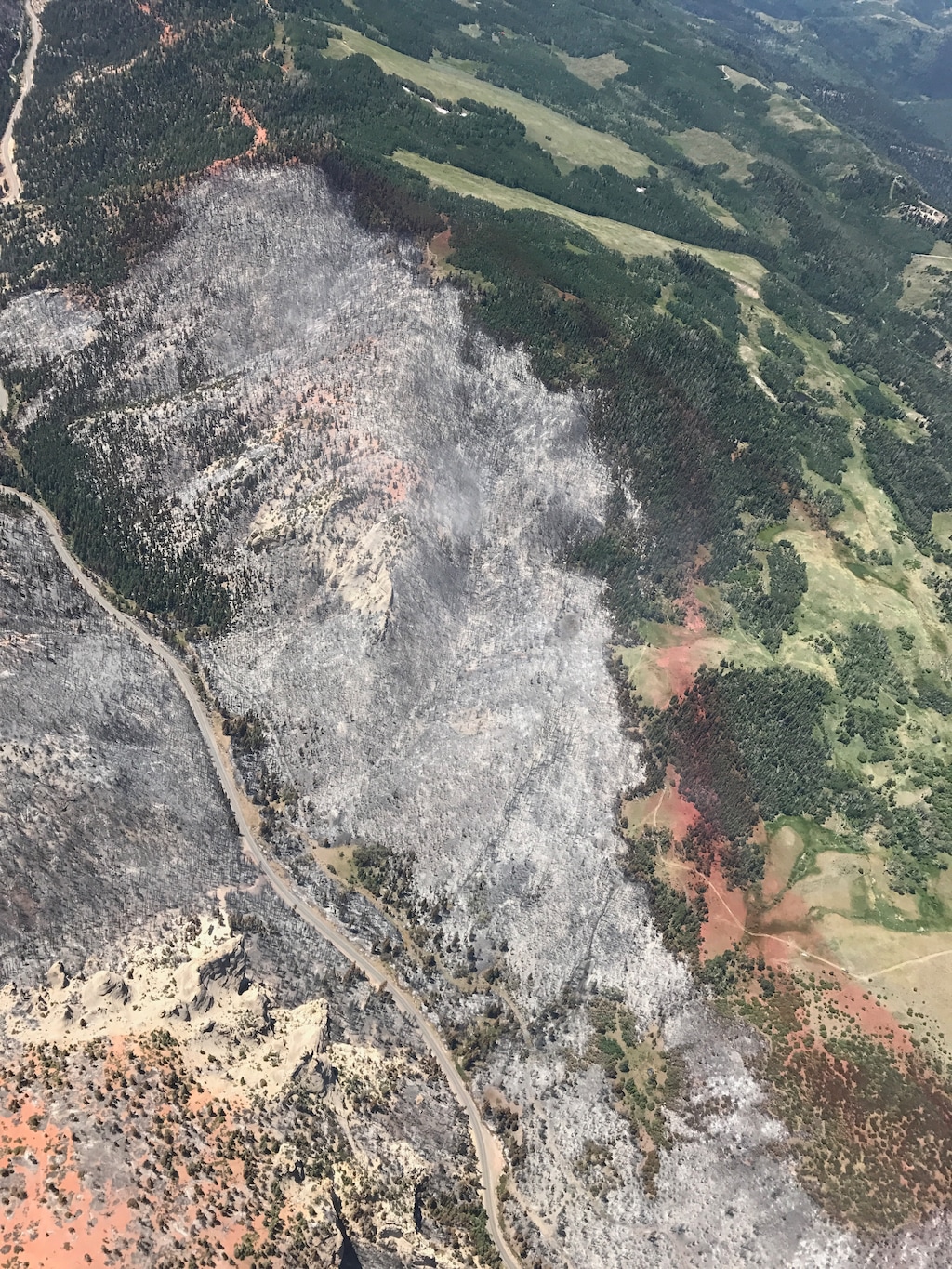
St. George, Utah • Federal forest managers are starting the lengthy process of restoring the expanse of burned-out forest left behind by a massive wildfire near the ski town of Brian Head in southern Utah.
They will begin by aerial seeding and mulching over more than 8.8 square miles of the forest, according to Dixie National Forest news release. More than 111 square miles across Iron and Garfield counties were consumed by the June 17 wildlife that is believed to have been started by an individual using a weed torch, The Spectrum reported.
The forest could take between one to five years to recover from the fire, Dixie National Forest Public Information Officer Cigi Burton told the newspaper in a previous interview.
Crews have planted triticale seeds, which are a cross between wheat and rye over areas that could loose soil to erosion, according to the news release. Officials chose triticale seeds because they are known for germinating quickly after being planted.
They will later cover the area with 3,200 tons of wheat straw to promote germination and reduce the potential of water runoff, officials said. They expected that work to go on through the middle of September, said Kacy Ellsworth with the public affairs office for the national forest, which may increase traffic in the area.
The fire that ravaged through the Dixie National Forest is technically not 100 percent contained. Fire crews are looking for hot spots that could flare up, Cedar City Fire Chief Mike Phillips at Cedar City council’s July 26 meeting. Officials may wait until the first snow to declare it officially contained.